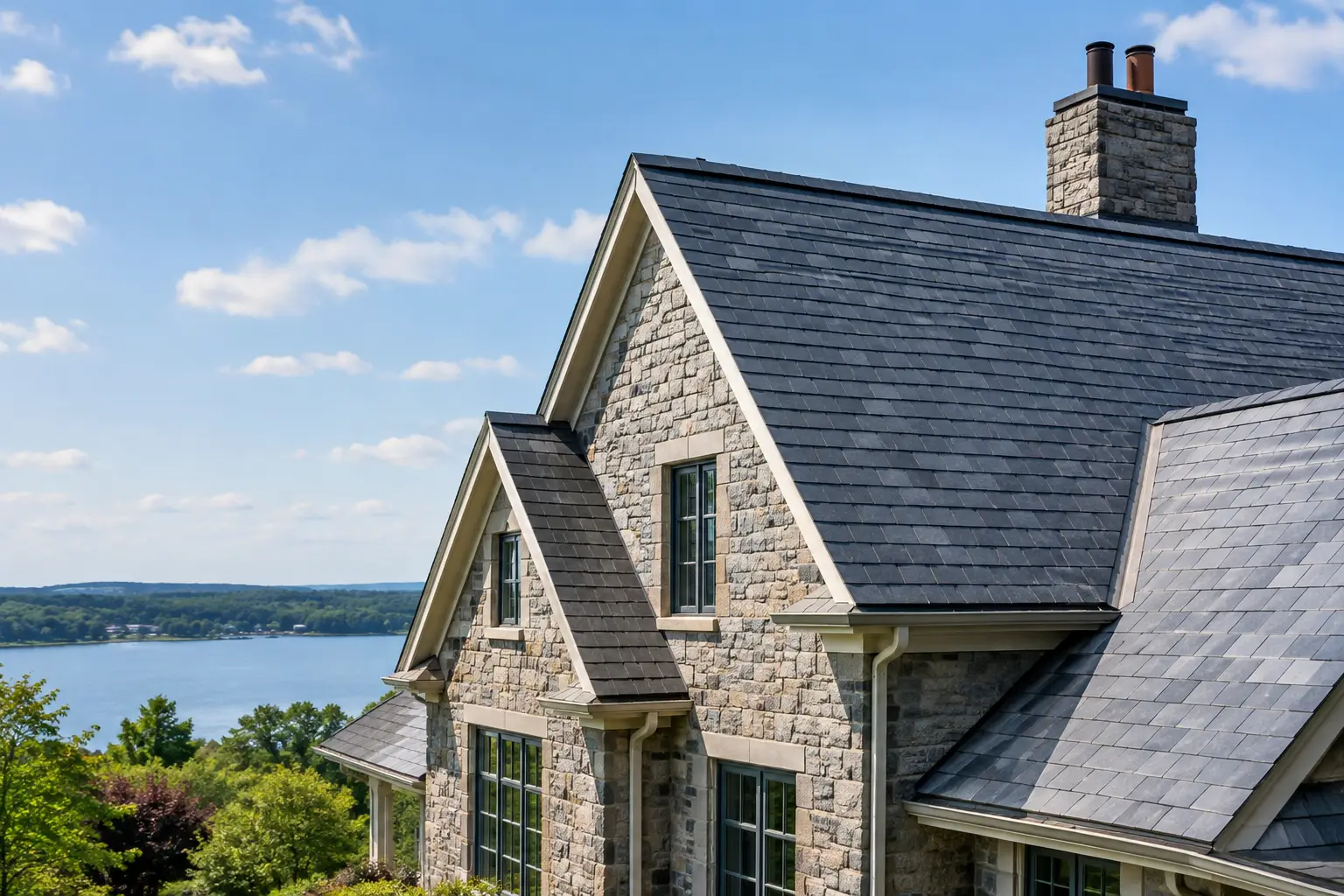


A slate roof can outlast several generations of homeowners, but only when the stone, installation, and supporting roof system are all in good condition. So, how long does a slate roof last? In Connecticut, a properly installed and maintained natural slate roof can often perform for 100 years or more. Premium hard slate may last 150 to 200 years, while softer slate may have a service life closer to 75 to 125 years.
That longevity is why slate remains a strong choice for historic homes, higher-end properties, and buildings where appearance and long-term value matter. It is also why a slate roof should never be treated like an ordinary asphalt roof. A leak, missing slate, or aging flashing does not automatically mean the entire roof needs replacement. In many cases, targeted repairs and regular inspections can preserve the roof for decades.
How Long Does a Slate Roof Last? It Depends on the Slate
Natural slate is a stone, not a manufactured roofing product. Its durability varies based on where it was quarried, its mineral composition, thickness, and density. The difference between hard and soft slate is one of the biggest factors in a roof’s expected lifespan.
Hard slate is exceptionally dense and resistant to water absorption, freezing, and weathering. It is commonly associated with service lives of 150 years or longer when installed correctly. Soft slate is still durable, but it may weather more quickly and can become brittle sooner, particularly under repeated freeze-thaw conditions.
The roof’s age alone is not enough to determine whether it is nearing the end of its life. A 100-year-old hard slate roof with sound flashing and a stable structure may have many useful years remaining. Conversely, a much younger roof may need significant work if inferior slate was installed, repairs were neglected, or the roof has experienced storm damage.
The Roof System Matters as Much as the Stone
Slate may be the visible finish, but it is only one part of the roofing system. The nails, underlayment, flashing, valleys, chimneys, gutters, and roof deck all affect performance. In fact, flashing often wears out long before the slate itself.
Copper flashing can last for many decades and is commonly used on high-quality slate roofs. Galvanized steel or other less durable flashing materials may corrode earlier, allowing water to enter around chimneys, dormers, valleys, and wall transitions. Replacing failing flashing can stop leaks and extend the life of an otherwise sound slate roof.
Fasteners deserve close attention as well. Older roofs may have steel nails that rust over time. When fasteners fail, individual slates can slip out of position even though the stone is still in good shape. This condition is sometimes called nail fatigue. It requires skilled repair, not a quick patch, because improper nailing or careless foot traffic can crack surrounding slates.
The roof deck and framing should also be evaluated. Slate is heavy, and the structure must be able to support it safely. On historic properties, an experienced roofer should assess whether water intrusion, rot, or past alterations have affected the decking beneath the slate.
Connecticut Weather Can Shorten or Preserve Slate Roof Life
Fairfield County roofs deal with changing weather throughout the year: snow, ice, wind-driven rain, humid summers, falling branches, and coastal exposure in nearby shoreline communities. Natural slate handles moisture and temperature changes well, but the rest of the system must be prepared for local conditions.
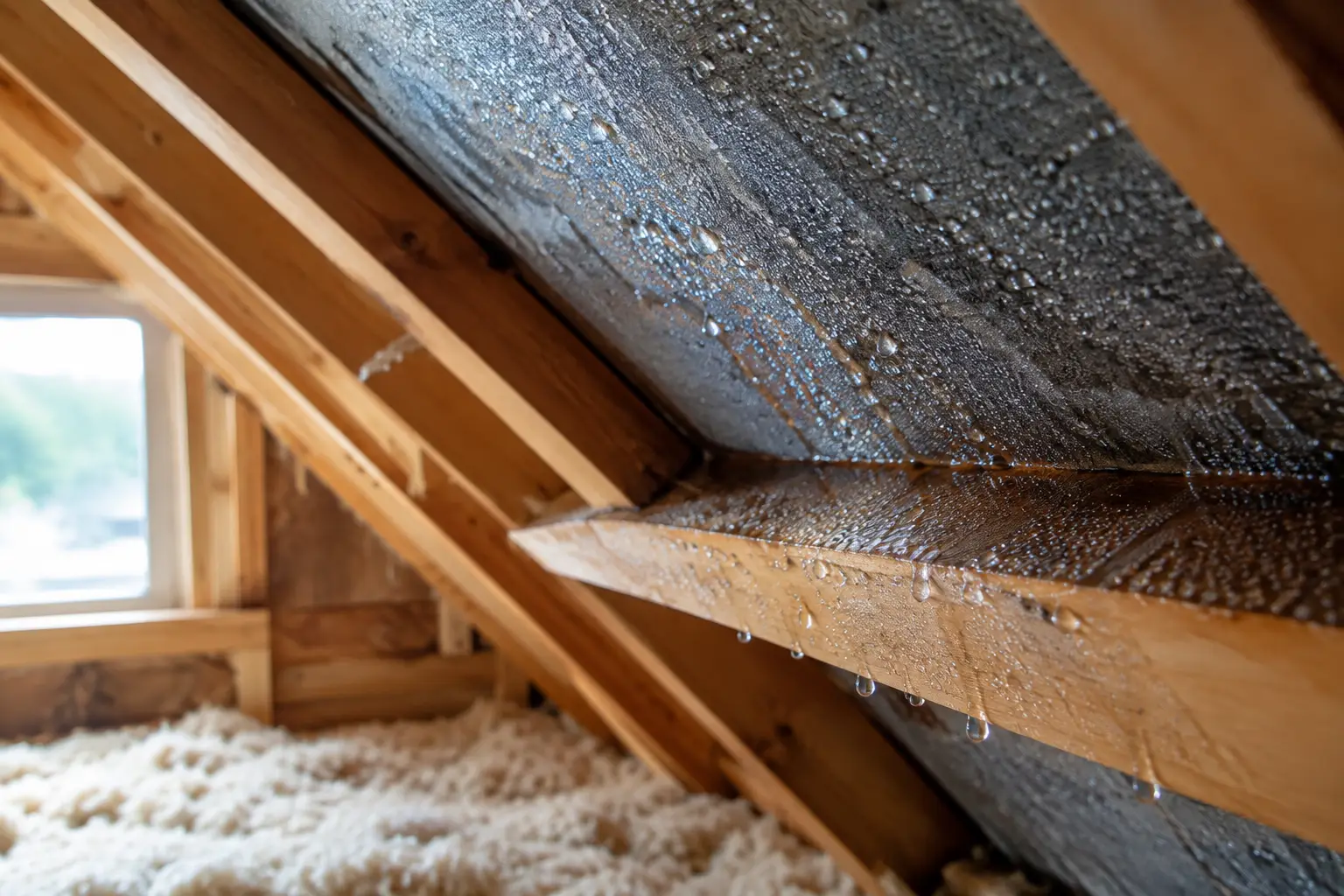
Ice dams are a common concern. When heat escapes into an attic, snow melts on the upper roof and refreezes near colder eaves. Water can then back up beneath slates, especially where flashing or underlayment is already compromised. Improving attic insulation and ventilation can reduce this risk and help protect the roof deck from moisture damage.
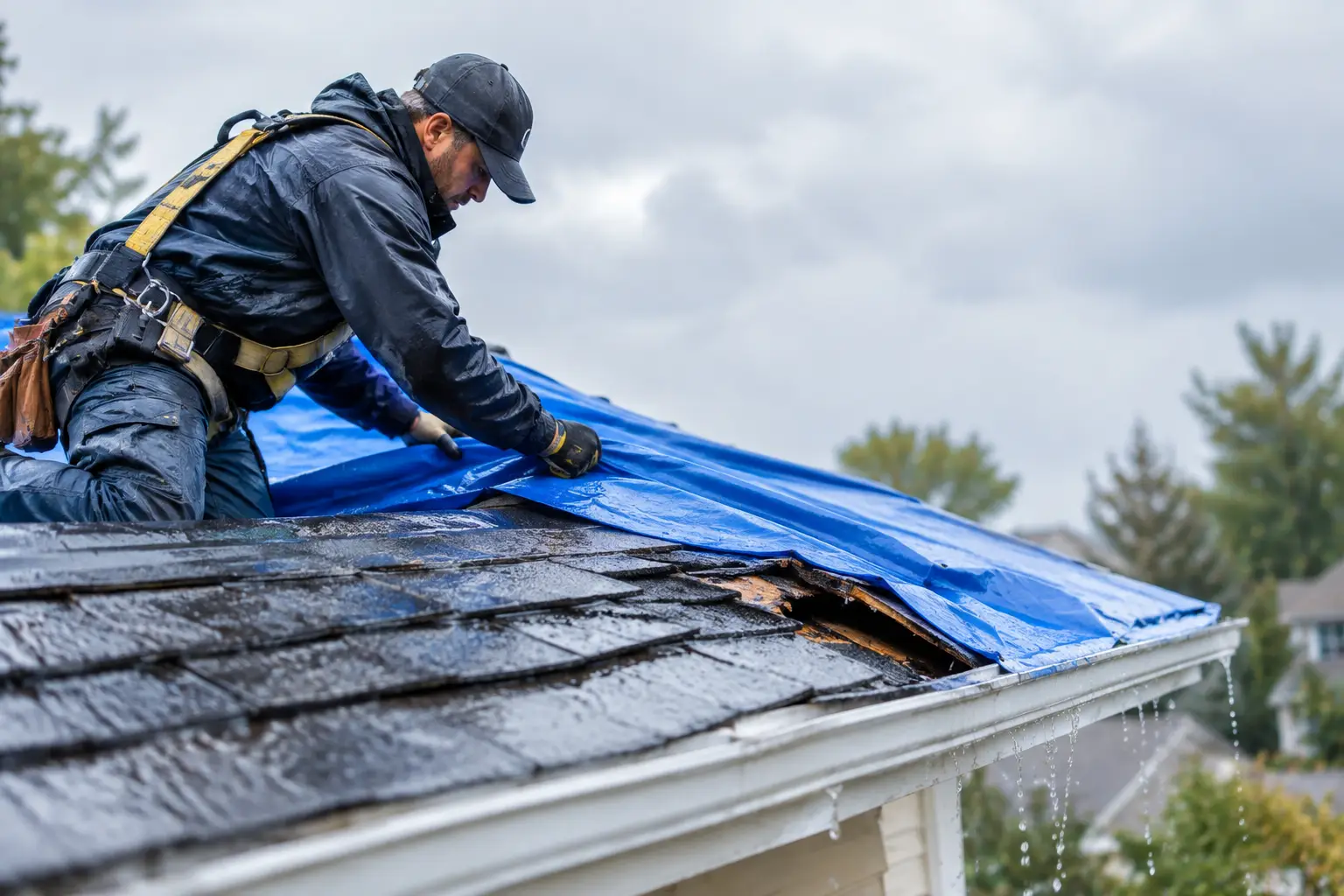
High winds and severe storms may dislodge slates, crack brittle pieces, or damage flashing. Even a small opening can allow water into the underlayment and decking. After a major storm, a professional inspection is a practical way to identify loose or broken slates before a minor issue becomes an interior leak.
Trees should also be managed carefully. Overhanging limbs can scrape slates, drop heavy branches, and keep parts of the roof damp and shaded. Moss and algae are not always a structural problem, but heavy growth can hold moisture and make defects harder to see. A roofing professional can recommend an appropriate cleaning approach without damaging the stone.
Signs a Slate Roof Needs Repair
A slate roof rarely fails all at once. More often, it gives visible and interior warning signs. Catching them early is the most cost-effective way to protect a long-lasting roof.
Watch for cracked, missing, or sliding slates; rusty metal pieces around flashing; loose gutter sections; water stains in an attic or on ceilings; and recurring leaks around chimneys, valleys, skylights, or dormers. Pieces of slate on the ground should also be taken seriously, particularly after a storm.
Some deterioration is less obvious from the ground. Slates can begin to delaminate, meaning thin layers of stone flake or separate. They may sound hollow when assessed by a trained professional, or show surface changes that indicate weathering. Because slate can break under careless weight, homeowners and maintenance crews should not walk on a slate roof unless they have the right experience and equipment.
Repair, Restore, or Replace?
The right approach depends on the condition of the slate and the system beneath it. If most slates remain sound, repair is usually the best answer. A qualified slate roofer can replace broken pieces with matching or compatible slate, secure slipped slates, repair flashings, and address isolated deck damage.
Restoration may be appropriate for older roofs with widespread fastener or flashing problems but serviceable slate. This work can include replacing deteriorated flashings, addressing nail fatigue, repairing valleys, and selectively replacing damaged slates. It is a more involved investment than a simple repair, but it can preserve the original roof and historic character of the property.
Full replacement becomes more likely when the slate itself has reached widespread failure, when delamination affects a large portion of the roof, or when structural and water damage are extensive. Replacement decisions should be based on a thorough inspection, not simply on the roof’s age. A contractor familiar with slate can distinguish a repairable historic roof from one that has exhausted its useful life.
Maintenance That Helps Slate Last Longer
Slate requires less frequent replacement than many roofing materials, but it is not maintenance-free. Periodic professional inspections are especially valuable for aging roofs, homes with mature trees, and buildings near the coast. An inspection can identify damaged slates, failing flashings, blocked drainage, and ventilation concerns before they create larger repair costs.
Keep gutters and downspouts clear so water can move away from the roof edge. Address attic moisture, insufficient ventilation, and insulation gaps that contribute to ice dams. Trim branches away from the roof, and schedule an inspection after significant wind, hail, or falling-tree damage.
It also matters who performs the work. Slate repairs require specialized methods, including proper slate sizing, fastening, and flashing integration. Using mismatched materials or fastening slates incorrectly can shorten the life of a repair and damage neighboring stone.
For homeowners and property managers in Norwalk and throughout Fairfield County, Rick’s Main Roofing can evaluate a slate roof’s condition, identify the source of leaks, and recommend repairs or restoration based on what the roof actually needs. A careful inspection today can help preserve one of your property’s most durable and distinctive features for many years to come.