

A water stain spreading across a ceiling during a heavy Fairfield County storm is not a problem to watch overnight. Water can move far from the point where it entered the roof, saturating insulation, damaging drywall, and reaching electrical systems or structural framing. Emergency roofing is about stopping that chain of damage quickly, then identifying the condition that allowed it to begin.
For homeowners, property managers, and commercial building operators, the right response balances urgency with safety. A temporary protective measure may be necessary after a storm, but it should lead to a thorough roof evaluation and a lasting repair – not simply cover up a problem until the next rainfall.
When Emergency Roofing Is Necessary
Not every missing shingle requires an after-hours response. A small issue in dry weather can often be scheduled for a standard repair visit. The situation changes when the roof can no longer keep water out, loose materials pose a hazard, or storm damage exposes the building to further loss.
Active interior leaking is the clearest sign to call for emergency roofing service. Water dripping from a ceiling, running down walls, or collecting near outlets needs prompt attention. The same is true when wind has removed shingles, ridge caps, flashing, siding transitions, or sections of a flat roofing membrane.
On commercial properties, ponding water around roof drains, open seams in a low-slope system, or damage around rooftop equipment can interrupt operations quickly. A leak over inventory, offices, electrical rooms, or tenant spaces requires a response that protects both the building and the people using it.
Connecticut weather creates several familiar risks. Wind-driven rain can force water beneath compromised shingles. Heavy snow and repeated freeze-thaw cycles can contribute to ice dams along eaves. Coastal homes and buildings may face additional wind exposure and salt-air wear. These conditions do not always cause obvious damage from the ground, which is why a professional inspection matters after severe weather.
What to Do Before the Roofing Crew Arrives
The first priority is protecting people and limiting interior damage. Do not climb onto a wet, icy, or storm-damaged roof. Even an experienced property owner cannot reliably see weakened decking, unstable materials, or power-line hazards from above.
Take these practical steps while waiting for help:
- Move furniture, electronics, inventory, and other valuables away from the affected area.
- Place containers under active drips and use towels to control small amounts of water on finished floors.
- If a ceiling is visibly bulging with trapped water, keep people away from the area and contact a roofing professional promptly.
- Photograph interior damage, visible exterior damage, and any water intrusion for your records and insurance claim.
If water is near wiring, lighting fixtures, electrical panels, or equipment, treat it as an electrical safety concern. Avoid handling fixtures or standing in pooled water. A roofing contractor can address the source of the intrusion, while an electrician may be needed if the electrical system has been affected.
It is also helpful to note when the leak began and what weather conditions were occurring. Did it start during wind-driven rain? Does it appear only after snow melts? Does water enter near a chimney, skylight, vent pipe, roof valley, or wall transition? Those details can help narrow the investigation, but they should not replace a complete inspection.
A Temporary Repair Is Not Always the Final Repair
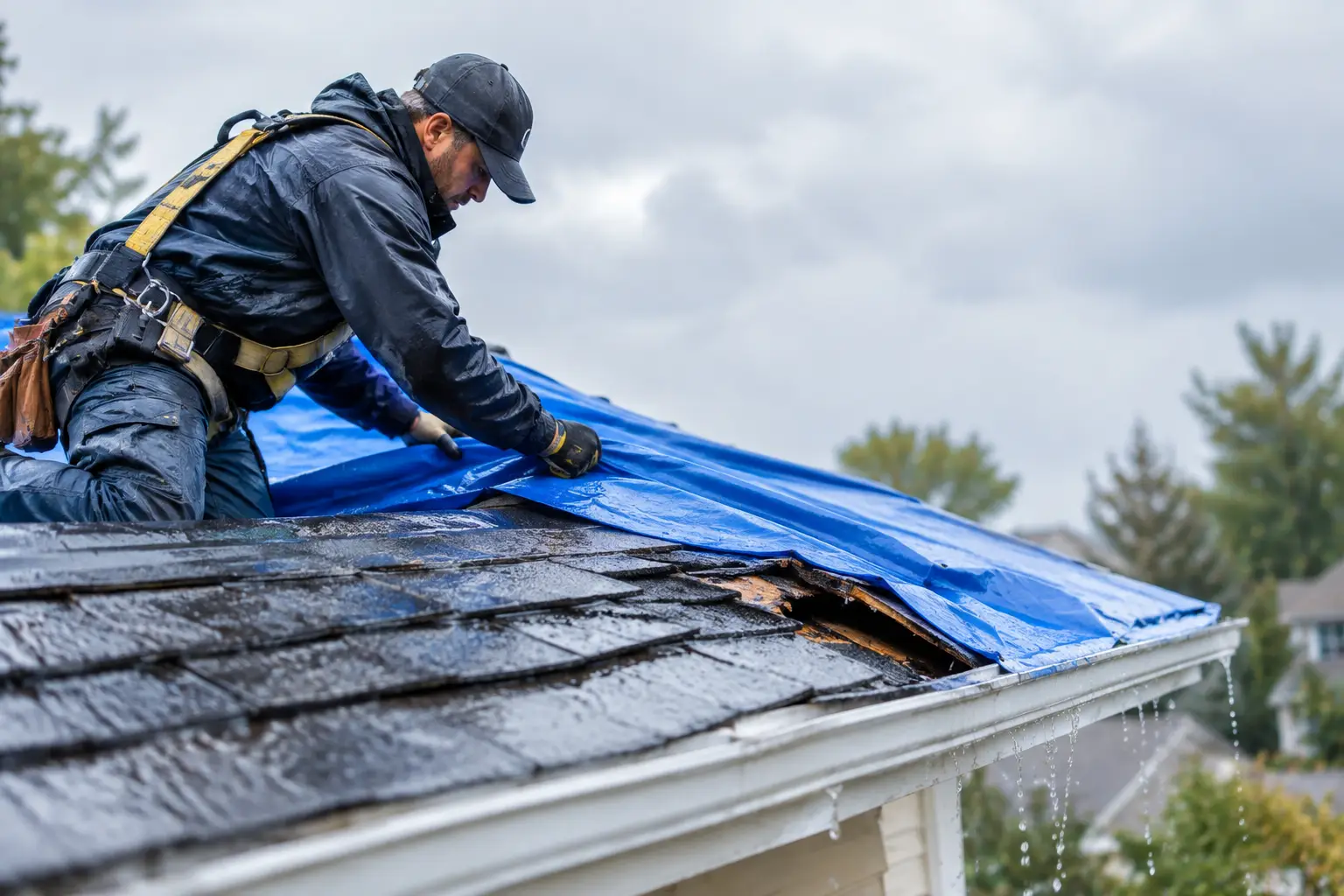
An emergency visit often begins with stabilizing the immediate problem. Depending on the roof type and weather conditions, this may involve securing loose materials, applying a temporary patch, protecting an exposed opening, or installing an emergency tarp. The goal is to reduce water entry safely until permanent work can be completed.
That temporary step is valuable, but it has limits. A tarp cannot correct failed flashing, worn shingles, deteriorated underlayment, split membrane seams, improper drainage, or ventilation issues. It may also be impossible to perform a permanent repair during active storms, freezing conditions, or when materials need time to dry.
After the roof is stabilized, the next step should be a clear assessment of the underlying damage. A dependable contractor will explain whether the issue is isolated to a repair area or whether broader deterioration affects the roof system. That distinction protects property owners from paying for a repeated patch when replacement or more extensive restoration is the more sensible long-term choice.
Finding the Source Takes More Than Looking at the Leak
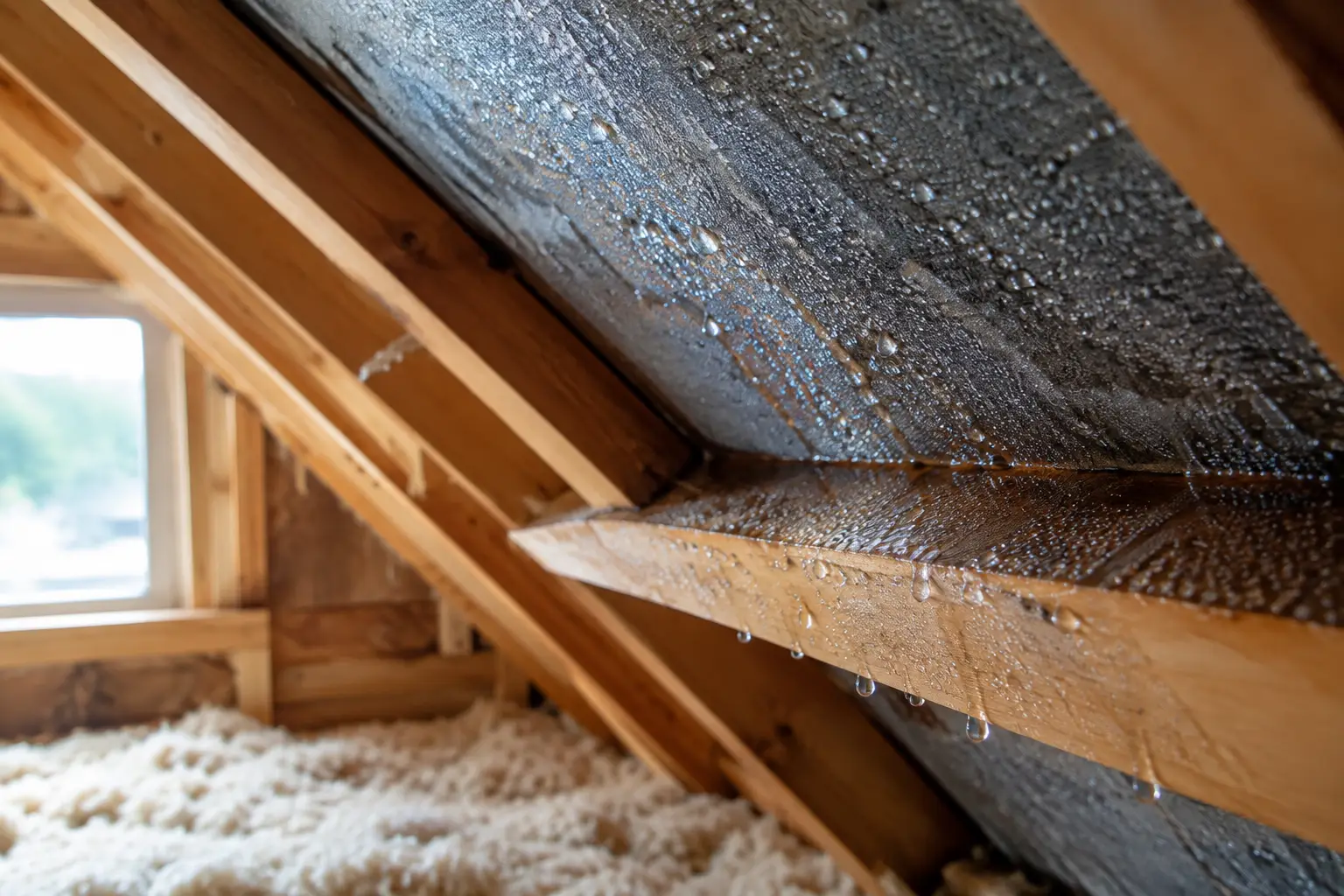
The location of water inside a building is not always where the roof is failing. Water can travel along roof decking, rafters, insulation, pipes, and wall framing before it becomes visible. A stain in the center of a room may originate at a roof penetration several feet away.
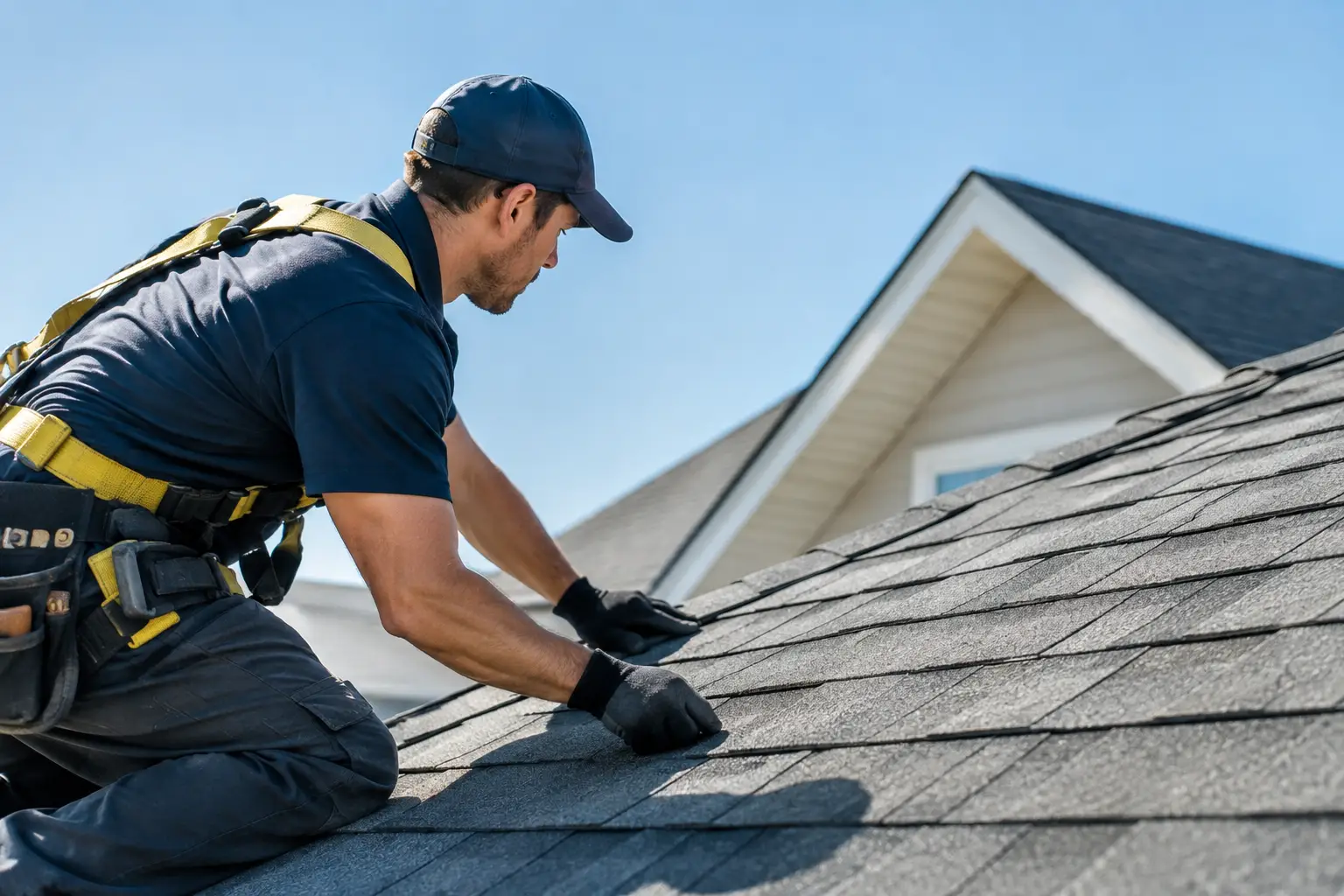
Professional diagnosis considers the roofing material, roof slope, drainage paths, flashing details, penetrations, attic conditions, and evidence of previous repairs. On asphalt roofs, investigators may look for lifted shingles, exposed fasteners, failed pipe boots, or compromised valleys. On slate, cedar, metal, rubber, and other specialty systems, the likely failure points and proper repair methods differ significantly.
Ventilation also deserves attention. Excess heat and moisture in an attic can shorten shingle life, encourage condensation, and contribute to winter ice dam problems. A repair that stops a leak but ignores inadequate intake or exhaust ventilation may not fully protect the roof over time.
Residential and Commercial Emergencies Need Different Planning
A residential emergency typically centers on protecting living spaces and preventing damage to finishes, belongings, and framing. The repair plan should preserve the appearance and performance of the roof, particularly on historic homes, premium properties, and coastal residences where material selection and detail work matter.
Commercial roofing emergencies add operational considerations. Building owners and managers may need to protect tenants, secure work areas, coordinate around business hours, document conditions for ownership groups, and avoid disruption to critical equipment. Low-slope roofs can also have more complex drainage and membrane details than a typical residential roof.
In either case, the contractor should provide straightforward communication about the immediate repair, what remains temporary, and what should happen next. Property owners should not be left guessing whether the roof is protected for the next storm or whether additional work is required.
How Ongoing Maintenance Reduces Emergency Calls
Some roof emergencies are unavoidable. A fallen tree limb or a severe wind event can damage even a well-maintained roof. Many leaks, however, begin as smaller conditions that routine inspections could identify before they reach the interior.
Regular maintenance can uncover cracked sealant, loose flashing, worn pipe boots, clogged drains, open seams, damaged shingles, and debris buildup in valleys or gutters. For commercial properties, planned inspections help document roof conditions and support better budgeting for repairs or replacement.
Seasonal attention is especially useful in Connecticut. Before winter, a roof should be checked for drainage issues, vulnerable flashings, and areas where snow and ice may accumulate. After major storms, a prompt inspection can catch wind damage before the next period of rain turns it into a leak.
Rick’s Main Roofing provides 24/7 emergency response for residential and commercial properties in Norwalk, Fairfield County, and nearby communities, with experience across asphalt, cedar, slate, rubber, and metal roofing systems. The right repair begins with understanding the entire roof assembly, not just the visible symptom.
When a roof is actively leaking, fast action protects the building. When the immediate danger has passed, a careful inspection and properly matched repair protect the investment behind it.