

A leak over a retail floor, office suite, warehouse aisle, or multifamily corridor is rarely just a roofing problem. It can interrupt operations, damage inventory, create safety concerns, and force property managers to make costly decisions under pressure. Effective commercial roofing starts well before water reaches the ceiling. It requires a system suited to the building, local weather exposure, drainage layout, and the way the property is used every day.
For commercial property owners in Norwalk and throughout Fairfield County, the right approach is not simply choosing a material or waiting for a visible failure. It is understanding the roof as a working building system that needs regular attention, prompt repairs, and a clear replacement plan when repairs no longer make financial sense.
What Makes Commercial Roofing Different
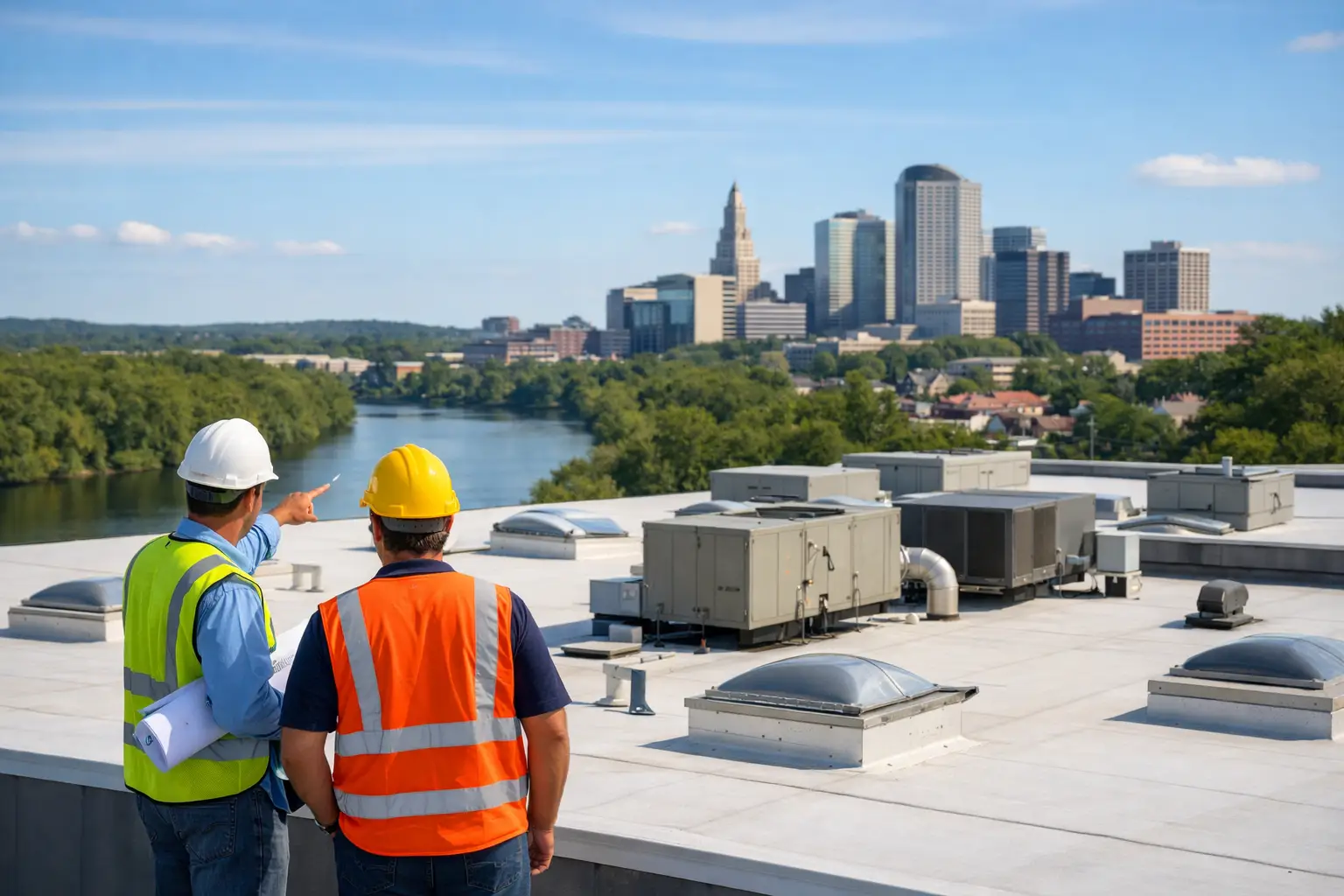
Commercial roofs are often larger, lower in slope, and more complex than residential roofs. They may include rooftop HVAC equipment, drains, parapet walls, skylights, vents, solar equipment, rooftop access points, and areas where several roofing materials meet. Every penetration and transition is a potential point for water intrusion if it is not installed and maintained correctly.
The stakes are also different. A residential roof protects one household. A commercial roof may protect tenants, employees, customers, equipment, inventory, sensitive records, or a building with continuous operations. That is why a repair or replacement should be planned around both roofing performance and business continuity.
Connecticut weather adds another layer of consideration. Freeze-thaw cycles can stress seams and flashing. Heavy rain exposes drainage problems. Wind-driven coastal weather can challenge perimeter details and edge metal. Snow and ice can create ponding, blocked drains, and water backup. A roofing system that performs well on paper still needs to be detailed for the conditions it will face in Fairfield County.
Choosing the Right Commercial Roofing System
There is no single best roofing material for every commercial building. The best fit depends on roof slope, existing construction, drainage, foot traffic, budget, energy goals, expected service life, and whether the building must remain fully operational during the project.
Single-Ply Membranes
Rubber and other single-ply membrane systems are common choices for low-slope commercial properties. These systems can provide reliable coverage across broad roof areas and are often practical for buildings with large, relatively flat roof decks. Their performance depends heavily on seam work, flashing details, insulation design, and proper drainage.
A membrane roof may be a strong choice for an office building, retail center, or industrial facility, but it should not be selected on price alone. A lower initial cost can lose its advantage if poor drainage, inadequate insulation, or frequent rooftop traffic shortens the system’s service life.
Metal Roofing
Metal roofing is often selected for durability, long-term value, and architectural appearance. It can be especially effective on commercial buildings with sloped roof sections, visible facades, or a need for strong wind resistance. Properly designed metal systems can also help manage snow shedding, although snow retention and public safety should be considered where entrances, sidewalks, or loading zones sit below roof edges.
Metal is not automatically maintenance-free. Fasteners, seams, flashings, sealants, and penetrations still need periodic inspection. Expansion and contraction are normal, particularly through Connecticut’s seasonal temperature swings, so detailing must allow the system to move as intended.
Asphalt, Slate, and Cedar for Specialized Properties
Some commercial properties do not look like conventional commercial buildings. Historic buildings, places of worship, professional offices in converted homes, and upscale mixed-use properties may require asphalt shingles, slate, cedar, or copper detailing to preserve appearance and meet project requirements.
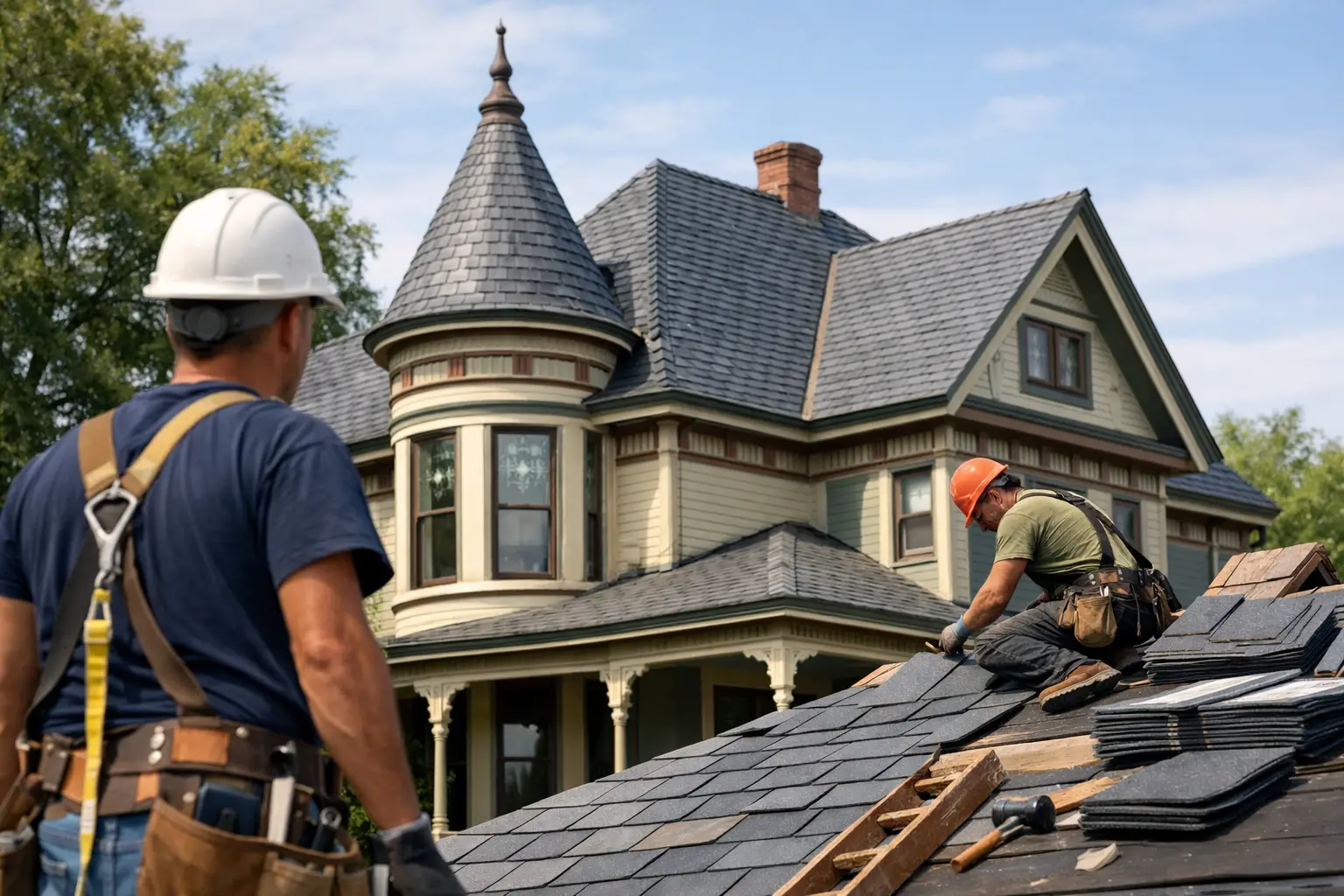
These systems demand material-specific knowledge. A historic slate roof, for example, may be repairable long after other materials would require full replacement. The work must be approached carefully to protect surrounding slate, flashing, and original architectural features. Cedar requires attention to ventilation, moisture management, and local exposure. In these cases, craftsmanship matters as much as the material itself.
Warning Signs That Need a Professional Inspection
Commercial roof damage often begins quietly. By the time a ceiling stain appears, water may have traveled through insulation, along framing, or beneath the membrane from a source several feet away. Property managers should act promptly when they notice signs such as:
- Water stains, dripping ceilings, damp insulation, or musty odors inside the building
- Ponding water that remains more than 48 hours after rainfall
- Cracked sealant, open seams, loose flashing, or damaged edge metal
- Blisters, splits, punctures, or areas of membrane wear near rooftop equipment
- Clogged drains, damaged scuppers, or recurring ice buildup around drainage points
- Higher energy costs that may indicate wet insulation or declining roof performance
Not every issue means the entire roof must be replaced. A localized puncture, failed pipe boot, open seam, or deteriorated flashing detail may be repairable when addressed early. The problem is that temporary patching without identifying the underlying cause can create a cycle of repeat leaks and rising maintenance costs.
A professional inspection should determine where water entered, whether moisture has spread beneath the surface, and whether the current roof still has enough useful life to justify repair. That assessment gives owners a more reliable basis for budgeting.
Commercial Roofing Maintenance Protects the Budget
Maintenance is one of the most practical ways to extend the life of a commercial roof. It is not a substitute for replacement when a system has reached the end of its service life, but it can help prevent avoidable damage and reveal small issues before they affect operations.
For many properties, inspections in the spring and fall are sensible, along with additional checks after severe storms, high winds, heavy snow, or work performed by other trades on the roof. HVAC service crews, electricians, satellite installers, and maintenance personnel can unintentionally damage a membrane or disturb flashing while accessing equipment.
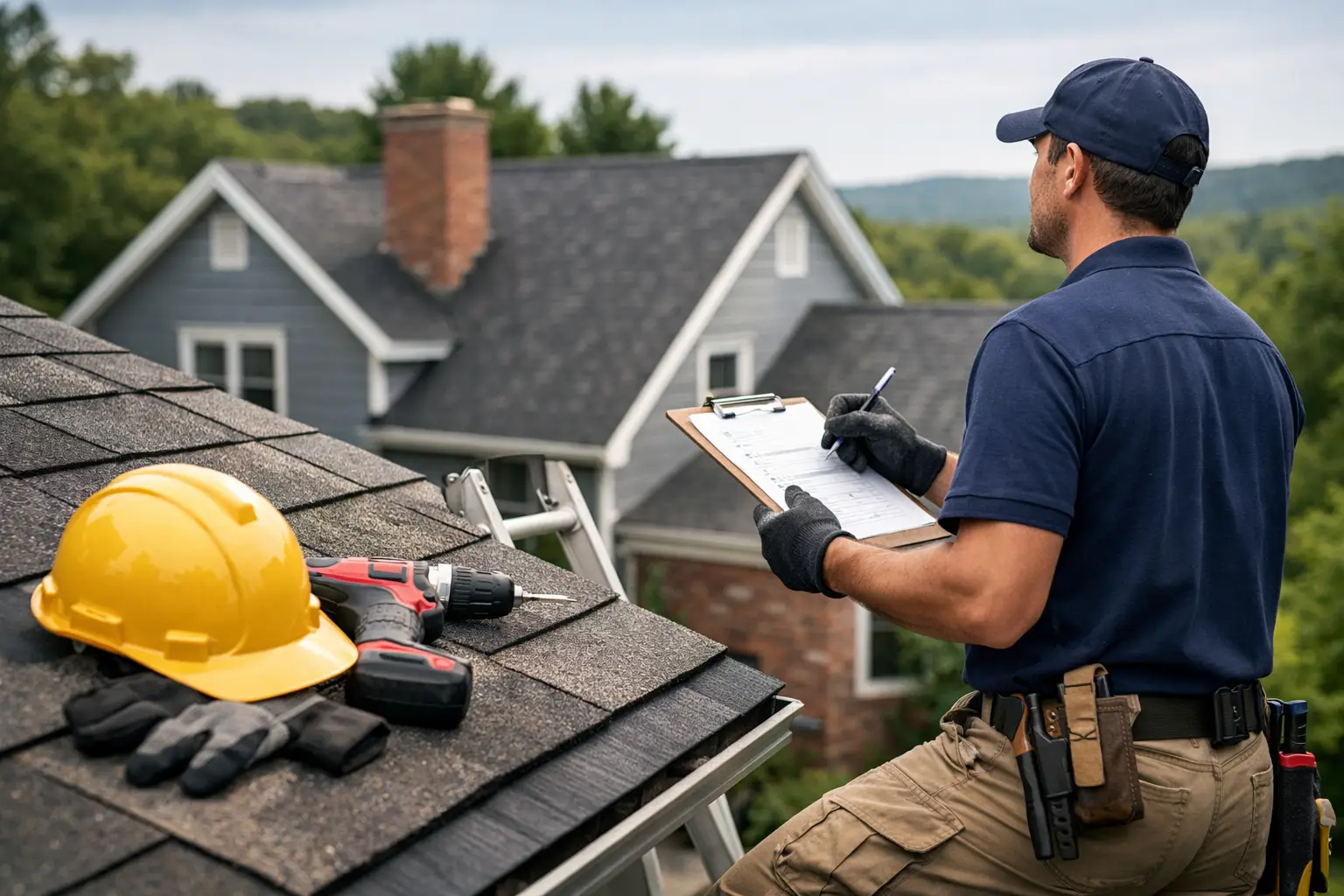
During a maintenance visit, a qualified roofing contractor should review drainage components, seams, flashings, penetrations, edge details, rooftop curbs, and visible surface conditions. The roof should also be checked for debris that blocks drains and for signs of standing water. Documentation matters. Photos and written findings help property owners track roof condition, plan expenditures, and communicate clearly with boards, tenants, or ownership groups.
Maintenance plans work best when they are specific to the building. A busy restaurant with grease exhaust equipment, for example, has different roof conditions than a warehouse with frequent HVAC access. A coastal property may need closer attention after wind events, while an older building with internal drains may require more frequent cleaning and drainage checks.
Repair or Replacement: Making the Right Call
The repair-versus-replacement decision should be based on condition, not just age. A roof may be relatively old but still serviceable if it has been maintained, drains well, and has isolated repair needs. On the other hand, a younger roof with widespread seam failures, saturated insulation, poor installation details, or chronic ponding may no longer be a sound candidate for repeated repairs.
Replacement becomes more likely when leaks are recurring across multiple areas, repairs are becoming frequent, insulation is wet, membrane deterioration is widespread, or the roof no longer meets the building’s operational needs. If a facility is being renovated, adding rooftop equipment, or changing occupancy, the roofing system may also need to be upgraded to support those changes.
Owners should evaluate more than the immediate project price. Consider projected repair costs over the next several years, anticipated energy performance, disruption to tenants or operations, warranty options, and the condition of underlying components. In some cases, a restoration coating may extend the service life of an appropriate roof. In others, a full tear-off is necessary to remove damaged materials and correct concealed issues. The right answer depends on a thorough evaluation of the existing system.
Planning a Commercial Roof Project With Less Disruption
A well-managed commercial roofing project begins with planning. The contractor should understand access routes, tenant schedules, loading areas, parking, security procedures, rooftop equipment, and any hours when noise or odors must be limited. For healthcare, hospitality, education, food service, and occupied multifamily properties, coordination is especially critical.
Before work begins, owners should expect a clear scope of work that identifies the roofing system, insulation, flashing, drainage improvements, demolition requirements, and protection measures for the property. Communication should continue through the project, particularly if hidden deck damage or moisture conditions are discovered after the existing roof is opened.
Rick’s Main Roofing brings local experience, manufacturer-recognized commercial expertise, and responsive service to projects throughout Norwalk and Fairfield County. Whether the need is a targeted repair, scheduled maintenance, emergency response, or a full replacement, the goal should be the same: protect the building with workmanship that holds up under real Connecticut weather.
A commercial roof does its best work quietly. Give it regular attention before the next storm, and it can protect your property, operations, and budget when conditions are at their hardest.