

A ceiling stain after a hard Norwalk rain can make one question feel urgent: do you need a patch, or is the roof due for a real repair? In the discussion of roof repair versus patching, the right answer depends on more than the visible leak. The source of the water, the condition of surrounding materials, the roof’s age, and Connecticut’s demanding weather all matter.
A patch can be the right, cost-effective solution for a contained problem. But if water has traveled beneath shingles, entered insulation, damaged decking, or exposed a broader installation issue, a small surface fix may only delay a more expensive repair. A professional inspection separates a manageable defect from a developing roofing failure.
Roof Repair Versus Patching: The Key Difference
In everyday conversation, people often use “patch” and “repair” interchangeably. In roofing, there is a useful distinction.
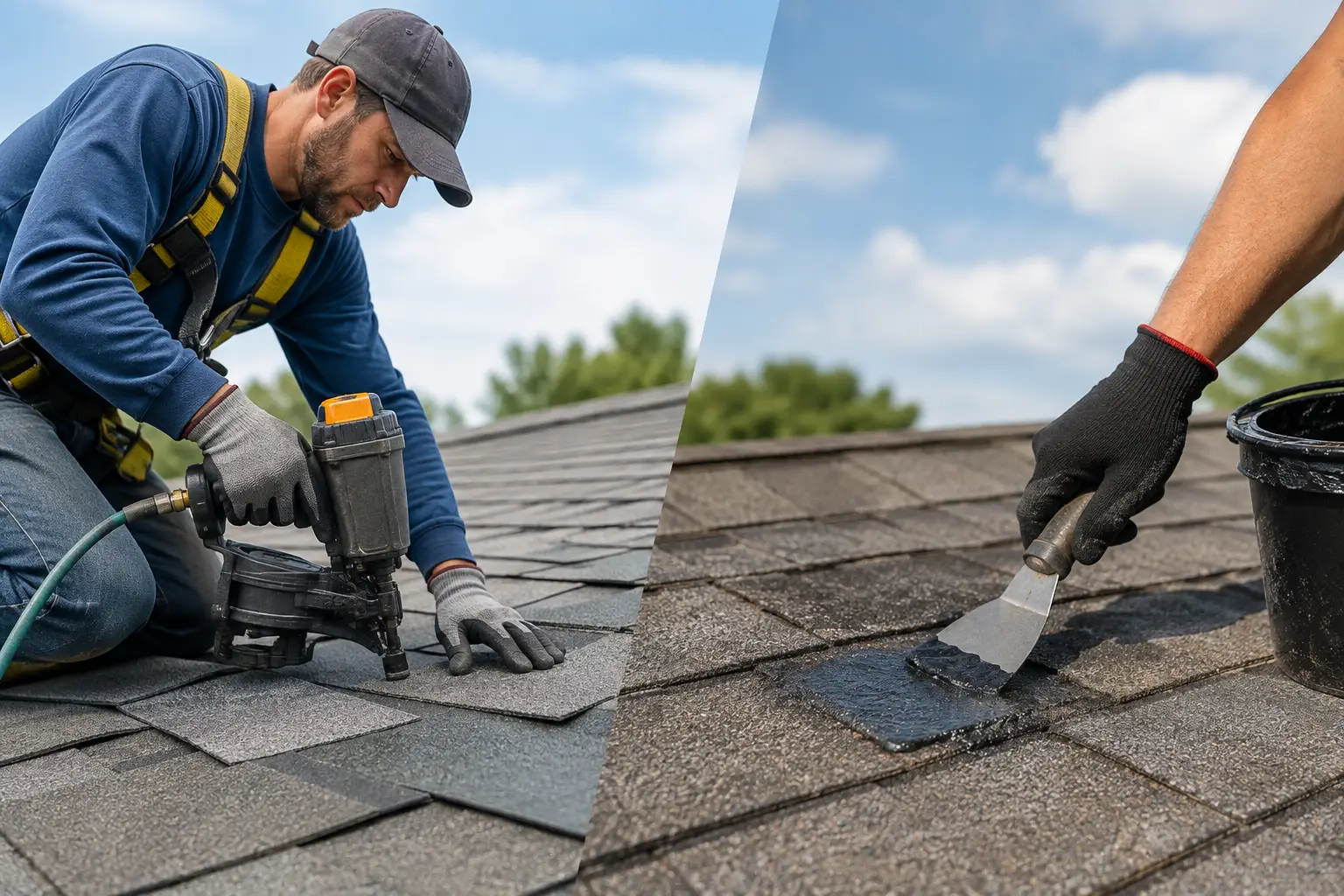
Patching generally means addressing a small, specific opening or damaged area. Examples include replacing a few wind-lifted shingles, sealing a puncture in a low-slope membrane, or correcting a minor opening around a vent. It is focused work, usually limited to one clearly identified location.
Roof repair is broader. It may still be localized, but it involves diagnosing and correcting the underlying cause of the issue. That could mean replacing deteriorated flashing, repairing a section of wet roof decking, rebuilding a troublesome pipe penetration, correcting damaged underlayment, or addressing an ice-dam-related leak at the eaves.
The distinction is not about making a job larger than necessary. It is about making sure the work will hold up after the next heavy rain, freeze-thaw cycle, coastal wind event, or winter snow load.
When a Patch Is Usually the Right Choice
A targeted patch is often appropriate when the roof is otherwise in good condition and the damage is genuinely isolated. A newer asphalt shingle roof with one missing shingle after a storm, for example, may need only matching replacement shingles and a careful check of the surrounding area.
Patching can also make sense after a single puncture from a fallen branch or when a small section of flashing has been damaged. On commercial flat or low-slope systems, a properly prepared membrane patch can provide a durable repair when the surrounding roofing system remains sound.
The best candidates for patching tend to have three things in common: a known and limited source of damage, dry and stable materials around the damaged area, and enough remaining roof life to justify the work. A quality patch is not simply caulk applied over a suspected leak. It requires compatible materials, proper surface preparation, secure fastening where needed, and a watertight integration with the existing roof.
There is also a practical timing advantage. If a sudden leak occurs during severe weather, an emergency temporary patch or tarp can protect the building until permanent repairs can be completed safely. That temporary measure is valuable, but it should not be mistaken for a long-term solution without an inspection.
Signs You Need More Than Patching
A leak is not always directly above the water stain. Water can run along roof decking, framing, or insulation before it reaches a ceiling. This is one reason a visible stain alone is not enough to determine the scope of work.
More extensive repair is often warranted when shingles are cracked, curled, brittle, or losing granules across multiple areas. The same is true when flashing has corroded or separated around chimneys, skylights, dormers, walls, or plumbing vents. These areas are among the most common points of water entry because they depend on precise installation, not just roofing material condition.
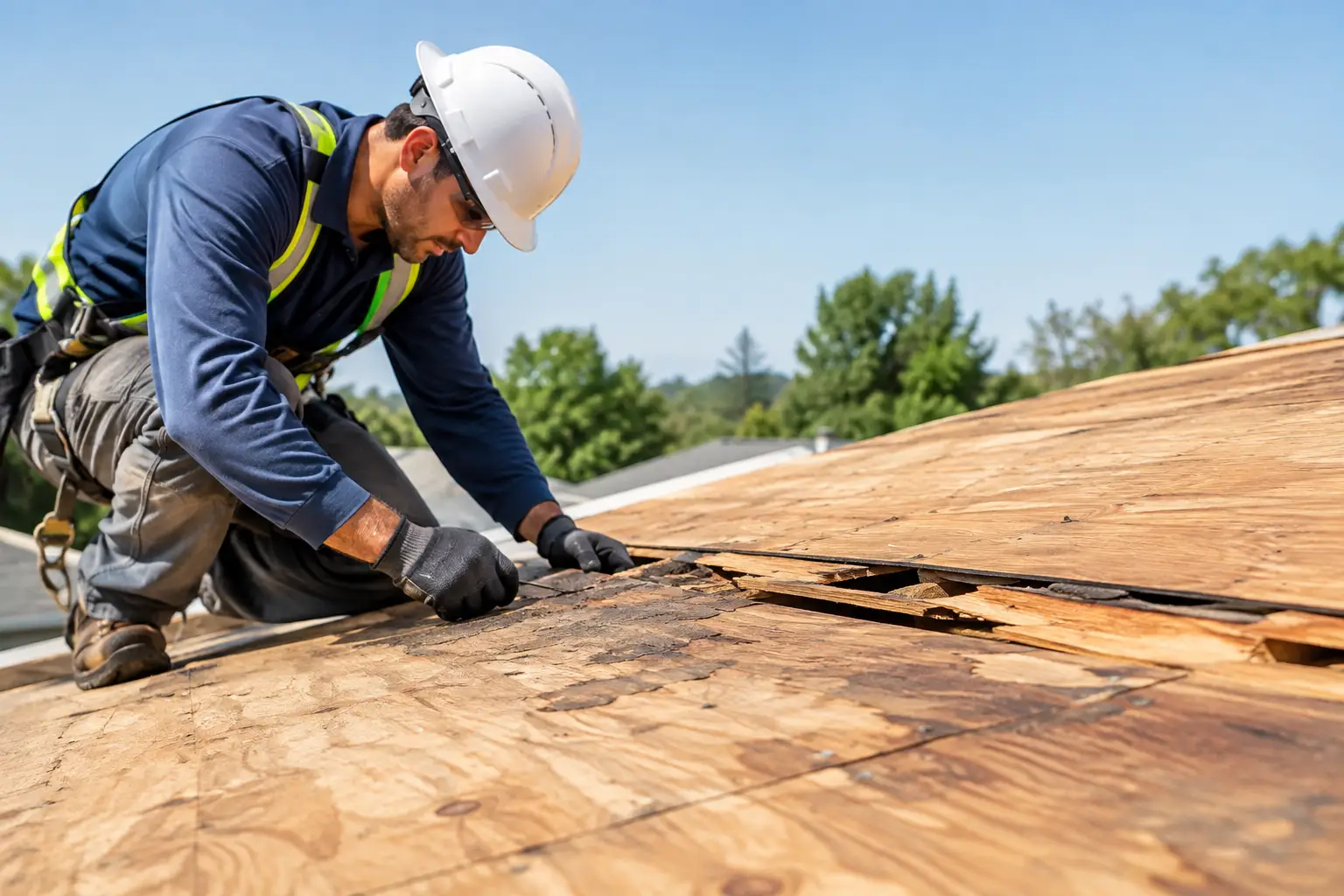
Soft spots in the roof surface, sagging areas, recurring interior leaks, or signs of moisture in an attic should be taken seriously. Wet decking can weaken the roof structure and may continue deteriorating even after a surface hole is covered. Moldy insulation, rusted nails, and dark staining on attic sheathing can point to a longer-running moisture issue or a ventilation problem that needs attention alongside the roof repair.
Repeated patches in the same general area are another warning sign. Multiple repairs do not automatically mean a full replacement is needed, especially on a large commercial roof. However, they do mean the roof should be evaluated as a system. The original leak source may be elsewhere, or the roofing material may be nearing the end of its serviceable life.
Connecticut Weather Changes the Decision
Fairfield County roofs face conditions that can turn minor weaknesses into larger failures. Winter ice dams are a common example. When heat escapes into the attic and melts snow unevenly, water can refreeze near the roof edge and back up under shingles. A patch at the leak point may help, but lasting protection can require attention to underlayment, ventilation, insulation, and the condition of the eaves.
Wind-driven rain is another concern, particularly for coastal and exposed properties. Rain can be forced under loose shingles, ridge caps, flashing edges, and siding-to-roof transitions that might not leak during a gentle shower. Storm damage may look limited from the ground while affecting a wider section of the roof.
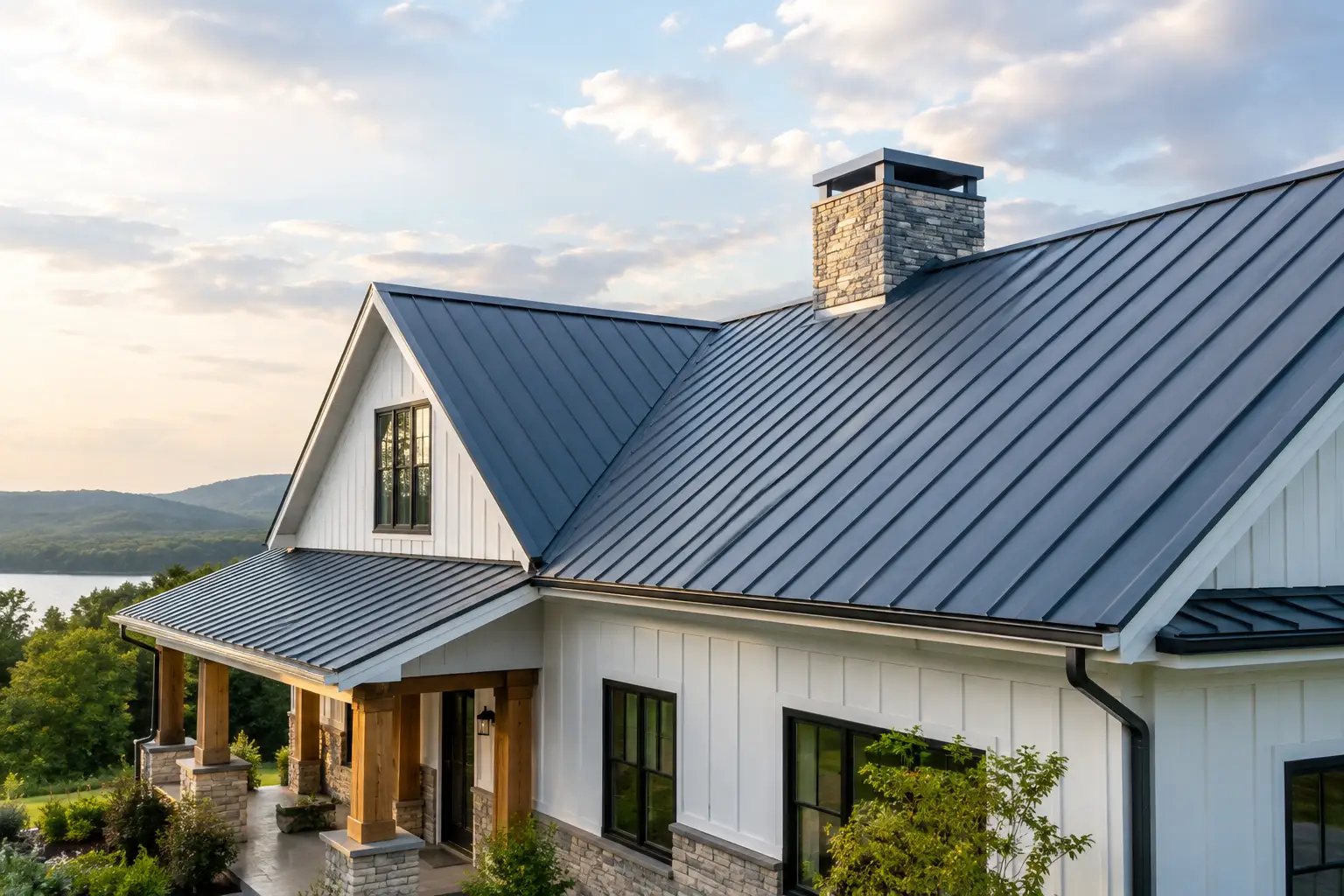
Freeze-thaw cycles also put stress on sealants, flashings, and masonry connections. On older homes, including historic properties with slate or cedar roofing, material-specific knowledge matters. A repair that works on a standard asphalt roof may be inappropriate for slate, where improper fastening or foot traffic can crack surrounding tiles. Metal, rubber, cedar, and slate systems each require the correct repair method and compatible materials.
Consider the Age and Condition of the Roof
The age of a roof should inform the decision, but age alone does not decide it. A well-maintained roof may have many years left, while a younger roof with poor ventilation, storm damage, or installation defects can need significant work.
If the roof is in the first half of its expected service life and the problem is confined, repair is often the sensible investment. If it is near the end of its useful life and has widespread wear, investing repeatedly in patches can become inefficient. The homeowner or property manager may spend money addressing symptoms while the underlying roofing system continues to decline.
Matching is another consideration. New asphalt shingles may not perfectly match faded existing shingles, and older material lines may be discontinued. On a highly visible roof, a larger repair area may produce a better appearance than a small patch with an obvious color difference. For premium and historic homes, that visual outcome deserves careful consideration alongside weather protection.
What a Proper Roofing Inspection Should Evaluate
Before recommending patching, repair, or replacement, a roofing professional should inspect the full context of the issue. That means checking the roof surface, flashings, penetrations, drainage paths, attic conditions when accessible, and the interior evidence of water intrusion.
For commercial buildings, the evaluation may also include seams, drains, coping, edge metal, ponding water, rooftop equipment curbs, and areas affected by foot traffic. The goal is to determine whether the leak is isolated or part of a broader performance concern.
A dependable contractor should explain what was found in plain language. You should understand where water is entering, what materials are damaged, whether the repair is expected to be temporary or long-lasting, and what warning signs to watch for afterward. A low initial price is not a value if it leaves compromised materials in place or fails to address the actual source of the leak.
Make the Decision Before Damage Spreads
Waiting can turn a small repair into damaged drywall, insulation replacement, wood rot, or business disruption. If water is actively entering the building, protect the interior if it is safe to do so and arrange prompt professional service. Avoid climbing onto a wet or storm-damaged roof yourself.
For property owners in Norwalk and throughout Fairfield County, Rick’s Main Roofing can assess the condition of the roof, identify the source of the problem, and recommend work that fits the building rather than a one-size-fits-all answer. Sometimes that means a careful patch. Sometimes it means a more complete repair that prevents the same leak from returning.
The most useful next step is not choosing the smallest fix or the largest project. It is getting a clear diagnosis while the damage is still manageable, then choosing the repair that protects the roof, the structure beneath it, and the people who rely on the building.