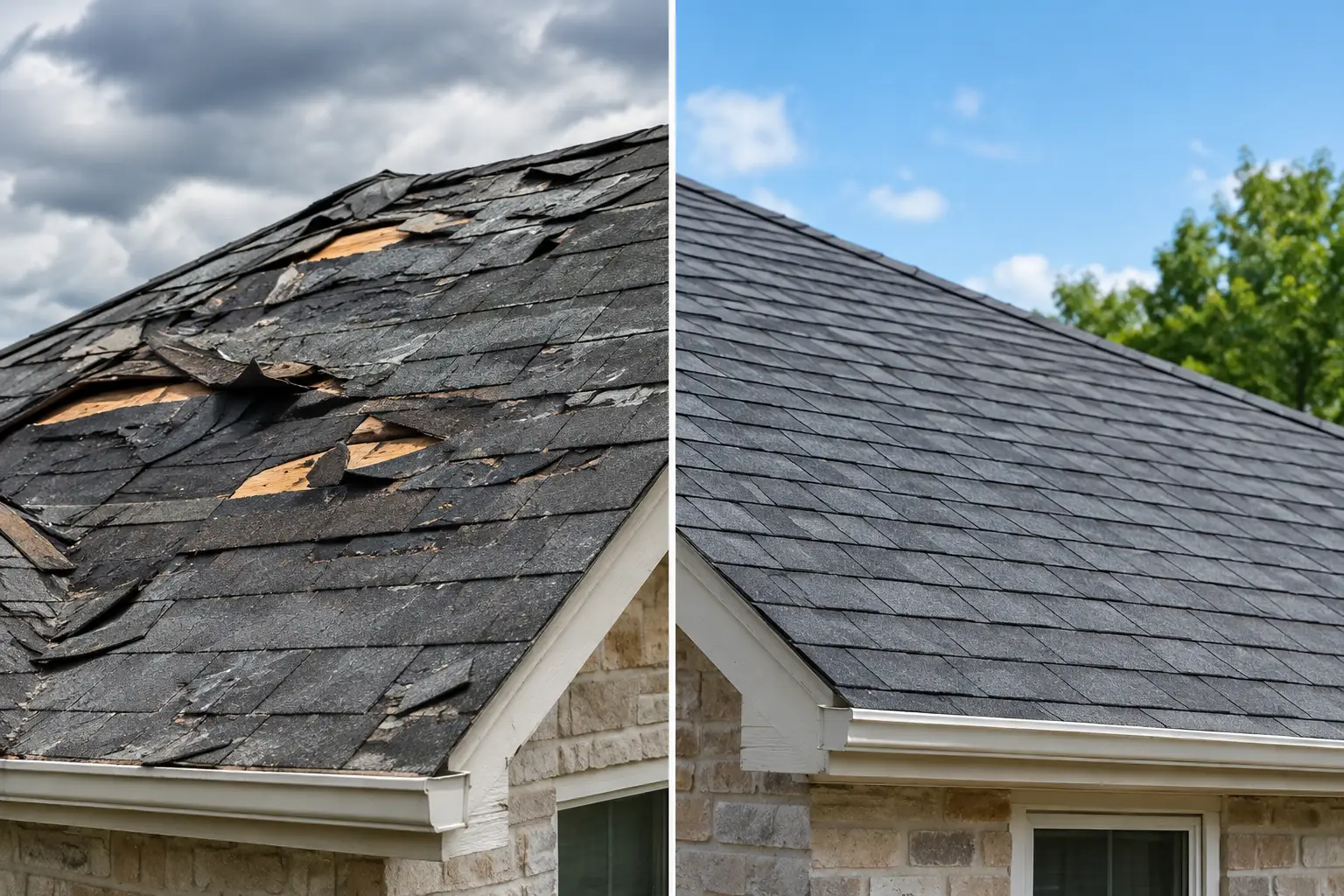


A storm damaged roof before after comparison can be more revealing than a few missing shingles in a photo. The visible damage may show where wind or falling branches struck, but the condition beneath the surface often determines whether a property needs a targeted repair, emergency stabilization, or full replacement. For homeowners and property managers in Fairfield County, a careful inspection after severe weather is the difference between addressing a problem promptly and discovering a leak after it has reached insulation, ceilings, or interior finishes.
What a Storm Damaged Roof Looks Like Before Repairs
Storm damage is not always dramatic. A roof can appear mostly intact from the ground while sustaining damage that compromises its ability to shed water. High winds can lift shingle edges, break seal strips, loosen flashing, or expose fasteners. Hail can bruise asphalt shingles, crack slate, dent metal panels, and shorten the useful life of materials without creating an immediate opening.
On Connecticut homes, heavy rain and wind-driven rain frequently expose weak points around chimneys, skylights, valleys, wall flashing, vent pipes, and roof-to-wall transitions. On low-slope commercial roofs, pooled water, punctured membranes, and damaged drains deserve close attention. A fallen limb can also create damage that is obvious at first glance, from broken decking to a temporary opening that requires immediate protection.
The “before” condition should be documented thoroughly. Clear photos of every affected roof slope, damaged components, interior staining, and debris can help establish what happened and guide repair decisions. Documentation may also be useful when speaking with an insurance carrier, although coverage and claim requirements depend on the policy and the cause of loss.
Damage that may not be visible from the ground
Not every problem is safe or possible to identify from a driveway. A trained roofing professional looks for lifted tabs, fractured shingle mats, granule loss, displaced ridge caps, damaged drip edges, and compromised flashing. They also assess whether water has entered beneath the roofing material.
In the attic, warning signs can include damp sheathing, water trails, mold growth, wet insulation, or daylight visible through the roof deck. These conditions do not automatically mean a complete replacement is required. They do mean the source needs to be identified before a small problem becomes a more expensive structural or interior repair.
Storm Damaged Roof Before After: What Changes in a Proper Repair
A good repair does more than make a roof look whole again. The goal is to restore the roof system’s ability to manage water, wind, ventilation, and material movement. The “after” result should show correctly integrated materials, not simply new shingles placed over a damaged area.
For an asphalt shingle roof, that may involve replacing damaged shingles, underlayment, flashing, and roof decking where necessary. New materials must be properly woven into the existing roof so water flows over, rather than behind, each layer. Color matching can be a consideration, especially on older roofs where weathering has changed the appearance of surrounding shingles. A close match may be possible, but an exact match is not always available.
On cedar, slate, metal, rubber, and other specialized systems, repair methods vary considerably. Historic slate roofs need careful handling to avoid damaging adjacent pieces. Cedar repairs must account for spacing and natural movement. Metal roofing requires attention to panel fasteners, seams, sealants, and flashing details. Commercial roofing repairs may involve membrane patches, insulation replacement, edge metal, or drainage corrections.
The strongest visual proof after repairs is not just a clean roof surface. It is straight, secure material alignment; properly sealed penetrations; intact flashing transitions; and no evidence of active water entry inside the building. When damage is extensive or the roof is already near the end of its service life, a full replacement can provide a more reliable long-term result than repeated spot repairs.
Repair or Replacement Depends on More Than Appearance
It is understandable to focus on the size of the damaged area. However, the right scope of work depends on the roof’s age, material type, previous repairs, ventilation, underlying deck condition, and the extent of water intrusion.
A newer roof with isolated wind damage may be an excellent candidate for repair. Replacing the affected materials and correcting the failed detail can preserve the remaining service life of the roof. Conversely, a roof with widespread shingle creasing, repeated leaks, brittle materials, or extensive deck damage may not be a good candidate for piecemeal work.
There is also a practical issue of material availability. If a discontinued shingle or specialty product cannot be matched, a repair may remain visible even when it is technically sound. Property owners of premium or historic homes may choose a broader replacement scope to preserve appearance and performance. Commercial owners may prioritize a repair plan that minimizes disruption while protecting the building and its operations.
An honest evaluation should explain these trade-offs clearly. The least expensive immediate option is not always the least expensive over the next several years.
The First 24 Hours After a Roof Storm
Safety comes first. Do not climb onto a wet, icy, or visibly damaged roof, and keep clear of downed power lines and unstable trees. If water is entering the property, move valuables away from the affected area and use containers to catch drips where it is safe to do so.
Take photos from the ground and from inside the property. Note the date and time of the storm, visible damage, and any active leaks. Avoid attempting a permanent repair with caulk, loose tarps, or makeshift fasteners. Improper temporary work can create additional openings, trap water, or make a professional repair more difficult.
For active leaks, missing sections of roofing, or punctures caused by fallen debris, emergency tarping or temporary weather protection may be needed. A 24/7 emergency roofing response can help limit further water intrusion while a full inspection and repair plan are arranged.
Why Local Roof Knowledge Matters in Connecticut
Fairfield County roofs face more than summer thunderstorms. Coastal exposure can bring wind-driven rain and salt air, while winter weather creates ice dams, freeze-thaw cycles, and heavy snow loads. A storm can reveal ventilation or drainage issues that were already developing long before the weather event.
For example, ice dam damage may start with inadequate attic insulation or ventilation, not with a failure in the shingles alone. Replacing visible materials without addressing the contributing conditions can leave the property vulnerable to another winter leak. Similarly, a flat or low-slope roof that repeatedly holds water may require drainage attention in addition to membrane repair.
Rick’s Main Roofing evaluates storm damage in the context of the complete roofing system. That matters for residential roofs, historic properties, coastal homes, and commercial buildings where materials and details must be selected for the property’s specific demands.
What to Expect From a Professional Storm Damage Inspection
A professional inspection should give you a clear answer, not a vague recommendation. The roofing contractor should identify the affected areas, explain the cause and extent of damage, evaluate related components such as flashing and decking, and outline whether repair or replacement makes the most sense.
Ask for an explanation of the proposed work, including how the contractor will protect landscaping, manage debris, address hidden damage if found, and confirm the repair is watertight. If insurance is involved, keep copies of inspection findings, estimates, invoices, photographs, and communication records. Your contractor can document roof conditions, but the insurer ultimately determines coverage under your policy.
After work is complete, inspect the result with the contractor if possible. You should understand what was repaired, what was replaced, and whether any ongoing maintenance is recommended. A well-documented before-and-after record also gives you a useful baseline for future roof inspections.
A storm may leave behind only a few loose shingles, or it may expose a problem that has been building for years. Either way, prompt inspection gives you the best chance to protect the roof, the building beneath it, and the investment you have made in your property.