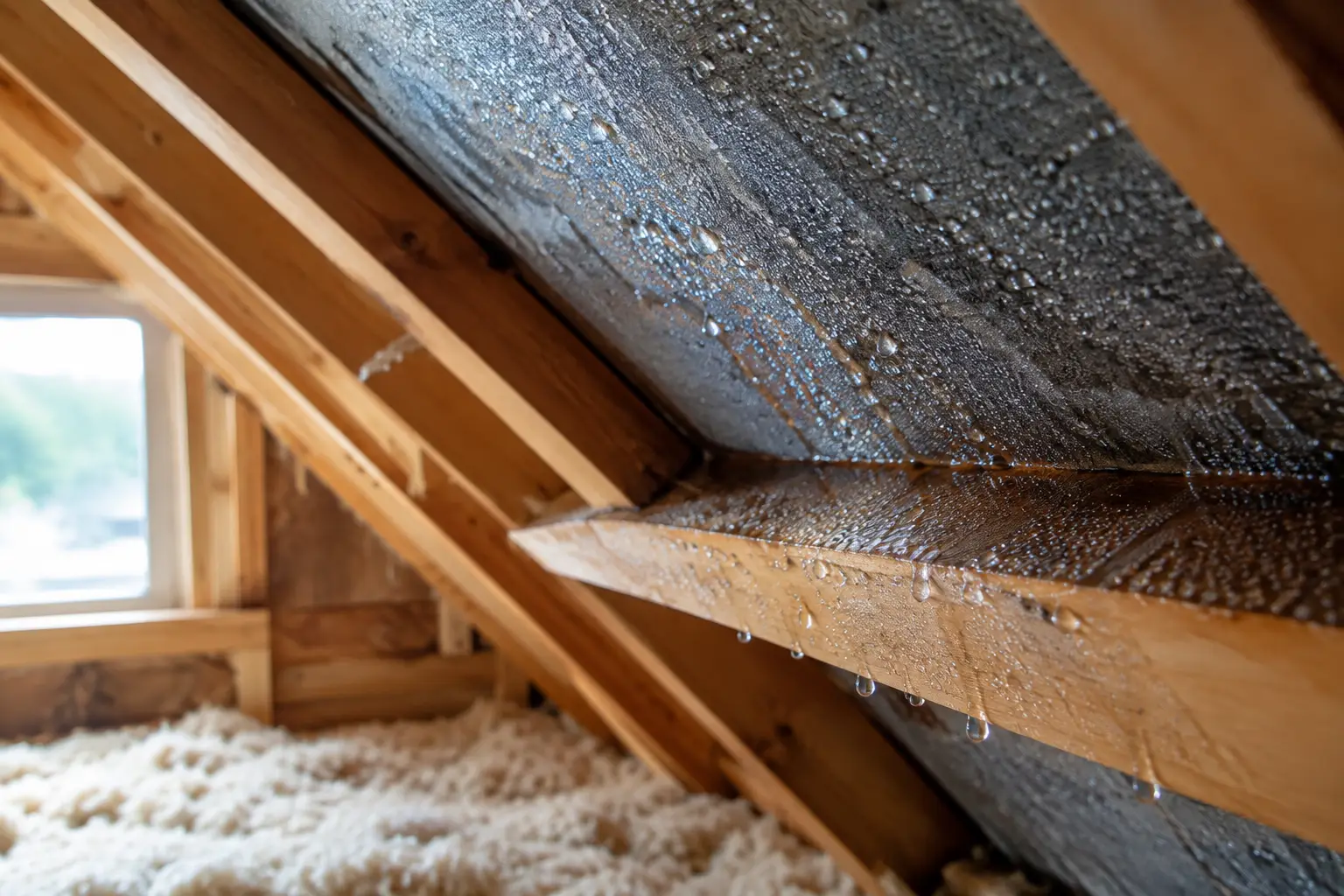


A frosty attic nail, damp roof sheathing, or water droplets on the underside of a roof can look like a roof leak. Sometimes it is. But when homeowners ask what causes attic roof condensation, the answer is often warm, moisture-laden indoor air reaching a cold attic surface. In Fairfield County, where cold winters, coastal humidity, and rapid temperature swings are common, that moisture can become a serious roofing and building-envelope problem.
Condensation does not need a visible roof opening to cause damage. Left unaddressed, it can soak insulation, stain ceilings, support mold growth, rust fasteners, and contribute to rot in roof framing and sheathing. The key is identifying whether the water is coming from inside the building, through the roof system, or from a combination of both.
What Causes Attic Roof Condensation?
Condensation forms when warm, humid air contacts a surface that is colder than the air’s dew point. During a Connecticut winter, heated indoor air naturally carries moisture from showers, cooking, laundry, occupants, and even houseplants. If that air escapes into an unconditioned attic, it can meet the cold underside of the roof deck and change from vapor into liquid water or frost.
The problem is not simply that an attic is cold. A properly designed attic is supposed to be cooler than the living space below in winter. The concern is the combination of excess indoor moisture, air leaks into the attic, inadequate insulation, and insufficient ventilation to manage the conditions.
Frost can be especially deceptive. On a very cold day, moisture may freeze on nails or sheathing without dripping. When temperatures rise, the frost melts and may create wet insulation or ceiling stains that appear to be a sudden roof leak. That is why a professional attic inspection should look beyond the shingles or exterior roofing material.
The Most Common Sources of Moisture in an Attic
Air leaks from the living space
Small openings between the heated home and attic can move a surprising amount of humid air. Common bypasses include gaps around recessed lights, plumbing stacks, electrical wiring, attic hatches, chimney chases, and top plates in interior walls. Warm air rises, and the pressure difference between a warm home and cold exterior can pull that air upward through these openings.
Adding insulation without sealing those bypasses may not solve the issue. Insulation slows heat transfer, but it does not reliably stop air movement. In fact, loose insulation can hide the paths that need attention while allowing moist air to continue reaching the roof deck.
Bathroom, kitchen, and dryer exhaust problems
Bathroom fans should discharge outdoors through properly installed ductwork, not into the attic. The same principle applies to kitchen exhaust and clothes dryer vents. A disconnected duct, a crushed flexible duct, or an exhaust termination that is blocked by snow, debris, or a damaged exterior cap can release a large amount of moisture where it does not belong.
This is one of the first issues to check when condensation appears near a particular section of the attic. Moisture concentrated around a fan duct or roof penetration often points to an exhaust problem rather than broad attic ventilation failure.
Inadequate or blocked attic ventilation
Attic ventilation helps carry out heat and moisture that reach the attic, but it works only when the system has a clear path for air to enter and leave. Soffit vents usually provide intake near the eaves, while ridge vents, gable vents, or other high-level vents provide exhaust.
Problems arise when soffit vents are covered by insulation, baffles are missing, ridge vents are obstructed, or the attic has exhaust ventilation without adequate intake. A roof can also have the wrong mix of vents. For example, combining ridge vents with powered fans or gable vents may short-circuit airflow rather than improve it.
Ventilation is important, but it is not a substitute for air sealing. If large quantities of humid indoor air are leaking into the attic, simply adding more vents can bring in colder air and make condensation more likely on the roof deck.
High indoor humidity
An attic can be properly vented and still develop condensation if indoor humidity is consistently high. This is more likely in tightly sealed homes, homes with oversized humidifiers, recently renovated properties, and buildings with moisture-intensive uses. New construction and major remodeling can also introduce significant moisture as lumber, drywall compounds, paint, and concrete dry.
During cold weather, indoor humidity needs to be appropriate for the outdoor temperature. A humidity level that feels comfortable in mild weather may be excessive during a hard freeze. Window condensation is often an early warning sign that indoor humidity is too high for current conditions.
Insulation gaps and uneven attic temperatures
Missing, compressed, or uneven insulation allows more heat to escape from the living space into the attic. This does not create moisture by itself, but it can alter roof-deck temperatures and contribute to uneven conditions. Warm areas of the roof can also melt snow while colder eaves remain frozen, increasing the risk of ice dams.
Insulation should be evaluated as part of the complete attic assembly. The right approach depends on the attic design, whether the space is vented or conditioned, the type of insulation already present, and the roofing system above it.
Condensation or a Roof Leak: How to Tell the Difference
Roof leaks and attic condensation can produce similar symptoms, but the pattern often differs. A leak is commonly localized around a roof penetration, valley, flashing detail, damaged shingle area, or a point of storm damage. It may worsen during or shortly after rain, wind-driven rain, or snowmelt.
Condensation is more likely to affect broad areas of the roof deck, fasteners, and framing, particularly during cold weather. You may see frosted nail tips, beads of moisture on the underside of sheathing, damp insulation across a wide area, or mildew that is not tied to one obvious exterior defect.
The distinction is not always straightforward. A roof with failing flashing can leak while a poorly ventilated attic also accumulates moisture. Coastal homes may face additional wind-driven rain exposure, and older or historic properties may have complex framing and ventilation paths. A thorough inspection should evaluate both the exterior roof and the attic interior before a repair plan is recommended.
Warning Signs That Require Attention
Do not wait for a ceiling to collapse or a musty odor to become severe. Schedule an inspection if you notice any of the following:
- Frost, droplets, or dark staining on roof sheathing or attic framing
- Wet, compacted, or discolored attic insulation
- Recurring ceiling stains that appear after temperature changes rather than rainfall
- Mold-like growth, musty odors, or rusted nails and metal components
- Bathroom exhaust ducts that terminate in the attic or show visible disconnection
These signs can indicate a developing moisture problem even when the roof covering looks sound from the ground.
Why Connecticut Winters Make the Problem More Noticeable
Fairfield County homes are exposed to the conditions that make attic condensation easy to trigger: cold spells, snow cover, freeze-thaw cycles, and humid coastal air. When exterior temperatures drop quickly, roof sheathing becomes cold enough for indoor water vapor to condense. Then a mild day can melt accumulated frost and make the problem suddenly visible.
Ice dams can complicate the diagnosis. Heat loss and poor attic air sealing may warm the upper roof surface enough to melt snow. Water runs down to the colder eaves, refreezes, and can back up under roofing materials. The same underlying issues – uncontrolled heat loss, air leakage, insulation deficiencies, and attic conditions – may contribute to both ice dams and condensation, although they are not identical problems.
The Right Way to Fix Attic Moisture
Effective repairs begin with diagnosis, not a one-size-fits-all ventilation upgrade. A roofing professional should inspect the roof covering, flashing, penetrations, attic sheathing, insulation depth, intake and exhaust vents, exhaust ducts, and signs of interior air leakage. If active water entry is found, the roof repair comes first. If the roof is watertight, the focus shifts to moisture control and attic performance.
The remedy may include sealing bypasses at the attic floor, correcting bathroom or dryer vent discharge, restoring blocked soffit intake, improving exhaust ventilation, installing insulation baffles, or upgrading insulation after air sealing. In some homes, reducing indoor humidity is part of the solution. In others, a damaged ridge vent, improperly installed roof intake, or aging roof detail needs correction.
For commercial buildings, the investigation may also involve rooftop equipment, vapor control layers, deck type, interior humidity loads, and the condition of the membrane or metal roofing system. Flat and low-slope roofs require a different diagnostic approach than a vented residential attic.
Rick’s Main Roofing can assess the roof and attic conditions together, helping property owners separate a true leak from a moisture-management issue and address the cause rather than only the visible damage. When water or frost appears overhead, prompt evaluation protects more than the roof – it protects the framing, insulation, finishes, and long-term condition of the entire property.