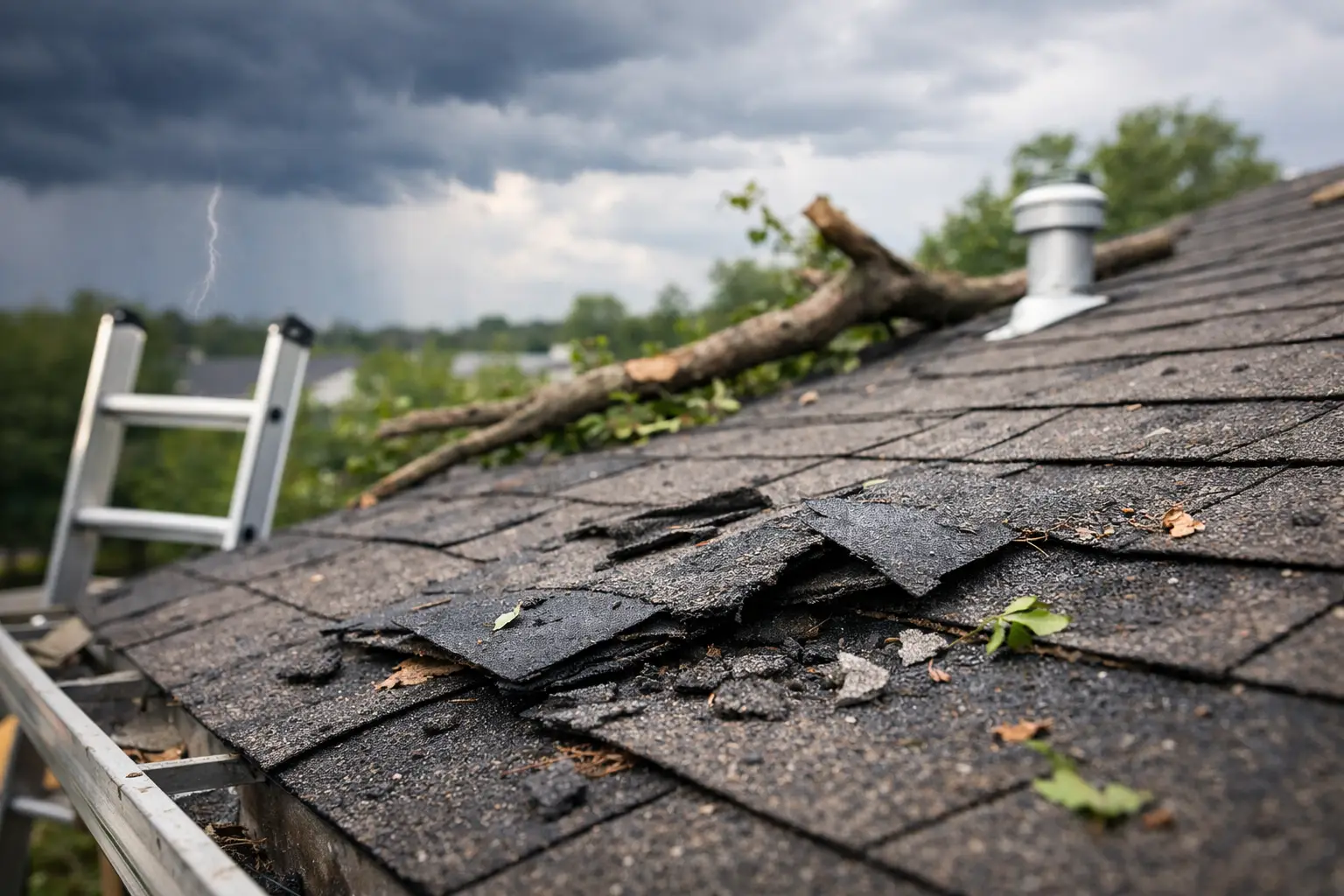


A storm can leave a roof looking perfectly normal from the driveway while water is already working beneath the shingles, flashing, or membrane. Knowing the best signs of storm roof damage helps Fairfield County property owners act before a small opening becomes stained ceilings, damaged insulation, mold growth, or a more extensive roof repair.
Connecticut weather puts roofs through more than one kind of stress. Wind can lift or remove materials, driving rain can enter weak points, hail can bruise shingles, and winter storms can create ice dams along eaves. A careful post-storm check is worthwhile, but it should be done safely. If damage may be present, a professional inspection can identify issues that are not visible from the ground.
Best Signs of Storm Roof Damage Outside the Building
The most obvious evidence often appears around the property before it appears inside. After the weather clears, walk the perimeter of the home or commercial building and look for changes. Do not climb onto a wet, steep, or potentially damaged roof.
Missing, lifted, or creased shingles
Wind damage does not always mean a large section of shingles has blown away. A shingle may lift at one edge, lose its seal, crease across the middle, or expose the dark adhesive strip beneath it. These conditions allow wind-driven rain to reach the roof deck over time.
Look for bare patches, uneven shingle lines, tabs that appear bent upward, and shingles lying in the yard. On architectural asphalt roofs, a few displaced shingles can signal a broader loss of adhesion across the same slope. Cedar, slate, metal, and flat roofing systems show damage differently, which is one reason material-specific inspection matters.
Granules collecting in gutters or at downspouts
Asphalt shingles have a protective mineral surface. After hail, heavy rain, or significant wind, granules may wash into gutters and collect near downspouts. Some granule loss is normal as a roof ages, but a sudden, noticeable accumulation after a storm deserves attention.
Granule loss can leave lighter spots or dark exposed areas on shingles. It reduces the roof’s ability to shield the asphalt layer from sunlight and weather. On a roof nearing the end of its service life, storm-related granule loss may also affect whether repair remains the sensible option.
Damaged flashing, vents, and roof penetrations
Many leaks begin at transitions rather than in the middle of the roof field. Flashing around chimneys, skylights, dormers, plumbing vents, and wall intersections can bend, pull loose, crack, or lose its seal during high winds.
From the ground, watch for crooked vent pipes, missing vent covers, displaced metal edging, or flashing that appears lifted. A damaged boot around a plumbing vent can cause a persistent leak in a small, concentrated area. These repairs can be straightforward when addressed early, but delaying them allows moisture to affect the roof deck and interior finishes.
Dented gutters, metal surfaces, or equipment
Hail can leave dents on gutters, downspouts, metal flashing, roof vents, air-conditioning equipment, and window screens. These marks do not prove the roof has hail damage, but they are a useful warning that the roof should be evaluated.
Hail damage on asphalt shingles is often subtle. It may appear as scattered impact marks where granules have been knocked away, rather than dramatic holes. A trained roofing professional can distinguish between hail impacts, normal aging, manufacturing variation, and mechanical damage from foot traffic.
Debris, broken branches, and sagging areas
Tree limbs can scrape shingles, puncture membranes, crack slate, or damage gutters and fascia. Even when a branch has fallen away, inspect the area beneath it from a safe distance. Fresh debris on the roof can also block drainage paths, especially on low-slope commercial roofs where standing water can become a concern.
A sagging roofline, soft-looking area, or visible dip is more urgent. It may indicate wet decking, structural damage, or a problem that existed before the storm but was made worse by added water or debris weight. Keep people away from the affected area and arrange for prompt evaluation.
Interior Signs That a Storm Breached the Roof
Exterior storm damage can take days or weeks to reveal itself indoors. Check upper floors, attic spaces, and ceilings after heavy rain, especially near chimneys, exterior walls, skylights, and roof valleys.
Water stains, dripping, or peeling paint
A brown ceiling ring, bubbling paint, damp drywall, or active drip should never be dismissed as a cosmetic issue. Water may travel along framing before it becomes visible, so the stain is not always directly below the entry point.
If water is actively entering, move valuables from the area, place a container under the drip, and avoid electrical fixtures. If the ceiling is bulging, do not puncture it or stand beneath it. A water-filled ceiling can fail unexpectedly and requires immediate professional attention.
Damp insulation and attic moisture
An attic inspection can reveal trouble early. Look for wet insulation, darkened wood, water trails on rafters, damp sheathing, or a musty odor. Daylight showing through the roof deck is also a clear sign that immediate repairs are needed.
However, attic condensation and inadequate ventilation can resemble a roof leak. This is especially common in Connecticut, where temperature swings and winter moisture create challenging conditions. A proper inspection should identify whether the problem is storm entry, ventilation, insulation, ice dams, or a combination of issues.
New odors or mold-like discoloration
Moisture trapped after a leak can produce a musty smell before a visible stain forms. Discoloration around attic framing, ceiling corners, or exterior-wall transitions can also point to a water issue. Mold concerns should be handled seriously, but the source of moisture must be corrected first. Otherwise, cleaning affected materials alone will not solve the underlying problem.
Damage Can Look Different by Roofing Material
Not every roof gives the same warning signs. Asphalt shingles may lose tabs, granules, or seals. Cedar shakes can split, lift, or develop openings where fasteners have loosened. Slate can crack or slide, often requiring careful replacement that preserves the roof’s appearance and performance.
Metal roofing may show loose fasteners, damaged seams, dented panels, or compromised flashing. Rubber and other low-slope commercial systems can develop punctures, seam separation, edge damage, or ponding water after debris blocks drains. Historic homes and coastal properties may require even more specialized attention because matching materials and managing wind exposure are critical.
When to Request a Professional Roof Inspection
A professional inspection is a wise next step after a severe windstorm, hail event, fallen branch, or interior leak. It is also useful when neighbors have reported damage, even if your own roof appears intact. Storm paths can be highly localized, and wind pressure can affect one side of a street or one roof slope more than another.
For commercial property owners and managers, speed matters. A small membrane puncture or displaced flashing detail can disrupt tenants, inventory, equipment, and operations if water reaches the building interior. Document visible conditions with photos from the ground, note when the storm occurred, and keep records of leaks or maintenance concerns.
An experienced roofing contractor can assess the roof surface, flashing, drainage components, attic conditions where accessible, and the likelihood of concealed damage. The goal is not to recommend replacement automatically. Sometimes a targeted repair will restore protection. In other situations, widespread damage, advanced age, or repeated leaks may make replacement the more responsible long-term decision.
Avoid Common Post-Storm Mistakes
Do not climb onto the roof to inspect it yourself, particularly after rain, snow, or high winds. Damaged materials can be unstable, and wet roofing surfaces are hazardous. Avoid pressure washing the roof, pulling at lifted shingles, or applying sealant without identifying the actual source of the problem.
It is also wise to be cautious with anyone who appears uninvited after a storm and pressures you to sign paperwork immediately. Choose a qualified local contractor who can explain the condition of the roof clearly, document findings, and provide an appropriate repair or replacement recommendation.
Rick’s Main Roofing provides inspections, repairs, replacement, and 24/7 emergency roofing response for property owners in Norwalk, Fairfield County, and nearby Connecticut communities. If your roof has changed after a storm or you have noticed water inside, arranging an inspection now can protect the building before the next round of weather arrives.