

A ceiling stain that grows during a hard rain, shingles scattered across the yard, or water running near electrical fixtures calls for immediate decisions. This guide to emergency roofing response helps homeowners, property managers, and commercial building owners protect people and property while arranging qualified roof repairs. The goal is not to diagnose every issue from the ground. It is to limit damage safely, document what happened, and bring in an experienced roofer before a minor opening becomes a larger structural or interior problem.
What Counts as a Roofing Emergency?
A roofing emergency is any condition that allows water into the building, creates a safety hazard, or leaves the roof vulnerable to rapid failure. A small drip can still be urgent if it is above a finished ceiling, insulation, electrical equipment, inventory, or occupied space. The amount of visible water does not always reflect the size of the roofing issue. Water can travel along decking, framing, insulation, and pipes before appearing indoors.
Storm damage is a common trigger in Fairfield County, particularly after high winds, heavy rain, coastal weather, falling branches, or winter freeze-thaw cycles. Emergency calls also arise from failed flashing around chimneys or skylights, blown-off shingles, punctured flat roofing membranes, clogged roof drains, ice dams, and tree impact. On commercial roofs, ponding water and damaged seams can create leaks that affect operations long before the roof deck shows obvious signs of failure.
Not every roof concern requires after-hours service. A few missing shingles with no leak during dry weather may be scheduled as a prompt repair. But if rain is entering the building, a portion of the roof has lifted, a tree has struck the structure, or water is near wiring, treat it as urgent.
First Steps in an Emergency Roofing Response
Your first responsibility is safety. Keep people away from areas with sagging ceilings, active leaks near electrical fixtures, fallen materials, or broken glass. If a ceiling is bulging with trapped water, do not stand beneath it or try to handle the situation alone. Move valuables, furniture, electronics, and inventory away from the affected area if it is safe to do so.
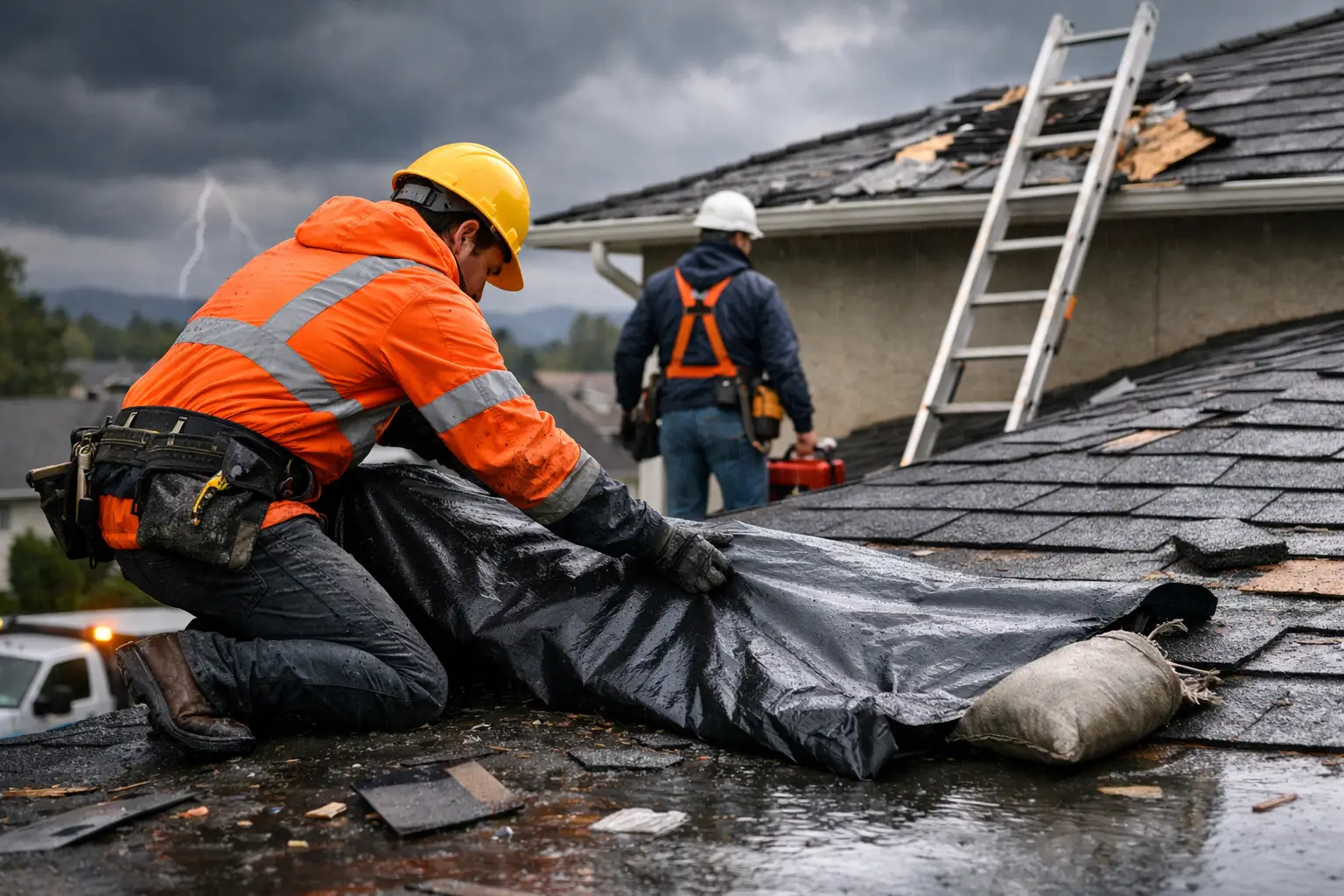
Place buckets or waterproof containers beneath active drips and use towels to contain splashing. For a broad leak, plastic sheeting and absorbent materials can help protect flooring and furnishings from additional water exposure. Do not climb onto a wet, icy, wind-damaged, or storm-darkened roof. Property owners are often injured when attempting a temporary repair without proper equipment, stable footing, or fall protection.
If water is reaching electrical panels, outlets, appliances, or wiring, avoid contact with the water and contact an electrician or emergency services as appropriate. A roofing contractor can address the exterior source, but electrical risk requires its own response. Likewise, if a tree has caused major structural damage, keep clear of the area and contact the appropriate emergency professionals before anyone enters the affected section.
Document Conditions Before Repairs Begin
Once everyone is safe, take clear photos and video from the ground and from inside the building. Capture missing materials, fallen branches, water stains, damaged ceilings, wet insulation, and affected belongings. Note when the leak began, the weather conditions, and any prior repairs or roof concerns. This documentation can support an insurance claim and gives the roofing team useful context before inspection.
Do not delay temporary protection while waiting for an insurer to respond. Most policies expect property owners to take reasonable steps to prevent additional damage. Keep receipts for emergency mitigation, cleanup, and temporary repairs, and avoid authorizing unnecessary permanent work before understanding your coverage. A reputable contractor can provide a clear description of observed damage and recommended repairs without making unsupported promises about claim approval.
What a Professional Emergency Roof Inspection Should Include
Emergency roofing work begins with a careful assessment, not a guess based only on the visible leak. A trained roofing professional evaluates the roof surface, penetrations, flashing, drainage components, edges, attic conditions when accessible, and the interior evidence of water entry. On a steep-slope roof, that may mean inspecting shingles, cedar, slate, or metal panels for displacement, cracks, missing fasteners, and compromised flashing.
Flat and low-slope commercial systems require a different approach. Rubber roofing membranes, seams, penetrations, drains, parapet walls, and areas of ponding need close attention. A leak at one point inside a commercial building may originate several feet away, especially where water follows insulation slopes or structural elements.
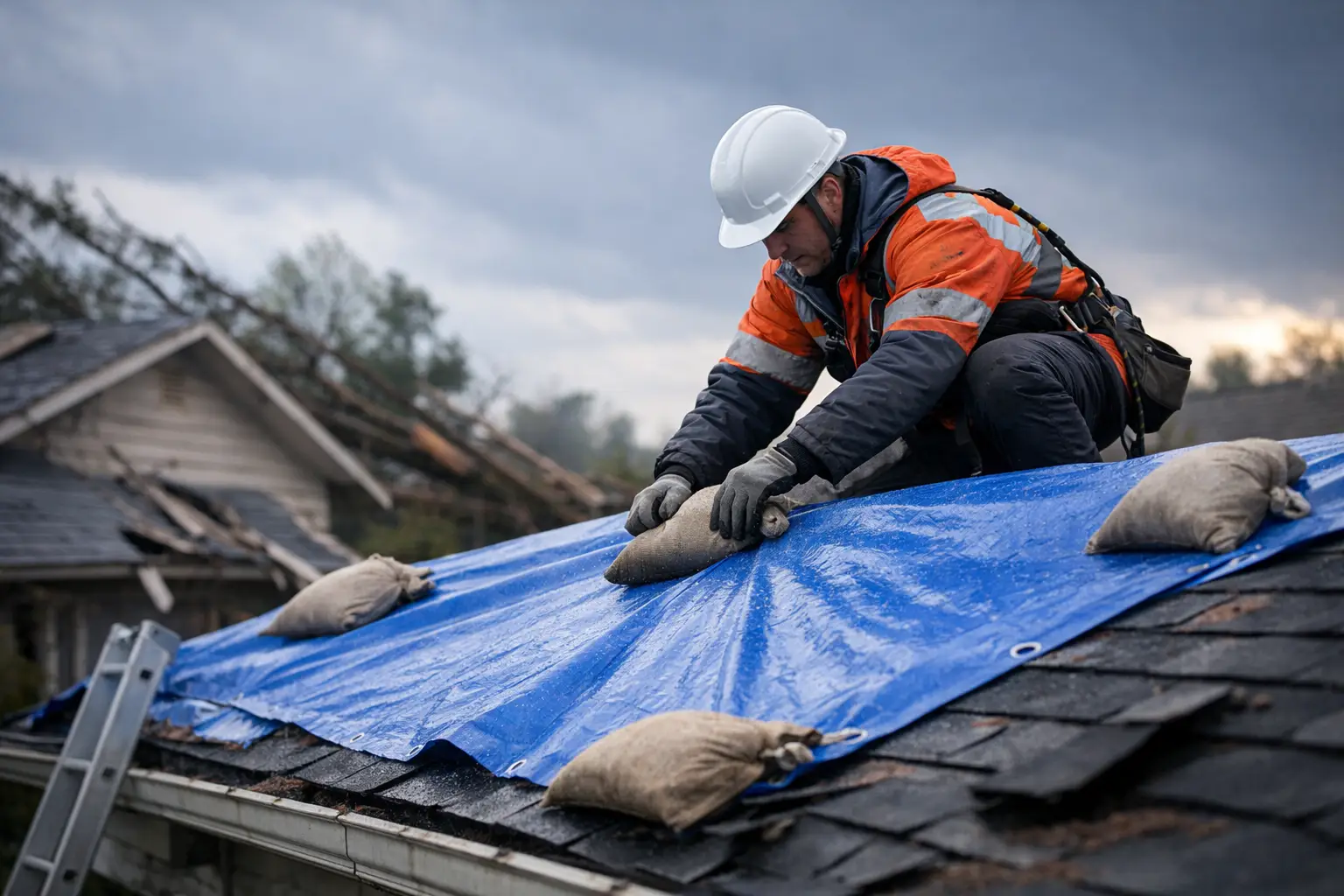
The first repair may be temporary by design. Emergency tarping, sealing, or patching can stop active intrusion and protect the building until conditions allow for a complete repair. That is often the correct choice during ongoing rain, high winds, or unsafe winter conditions. The trade-off is that a temporary repair must be revisited. It is not a substitute for correcting failed flashing, damaged decking, worn materials, poor drainage, or a roof system at the end of its service life.
A Guide to Emergency Roofing Response After Storm Damage
After a severe storm, avoid judging roof damage only by what you can see from the driveway. Wind can loosen shingles without removing them completely, break seals that later allow wind-driven rain beneath the roof covering, or damage flashing in ways that are difficult to spot. Hail can bruise or fracture roofing materials even when the roof looks intact from ground level.
Start with a ground-level walk around the property after the area is safe. Look for shingles, metal pieces, flashing, branches, granules, or debris. From indoors, check attic spaces, upper ceilings, skylights, and exterior wall transitions for moisture. A damp attic, musty odor, or fresh discoloration may indicate water entry before a ceiling leak becomes visible.
For commercial properties, inspect interior areas below drains, rooftop units, skylights, and wall intersections. Notify affected tenants or staff early, protect equipment and stock, and record any interruption to operations. Fast, organized action can reduce business disruption and provide a clearer record of the event.
Be Careful With Storm-Chasing Contractors
Storms can bring contractors from outside the area who offer immediate repairs, pressure owners to sign documents, or promise to cover insurance deductibles. Be cautious. Emergency conditions create understandable urgency, but they should not eliminate normal contractor vetting.
Choose a contractor with a local presence, proper insurance, material-specific knowledge, and a documented scope of work. Ask whether the proposed repair is temporary or permanent, what materials will be used, and whether the roofer has identified the source of the leak rather than simply covering the symptom. For historic homes, coastal properties, and specialized systems such as slate, cedar, metal, or rubber roofing, experience with the specific material matters.
Common Emergency Mistakes That Create More Damage
The most costly mistake is waiting for a leak to become severe. Water rarely stays contained at the original entry point. It can saturate insulation, weaken drywall, stain finishes, encourage mold growth, and damage framing over time. A prompt inspection after a suspected storm event is often less disruptive than waiting for an active interior leak.
Another mistake is applying caulk or roofing cement broadly without locating the failure. These materials can be useful for limited temporary protection, but improper application can trap water, interfere with drainage, or complicate a later repair. Covering a roof with a tarp also requires proper attachment. Fastening materials through vulnerable roofing areas may create new openings if done incorrectly.
Owners should also avoid assuming that a roof is the source of every ceiling leak. Chimney caps, masonry, siding transitions, plumbing vents, skylights, gutters, and HVAC components can all contribute. A qualified inspection separates roofing failure from related building-envelope issues so repairs address the actual cause.
Planning the Permanent Repair
Once the roof is stabilized, the next decision is whether a targeted repair will provide dependable protection or whether replacement is the more sensible investment. The answer depends on the roof’s age, the extent of damage, the condition of surrounding materials, prior repairs, ventilation, drainage, and the availability of matching materials.
A localized repair can be the right solution for a newer roof with isolated storm damage or failed flashing. Replacement may be more cost-effective when leaks are recurring, shingles are brittle or widely deteriorated, a low-slope membrane has multiple compromised areas, or the deck and insulation have sustained significant moisture damage. On older or historic properties, material matching and preservation requirements may shape the repair plan.
Connecticut winters add another consideration. Ice dams are often a symptom of heat loss, inadequate attic ventilation, air leaks, or uneven roof temperatures. Replacing shingles alone may not correct the underlying condition. A thorough repair plan considers the roofing system as a whole, including ventilation, insulation conditions, flashing details, and drainage.
Keep Emergency Repairs From Becoming Repeat Calls
Regular roof inspections and maintenance are the most practical defense against unexpected leaks. Have the roof checked after major storms and before winter, particularly if the property has mature trees, complex rooflines, skylights, chimneys, or low-slope sections. Keep gutters and drains clear, address loose flashing early, and do not ignore attic moisture or recurring ceiling stains.
For property owners in Norwalk and throughout Fairfield County, Rick’s Main Roofing can evaluate active leaks, storm damage, and longer-term repair needs across residential and commercial roofing systems. The right emergency response protects the building now, then gives you a clear plan for keeping the next storm outside where it belongs.