A small water stain beneath an attic rafter can be more than a routine roof leak when the home is a century old. Moisture can reach original framing, plaster walls, decorative woodwork, and finishes that are difficult or costly to replace. Historic home roofing services require more than covering a structure with new material. They require a careful plan that protects the building’s character while giving it dependable protection from Connecticut weather.
For owners of older homes in Norwalk, Fairfield County, and nearby communities, the right roofing decision balances preservation, performance, appearance, and budget. A roof should look appropriate for the property, but it also has to withstand wind-driven rain, snow, ice dams, changing temperatures, and coastal exposure where applicable.
When Historic Home Roofing Services Are Needed
A historic roof does not need to be visibly failing before it deserves professional attention. Missing slate, curling shingles, split cedar, loose flashing, or recurring attic moisture can indicate that water is already finding a path beneath the roof covering. On older homes, even a small opening can create significant damage because ventilation details, underlayment, flashing, and structural components may not meet modern standards.
A professional inspection is especially worthwhile after a major storm, before purchasing an older property, or when planning exterior restoration. The goal is to determine whether the roof can be repaired without compromising its appearance, or whether a full replacement is the more responsible long-term investment.
The distinction matters. Repairing a localized issue can preserve original material and control costs. Repeated patching across a roof near the end of its service life, however, can leave the home exposed and often costs more over time. An experienced roofer should explain the condition clearly, identify what is urgent, and distinguish necessary work from improvements that can be scheduled later.
Preserve the Roofline, Not Just the Roof Covering
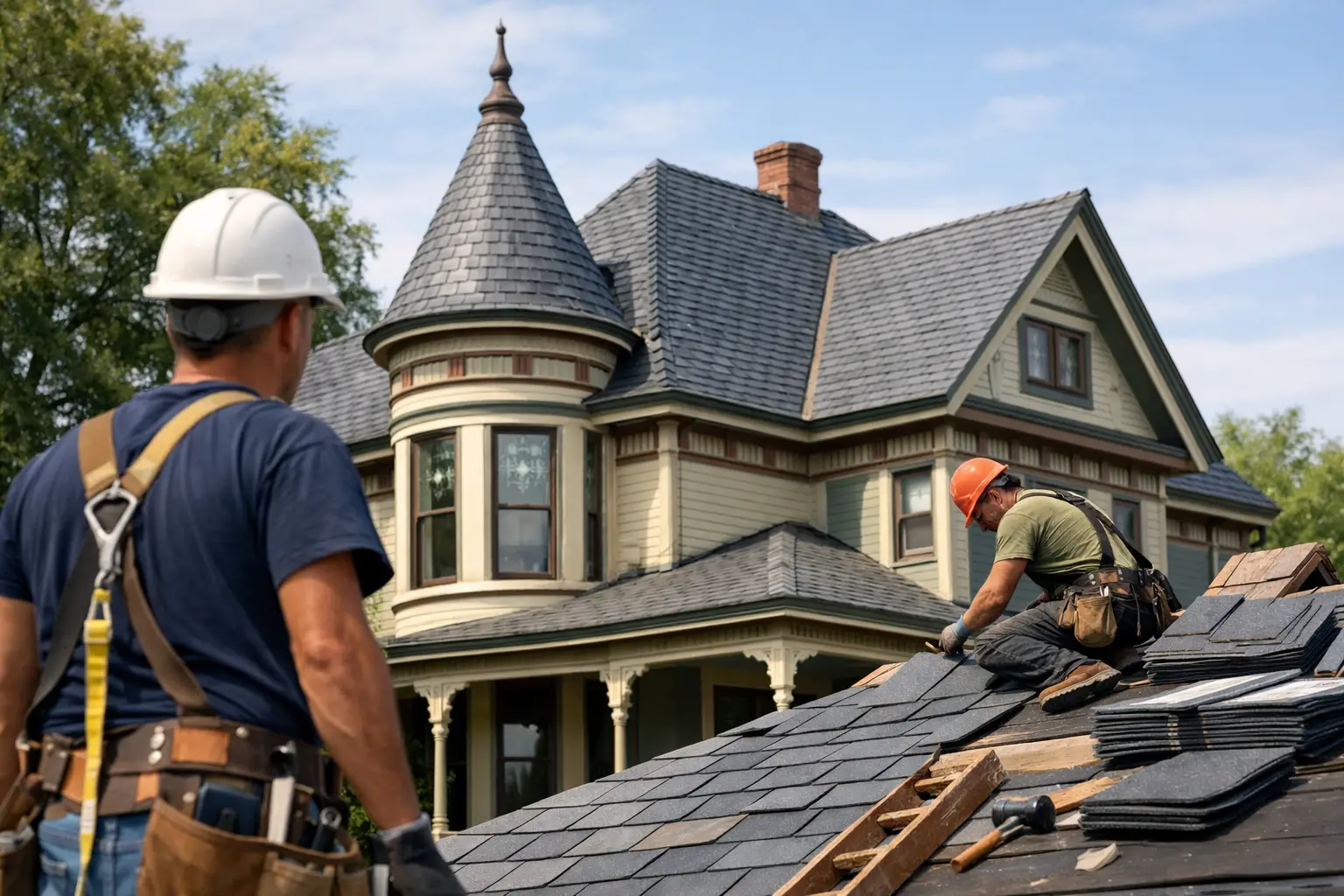
Historic homes often have details that standard roofing work can overlook. Steep pitches, complex valleys, dormers, chimneys, turret roofs, copper accents, and decorative trim all affect how water moves across the structure. Replacing material without understanding these details can change the home’s profile, create drainage problems, or make a carefully maintained property look out of place.
The roofline should be documented before work begins. This includes the existing material, exposure size, pattern, ridge treatment, flashing design, gutter interface, and visible architectural features. For homes in a local historic district or subject to preservation guidelines, owners may also need approval before changing roofing materials or colors. A contractor familiar with historic work can help homeowners understand how the proposed roof will affect the appearance of the property.
Matching the original roof exactly is not always possible or necessary. Some historic materials are no longer readily available, and others may be impractical for the building’s current condition or the owner’s maintenance expectations. The best choice depends on the home, local requirements, budget, and the level of historical accuracy desired.
Choosing Materials for an Older Connecticut Home
Material selection is one of the most consequential decisions in a historic roofing project. Each system has a different appearance, expected lifespan, maintenance requirement, weight, and installation method.
Slate roofing
Natural slate is a defining feature on many historic homes. It offers exceptional longevity and a distinctive appearance, but it requires specialized installation and repair skills. Individual broken slates can often be replaced, provided the surrounding roof remains sound. A full slate replacement requires a careful review of the roof structure because slate is heavy, and improper fasteners or flashing methods can shorten its service life.
Synthetic slate can provide a similar visual profile with less weight and potentially lower installation cost. It may be a practical option where original slate is no longer viable, although it may not meet every preservation standard. The decision should be made with an honest review of aesthetics, approvals, and long-term expectations.
Cedar roofing
Cedar shakes and shingles give older Colonial, coastal, and cottage-style homes a natural, traditional appearance. Cedar needs proper ventilation and drainage to perform well in Connecticut’s wet and variable climate. Moss, algae, trapped debris, and inadequate airflow can cause premature deterioration.
A cedar roof should be installed with attention to spacing, underlayment, flashing, and the wood’s ability to dry after storms. It can be a beautiful choice, but it is not a low-maintenance material. Owners should expect periodic inspections and prompt repairs when shakes split, curl, or loosen.
Asphalt shingles and architectural alternatives
High-quality architectural shingles can be appropriate for many older homes, particularly where the original roof was asphalt or where budget and maintenance considerations make natural materials unrealistic. The key is selecting a color, profile, and installation detail that complement the home rather than flattening its character.
Asphalt is generally more affordable than slate or cedar and can provide dependable weather protection when installed correctly. It is not the best fit for every landmark property, but it can be an effective solution for historic homes that need a durable, practical roof without the cost of a specialty material.
Metal and low-slope systems
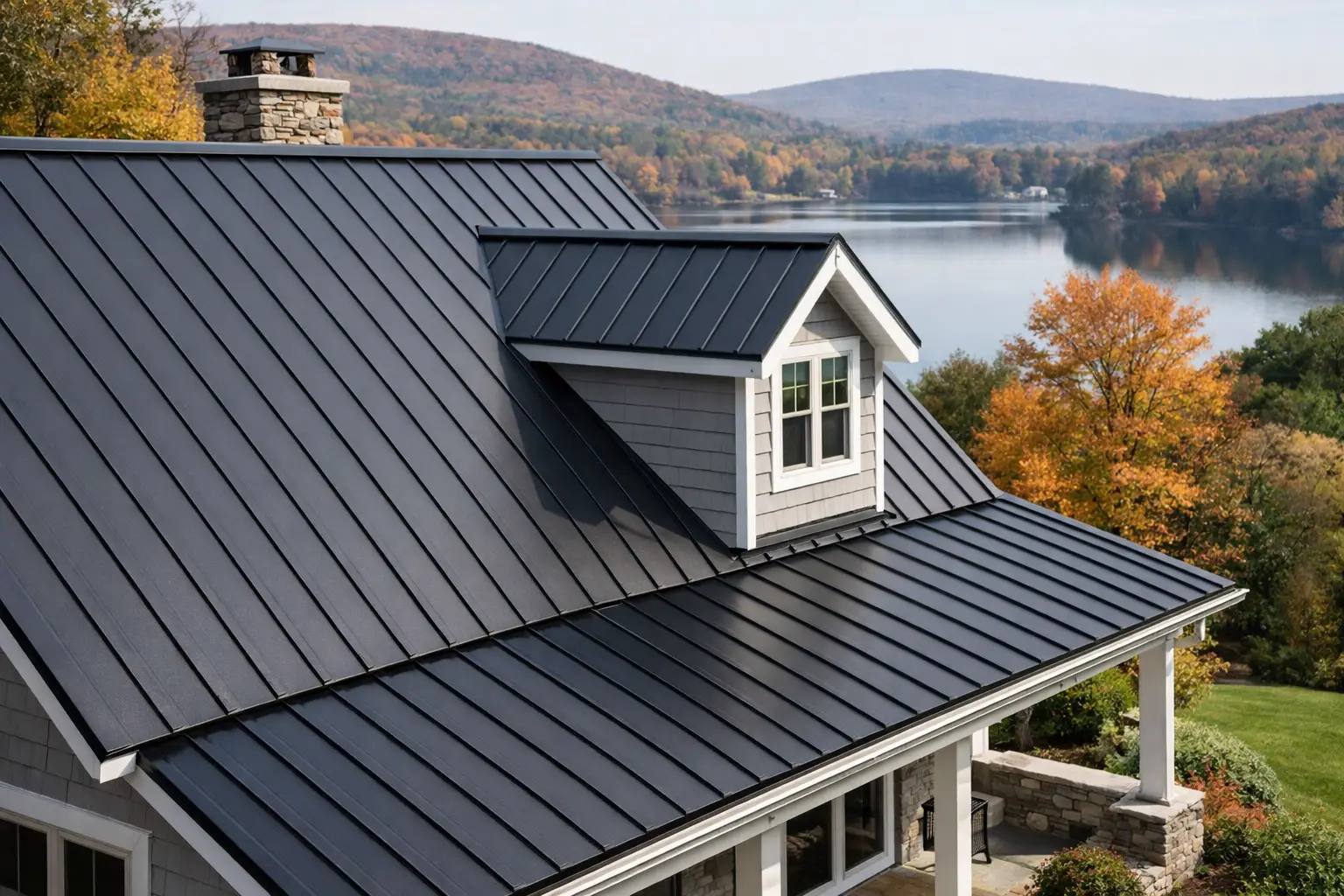
Standing-seam metal can be historically appropriate on certain porches, additions, bay windows, and agricultural-style structures. Copper may also be used for valleys, flashing, gutters, and decorative elements because of its longevity and traditional appearance. Flat or low-slope portions of older buildings may require rubber roofing or another membrane system designed for reliable drainage.
Using different materials on separate sections of a historic home is often the right approach. A slate main roof, copper valley liners, and a membrane roof on a rear low-slope addition can each serve a specific purpose while preserving the overall design.
The Details That Prevent Leaks
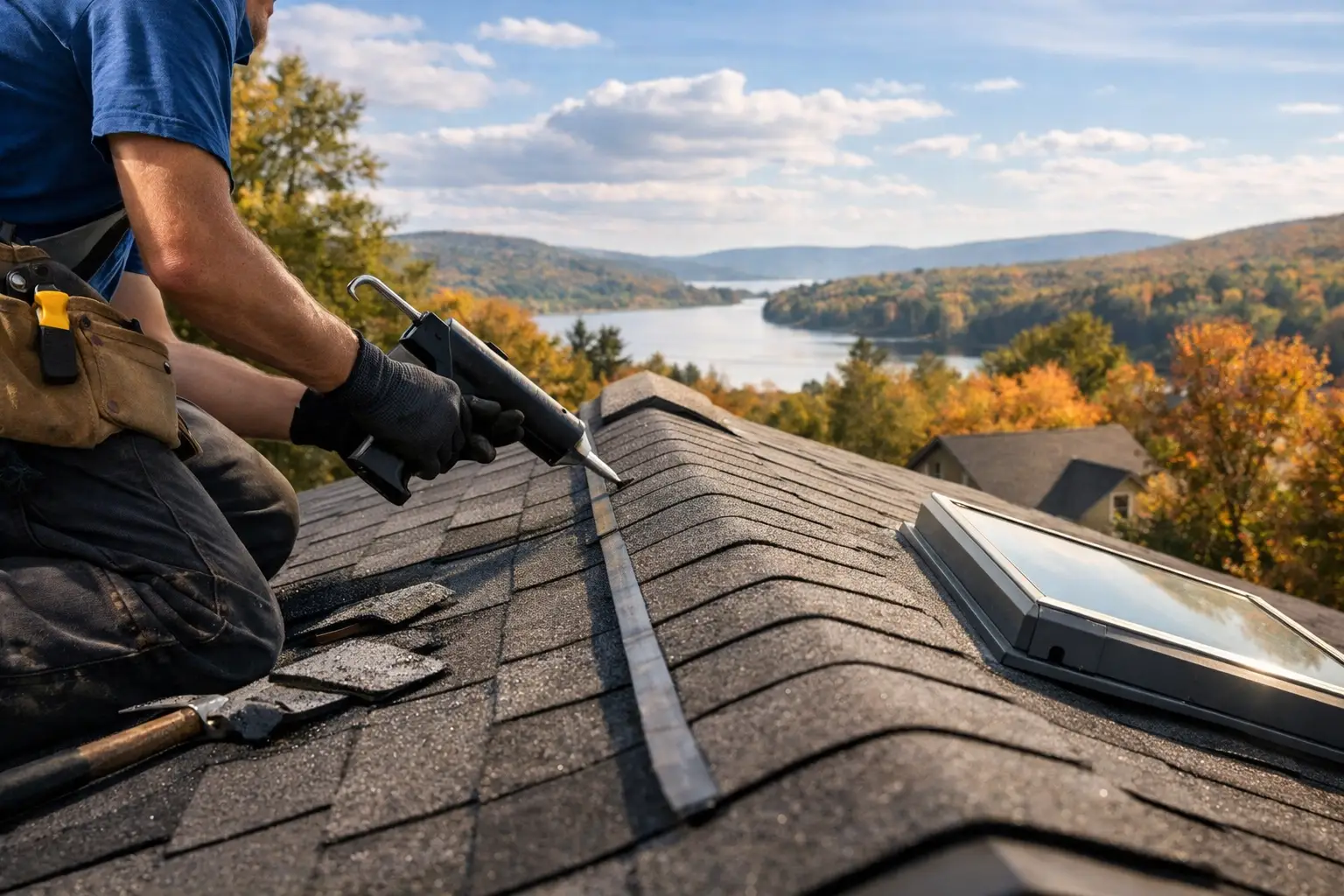
Roofing material gets the most attention, but historic roof performance often depends on the components around it. Chimney flashing, wall flashing, valleys, skylight curbs, pipe penetrations, and gutters are common sources of water intrusion. These areas must be integrated correctly with the roofing system, not simply covered with sealant.
Ventilation is another frequent concern in older homes. A poorly ventilated attic can trap heat and moisture, contributing to ice dams in winter and shortening the life of the roof in summer. Yet ventilation changes must be planned carefully. Cutting new openings or changing soffit and ridge details without considering the home’s construction can create new problems.
A qualified contractor evaluates insulation, airflow, roof deck condition, and drainage as connected parts of the same system. This is particularly important in Fairfield County, where winter freeze-thaw cycles and heavy rain can expose weaknesses that remain hidden during mild weather.
Repair, Replacement, and Emergency Response
Not every historic roof problem calls for replacement. Replacing damaged slates, repairing a small section of cedar, resealing a flashing transition, or correcting a drainage issue may extend the roof’s life while retaining significant original material. A repair-first approach is often appropriate when the roof is structurally sound and damage is confined to a defined area.
Replacement becomes more likely when leaks are recurring, material deterioration is widespread, the roof deck has been compromised, or prior repairs have created a patchwork of incompatible components. During replacement, homeowners should ask how the contractor will protect landscaping, siding, chimneys, and exterior details during removal and installation.
When a storm causes active leaking or visible roof damage, fast temporary protection matters. Emergency tarping and prompt assessment can limit water intrusion until permanent repairs can be completed. Waiting for the next dry day may turn a manageable roofing repair into damaged insulation, stained ceilings, or deteriorated framing.
Work With a Contractor Who Understands the Assignment
Historic roofing is not a job for guesswork or a one-size-fits-all proposal. Property owners should look for a contractor with proven experience across slate, cedar, asphalt, metal, rubber roofing, repairs, and replacement work. Ask how the crew will match materials, handle flashing, protect original features, and address ventilation or ice-dam concerns.
Rick’s Main Roofing brings full-service roofing capability to historic, coastal, and traditional homes throughout the Norwalk area and Fairfield County. From detailed inspections and material-matched repairs to complete roof replacement and 24/7 emergency response, the focus is on workmanship that protects both the home and the investment behind it.
A historic roof should never be treated as a cosmetic surface alone. If you see damaged material, staining, loose flashing, or signs of moisture in the attic, arrange an inspection before a small defect reaches the original parts of the home that cannot be easily replaced.