

Key Points:
- Overall pricing of new roof replacement varies in various regions of the US.
- On average, the cost of a roof replacement in CT ranges from $9000 to $18000.
- There are notable factors that add to or save from the new roof cost.
- Insurance is a smart move to cover the cost of a new roof.
You are living in Norwalk, CT, and thinking about replacing the roof of your home, but not sure about how the prices work in this region. You aren’t alone here; almost every homeowner thinks about how much the new roof costs.
Prices here have seen a dramatic surge, depending on several factors like labor, material costs, permits, and market differences.
To have a clearer idea, you may search the internet for a better estimate, but most results only provide a rough U.S. average. Which obviously varies a lot when it comes to Norwalk, CT. So, to take your worries off, we’ll be explaining the targeted factors and everything related to the new roof cost. Let’s have an in-depth read of this masterpiece!
Exploring Average New Roofing Costs in the US
Before moving towards finding the cost of a new roof in Connecticut, we will first see the prices of roof replacement in the United States:
- In the states, roofing projects can cost around $3000 to $18000.
- If you want to install high-quality materials like metal roofing, you have to understand its costs too, which can get higher up to $27000.
Now, you might be thinking that we have to save only $30,000 to get the best roof replacement, but here’s a twist: you have to ponder how it’ll vary with your home’s condition. Also, in the majority of cases, insurance can cover most of the cost.
Average Roof Replacement Cost in Norwalk, CT
Usually, the rates for roof replacement in the Connecticut region vary from $9,705 to $18,491, obviously impacted by many factors like the material type, size, and the rates of labour costs.
Although labor costs are about $1 to $11 per square foot in this region, they vary by contractor.
| Data | Value |
| Average roof replacement price in Norwalk | $12,000 to $16,000 |
| Average home size | 2,200 Square Feet |
| Average property size (2019 Parcel Data) | 0.23 Acres or 10,000 Sq.ft. |
| Average roof slope on homes | 6/12 Pitch or 26.57 Degrees |
Source: https://www.instantroofer.com/connecticut-roof-replacement-cost/norwalk/
Important Factors that Affect Roofing Costs
We have understood that pricing for new roofing varies a lot in Norwalk, CT, as compared to the US overall. Not all areas are the same; some can afford premium options, while others stick to the affordable options.
However, it all depends upon you and your home’s needs to determine how much you’ll be paying for the project. Well, we are going to elaborate on a couple of critical factors on how and where the prices vary while updating to a new roof.
1. Type of Roof
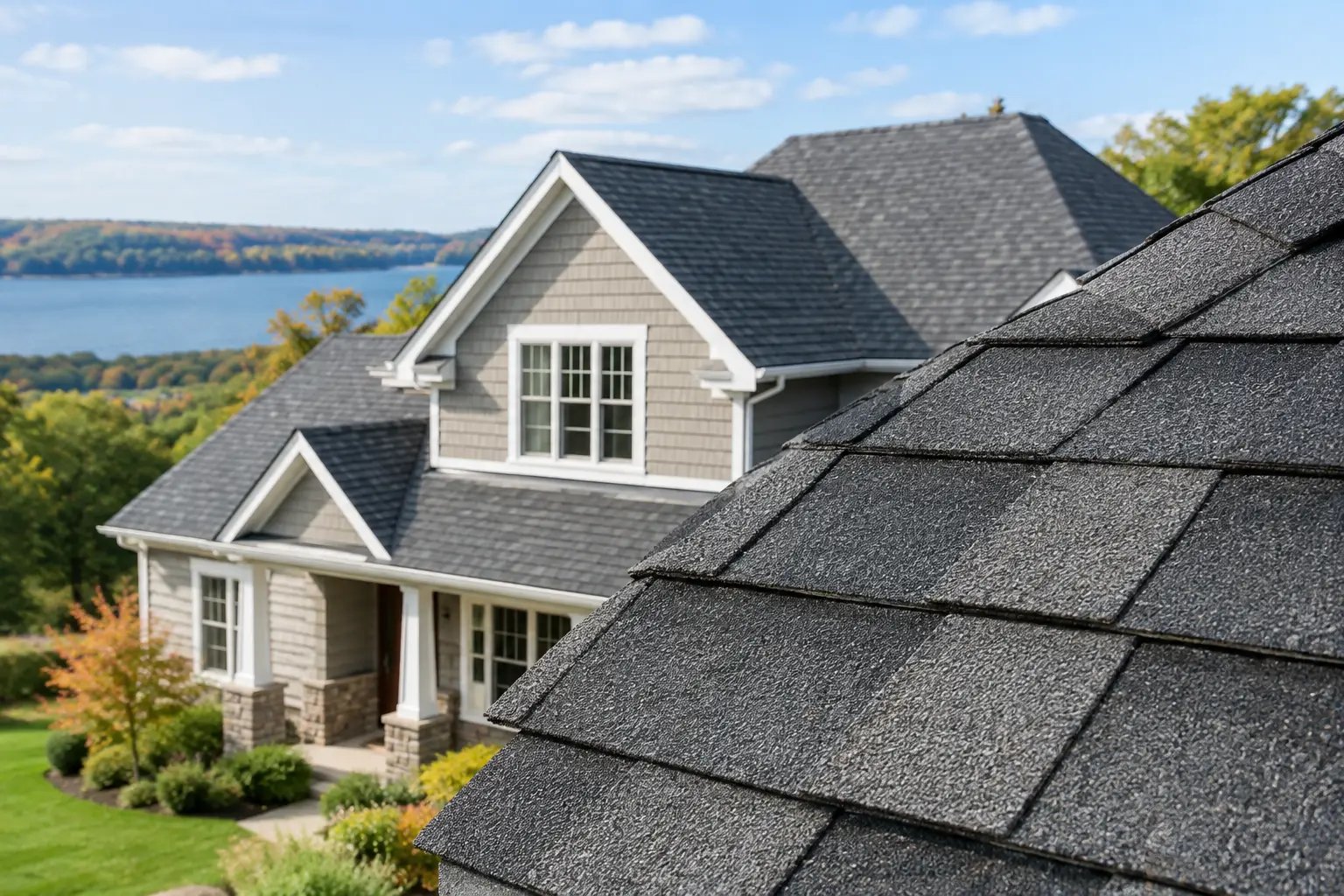
The first and most important factor in deciding your roof upgradation cost is what type of roof you’ll be installing at your property. Normally, homeowners choose asphalt or metal roofing. In both options compared, asphalt is cheaper, but a good option for owners who can’t afford expensive ones. People also love to add more aesthetics to their property.
Next, we have the metal roofing, which is far more durable than the asphalt one but also more expensive in comparison. But a one-time investment can last up to 25-30 years, which is a great ROI.
Finally, you decide whether you’ll be going for a long-lasting metal roofing option or budget-friendly asphalt shingles. You can discuss with your roofer to let you guide them in the best way.
2. Quality of Materials
After selecting the roofing type, we look at the quality of materials. This plays an important role in your roof’s sustainability. If you choose 30-year asphalt shingles, then you’ll be paying more for the materials as compared to choosing a 25-year one.
We understand that it’s always attractive to choose low-cost material, especially if you can’t afford high-priced ones. But, for your information, you’ll get a more lasting roof if you choose the premium quality materials. Because you won’t be reinvesting again and again to keep the low-quality material fixed, you’ll be saving in the long run.
3. Number of Stories in Your Home
We have discussed how important the material selection is; now we’ll see that your property is also of great importance in managing expenses.
It’s commonly understood that if a home has more stories, it’ll be more expensive for a roof replacement as compared to a ranch house of the same area. You are thinking, Why? Roofing companies charge more for higher roofs, as there’s a risk to life as well.
4. Square Footage
The next one on our list is keeping an eye on the area of your property. The more surface area your roof has, the more material and labor cost it’s going to have, which means more to pay for it.
This factor is non-negotiable, as you cannot change the area to save money. But you can make your life a lot easier by discussing with your roofer regarding an accurate roofing estimate for your area.
5. Complexity of Roof
Roof replacement cost also heavily relies on the complexity of it. For example, steep roofs will cost more. The other relevant factors that can affect your budget are the things that are attached to your roof, like vents, skylights, etc.
Many other home features can also make the overall project more complex, including landscaping, truck accessibility, or fences near the home. This will cumulatively affect how much you’ll be paying for the roof replacement.
Region-Based Factors
- Weather Conditions
Norwalk, CT, often faces intense weather like storms, hail, or sometimes high humidity conditions, which may lead to installing extra weatherproofing measures. This way, the cost of roof replacement will also be a bit higher.
- Labor Rates
Every region has its own labor costs, but living in Norwalk, CT, it would be slightly cheaper compared to the averages in the US.
Is Home Insurance a Good Option for Roof Replacement?
Don’t be afraid if everything seems too expensive regarding a roof upgrade. Oftentimes, the home insurance can cover the cost for replacement, after subtracting your deductibles.
Normally, these policies do cover some sort of event. Let’s have a look at where insurance would be able to cover the cost of roof replacement.
- Damages occurred due to storm-like wind or hail
- Fallen trees or branches
- Unplanned accidents
To avoid any mishap in the future, you should always read and discuss the policy in depth.
You have to ask a couple of questions to your insurance company, like:
- Would the company later deduct the amount they are going to pay for wear and tear?
- Is an old roof eligible for insurance or not?
- What type of incidents have been covered?
- How does the claiming process work?
- How much is your deductible?
Having a clear insight into your insurance policy will help you a lot in saving for the project.
Final Thoughts
We understand that a new roof is a dream for many homeowners. The reasons behind installing it are either to enhance the beauty or to maximise the durability of the space. People get confused about how much it’ll cost. There is no simple answer for this, as cost depends on many factors like the area, materials, and the condition of the roof.
There’s also a smart way to get covered for the roof replacement costs, which is having the right insurance policy. A last but very important thing that matters for the whole process is to look for a quality roofing company. And when Rick’s Main Roofing is here, no worries about getting the quality roofing experience!
Frequently Asked Questions
1. Which roofing option is the cheapest of all?
Asphalt shingles aren’t only the cheapest roofing option, but they also offer good durability for homes.
2. Which area of roof replacement is most expensive?
Choosing and getting the roof material is the most expensive stage of the roof replacement. There are commonly two options for this: asphalt and metal shingles. Although metal ones are quite expensive compared to asphalt shingles.
3. What are the common signs that lead to a roof replacement?
The following are a couple of common signs to go for a roof replacement:
- Cracked shingles
- Mold growth
- Damaged flashing
- Water stains
- Pungent smell