

A flat roof does not need standing water to become a problem. A shallow puddle around a drain, wet insulation beneath the membrane, or a backed-up scupper after a coastal storm can all lead to leaks that spread well beyond the roof surface. This guide to flat roof drainage explains how a properly designed system moves water off the roof, where failures begin, and when a professional inspection is the right next step.
Flat and low-slope roofs are common on commercial buildings, additions, multifamily properties, garages, and contemporary homes throughout Fairfield County. Despite the name, they are not truly flat. Every successful low-slope roof relies on intentional slope, correctly sized drainage components, sound flashing, and regular maintenance. If one part of that system falls behind, water finds the weakness.
Why Flat Roof Drainage Matters
Water is heavier than many property owners realize. One inch of rain across a 1,000-square-foot roof weighs more than 5,000 pounds before it drains away. When water remains in low spots, that load adds stress to the roof deck and structure. It can also accelerate membrane deterioration, loosen seams, damage flashings, and create conditions for interior leaks.
In Connecticut, drainage performance is tested year-round. Heavy rain, wind-driven coastal storms, falling leaves, freeze-thaw cycles, and snowmelt can all overwhelm a poorly maintained roof. A drain that seems adequate in dry weather may reveal its limitations during a sudden downpour, when debris is pushed into its strainer or ice blocks the outlet.
Ponding water is a warning sign, although it does not always mean the roof is failing immediately. Many roofing professionals use 48 hours after rainfall as a useful benchmark. If water remains after that period, the roof may have insufficient slope, blocked drainage, settlement in the insulation or deck, or a drainage layout that needs correction. The longer it sits, the greater the likelihood of premature wear and hidden moisture intrusion.
The Main Parts of a Flat Roof Drainage System
Drainage systems vary by building size, roof layout, local code requirements, and the roofing material in use. A small residential low-slope roof may use scuppers and gutters, while a large commercial roof may depend on multiple internal drains and emergency overflow protection.
Tapered Slope Moves Water Toward an Outlet
The membrane is only one part of a low-slope roof. Beneath it, tapered insulation or a sloped deck directs water toward drains, scuppers, or gutters. A common design target is a minimum slope of one-quarter inch per foot, but the correct approach depends on the roof assembly, structural conditions, and drainage plan.
Adding tapered insulation can solve persistent ponding on some roofs, but it also changes roof height at edges, curbs, flashing details, and door thresholds. That is why drainage corrections should be designed as part of the full roofing system rather than treated as a quick surface repair.
Internal Drains Carry Water Through the Building
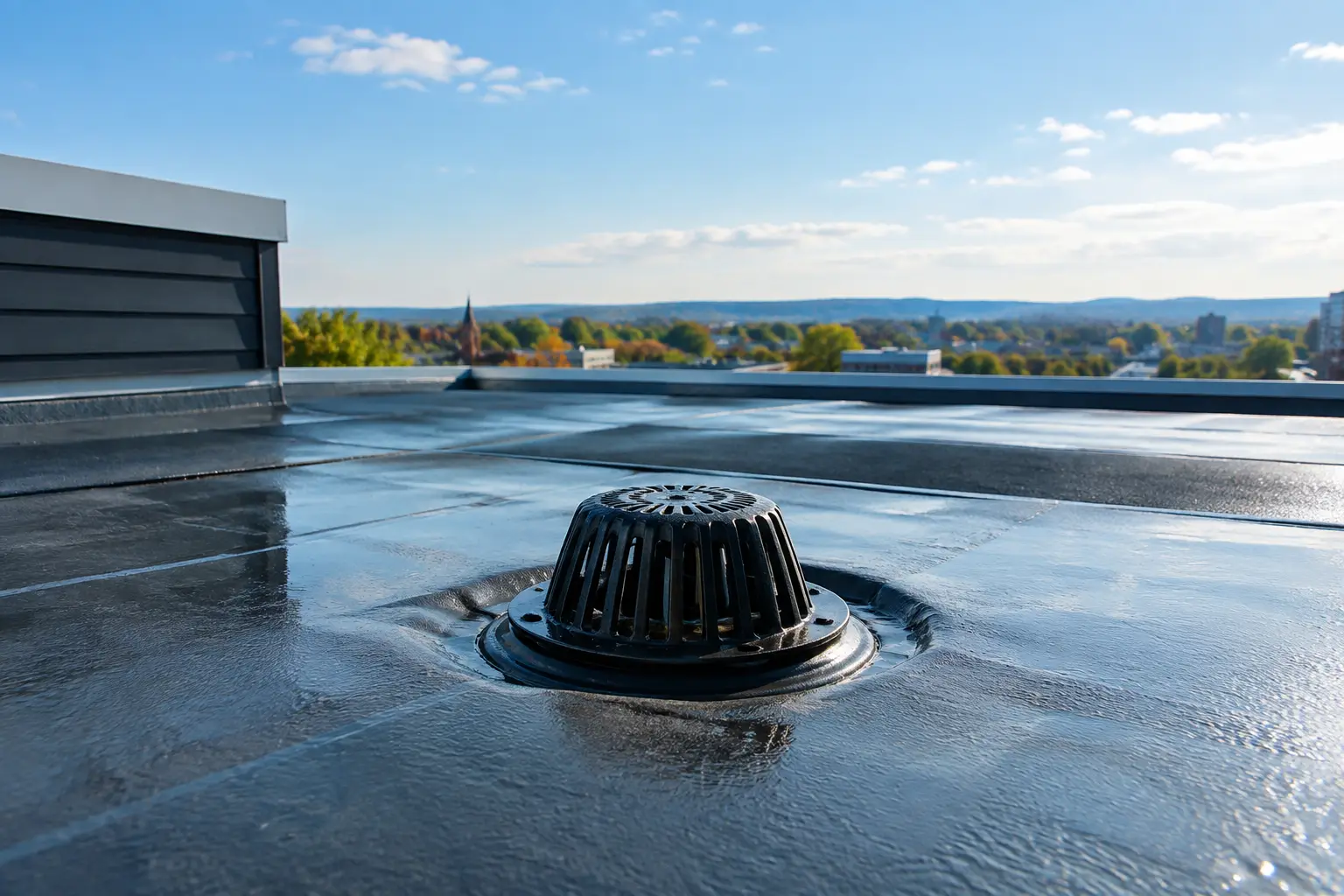
Internal roof drains are common on larger commercial buildings and roofs surrounded by parapet walls. Water enters through a protected drain bowl and travels through interior piping to the stormwater system. Their main advantage is capacity and a clean roofline without visible gutters.
Their trade-off is that a blockage may be harder to spot. Leaves, roofing debris, gravel, or an improperly maintained strainer can slow water movement. Because the piping is inside the building, leaks around the drain flashing or failures in the connected system can cause interior damage before the source is obvious.
Scuppers Release Water Through Parapet Walls
A scupper is an opening through a parapet wall that lets water exit the roof, often into a conductor head and downspout. Scuppers are practical, visible, and easier to inspect than internal drains. They are frequently used on residential flat roofs, small commercial structures, and buildings where exterior drainage is preferred.
The opening must be large enough and positioned at the correct elevation. A scupper placed too high can allow water to pool before it reaches the outlet. A scupper without an adequate downspout or splash control can direct water against siding, masonry, landscaping, or entrances below.
Gutters and Edge Drainage Protect the Perimeter
Some low-slope roofs drain to exterior gutters at the roof edge. This approach can work well when the edge has sufficient slope and the gutter system is sized for the roof area. Gutters must be secured correctly and kept clear, especially below trees.
On Connecticut properties, ice can create a recurring issue at roof edges. Water that reaches a cold, clogged, or undersized gutter may freeze, forcing meltwater back toward the roof edge and fascia. Addressing the cause may involve drainage improvements, insulation and ventilation evaluation, or a review of how snow and ice are being managed.
A Practical Guide to Flat Roof Drainage Inspections
Property owners can identify visible warning signs from the ground or during a safe visual check. Do not walk on a roof unless you know the surface is safe and the access method is appropriate. Wet membranes, concealed soft spots, and fragile roof components can create real hazards.
Start by looking for water that remains after rain, stained ceiling tiles, peeling paint near exterior walls, algae growth, or water marks beneath scuppers and downspouts. On commercial properties, check whether roof drains are protected by intact strainers and whether leaves or debris are collecting at drainage points. A slow-draining roof is not merely a housekeeping issue. It can be evidence of a developing roofing or structural concern.
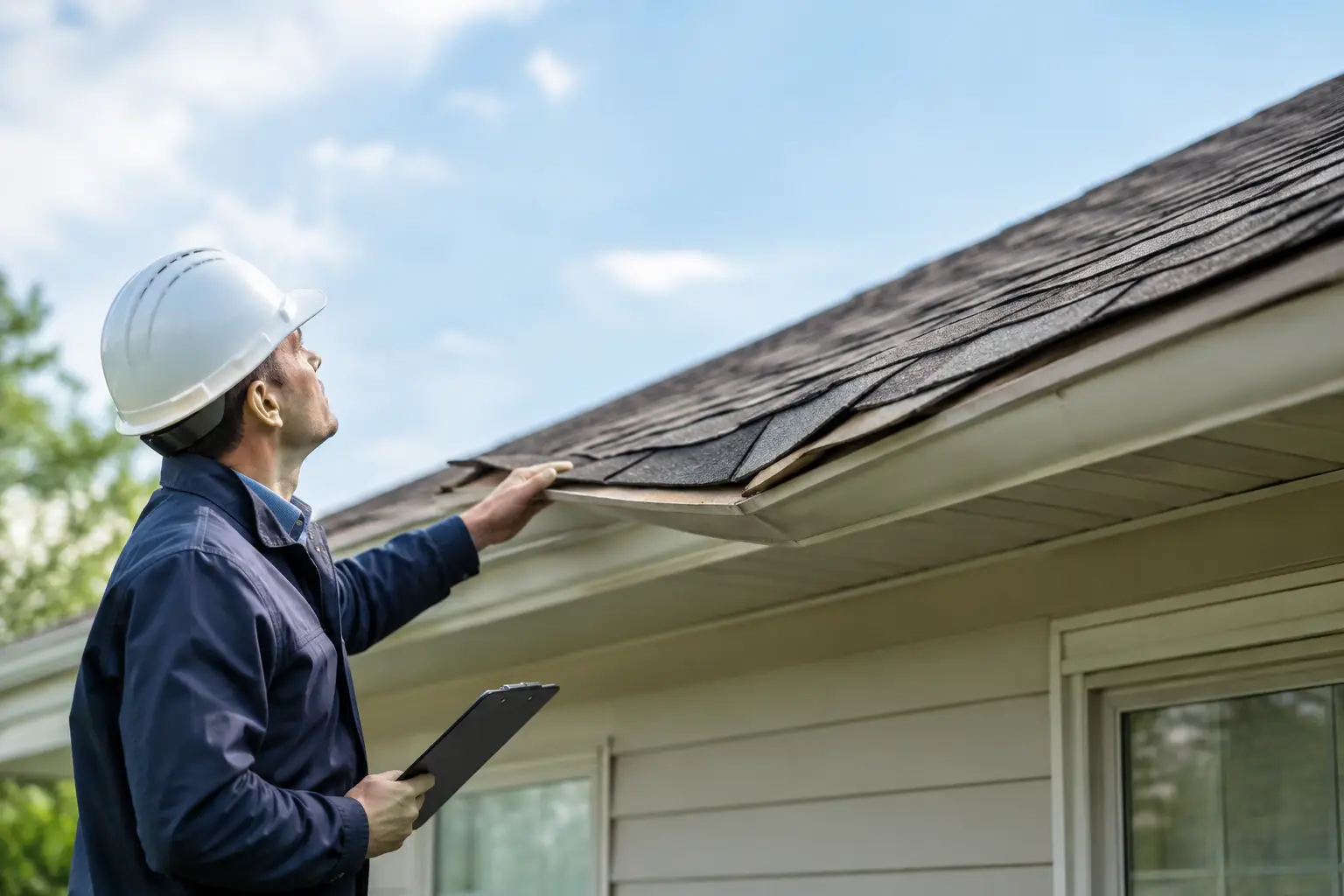
A professional inspection goes further. A qualified roofer evaluates drain flashings, seams around the drainage area, membrane condition, roof slope, insulation compression, parapet caps, edge metal, and the condition of gutters or downspouts. If moisture is suspected below the membrane, additional diagnostic work may be needed to determine whether a localized repair is enough or whether wet materials should be removed.
Common Drainage Problems and the Right Response
Clogged drains and scuppers are the most straightforward problem. Clearing debris and restoring protective strainers can return the system to normal operation, provided the roof has adequate slope and the outlet itself is sound. Regular cleaning is particularly valuable in the fall and after major storms.
Persistent ponding is more complicated. Applying a patch over the low area may stop a current leak, but it will not change the way water moves across the roof. Depending on the condition of the roof, the appropriate solution may be tapered insulation, drain relocation, an added scupper, a new overflow route, or a full replacement designed with better positive drainage.
Damaged drain flashing needs prompt attention. Drains are roof penetrations, and the connection between the membrane and drain body must remain watertight through thermal movement and weather exposure. Cracks, loose seams, deteriorated sealant, and membrane shrinkage near drains can all let water enter the assembly.
Overflow drainage also deserves attention. Buildings with internal drains often need secondary drains or overflow scuppers that activate if the primary system is blocked. These outlets are a safety feature, not an optional extra. They help prevent excessive water loading and provide a visible signal that the primary drainage path may be obstructed.
Maintenance That Prevents Expensive Repairs
Flat roof maintenance is most effective when it is scheduled, not triggered by an interior leak. For many properties, inspections in spring and fall are a sensible baseline, with additional checks after severe wind, intense rain, or heavy snowmelt. Commercial roofs with foot traffic, nearby trees, or complex mechanical equipment may need more frequent attention.
Keep drains, scuppers, gutters, and downspouts clear. Remove loose debris that can migrate to outlets. Watch for changes in how water leaves the roof, including overflowing gutters, water cascading over parapets, or downspouts discharging too close to the foundation. Inside the building, respond quickly to ceiling stains or musty odors near the top floor.
Avoid relying on coatings or sealant as a cure for every drainage issue. A coating can be useful in the right roofing system and condition, but it cannot correct blocked outlets, failed flashing, saturated insulation, or inadequate slope. The repair should match the cause, not just the visible symptom.
For homeowners and property managers in Norwalk and throughout Fairfield County, Rick’s Main Roofing can evaluate low-slope drainage concerns as part of a roof repair, maintenance, or replacement assessment. An experienced review is especially valuable when a roof has repeated leaks, standing water, storm damage, or uncertain repair history.
A dry ceiling after the next storm is reassuring, but a roof that drains properly season after season is the result worth protecting. Addressing slow drainage early gives you more repair options, helps preserve the roof system, and reduces the chance that a manageable exterior issue becomes an urgent interior one.