

A hailstorm can be brief, loud, and easy to dismiss once the sky clears. But can hail damage roof shingles without leaving an obvious hole or a visible leak? Absolutely. Hail can bruise, crack, loosen, or strip protective granules from shingles, creating damage that may not become apparent until the next heavy rain, winter freeze, or windstorm.
For homeowners and property managers in Norwalk, Fairfield County, and coastal Connecticut communities, a prompt roof assessment after a severe storm can prevent a manageable repair from becoming interior water damage, mold growth, or a premature roof replacement.
Can Hail Damage Roof Shingles Without a Leak?
Yes. Asphalt shingles are designed to withstand routine weather, but they are not indestructible. The impact of hail can fracture the shingle’s asphalt layer or dislodge the granules that protect it from ultraviolet exposure. The shingle may remain in place and look acceptable from the ground, yet its ability to shed water and withstand sun and temperature changes may be reduced.
Whether hail causes meaningful damage depends on more than hail size. A storm with smaller hail driven by strong wind can damage a roof more severely than larger hail falling straight down. The age and condition of the roof matter as well. Older shingles are generally more brittle, while newer shingles may be more resilient but can still sustain impact marks or granule loss.
Roof slope, building height, nearby tree cover, and the material itself also affect the outcome. A steep roof may show concentrated impact on one slope, while a low-slope commercial roof can have damage at seams, flashings, drains, and membrane surfaces. Cedar, slate, metal, and rubber roofing require material-specific inspection methods. What appears minor on one system may be a serious concern on another.
What Hail Damage to Roof Shingles Looks Like
Hail damage does not always look like missing shingles. A trained inspection focuses on patterns, impact areas, and related components rather than one isolated mark. On asphalt roofing, common signs include:
- Dark, round spots where granules have been knocked away
- Soft or bruised areas that feel slightly spongy when carefully pressed
- Cracks, splits, or punctures in shingle tabs
- Exposed fiberglass matting beneath the asphalt surface
- Fresh granules collecting in gutters, downspouts, or at the base of downspout extensions
Granule loss deserves close attention, but it should be evaluated in context. Some loose granules are normal, particularly on a new roof or an aging roof near the end of its service life. Storm-related damage often appears as distinct, randomly located impact marks across multiple shingles. An experienced roofer can distinguish likely hail impact from ordinary weathering, blistering, foot traffic, manufacturing defects, or mechanical damage.
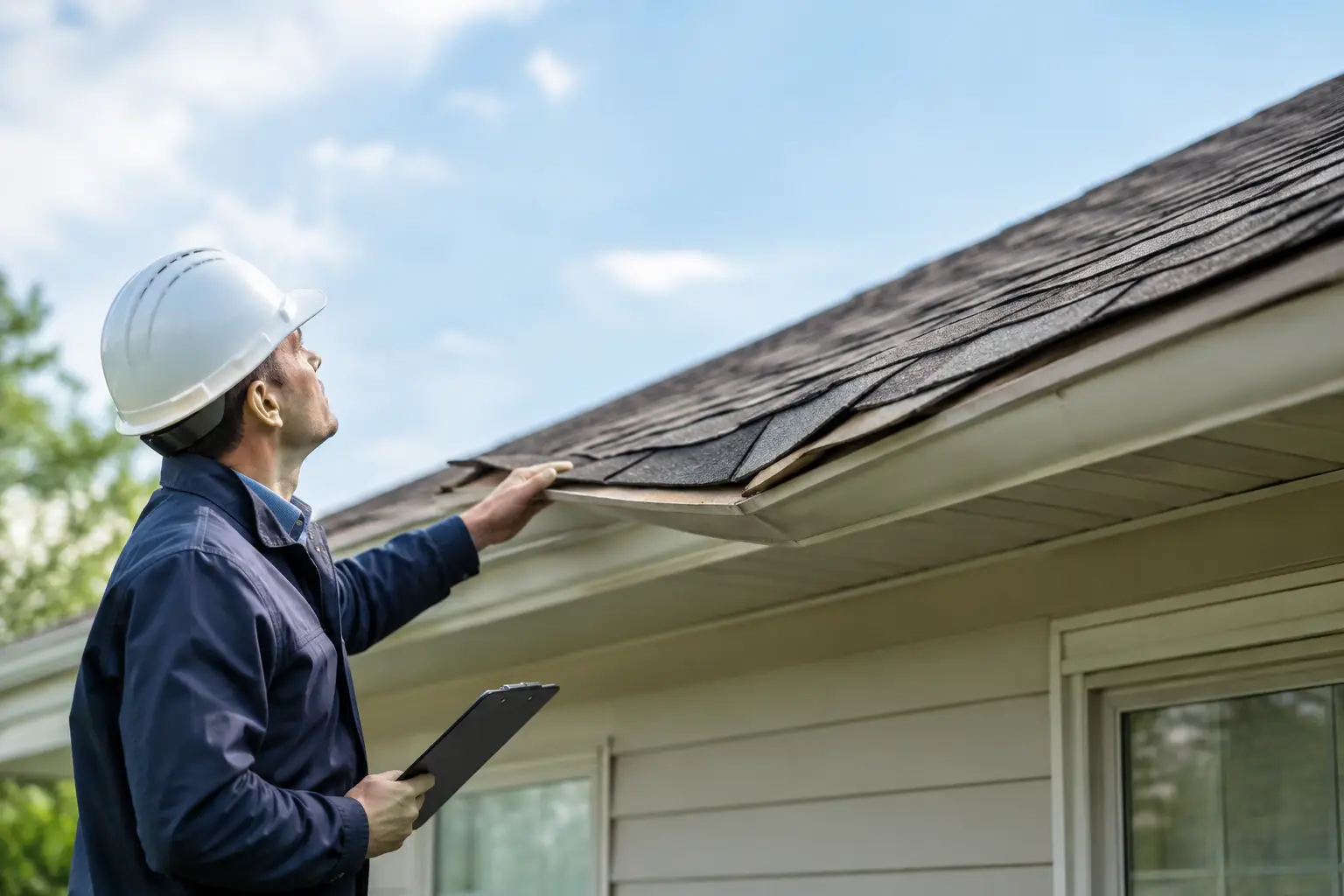
Do not climb onto the roof to investigate after a storm. Wet roofing is hazardous, and walking on damaged or aging shingles can make the problem worse. A ground-level review with binoculars can reveal fallen branches, displaced flashing, bent gutters, damaged vents, or obvious missing materials. Anything beyond that is best left to a qualified roofing professional.
The Damage May Extend Beyond the Shingles
A roof is a system. Hail that strikes shingles can also affect ridge caps, pipe boots, skylight flashing, chimney flashing, gutters, siding, window screens, roof vents, and HVAC equipment. These details matter because a leak often begins at a transition or penetration rather than in the middle of a roof field.
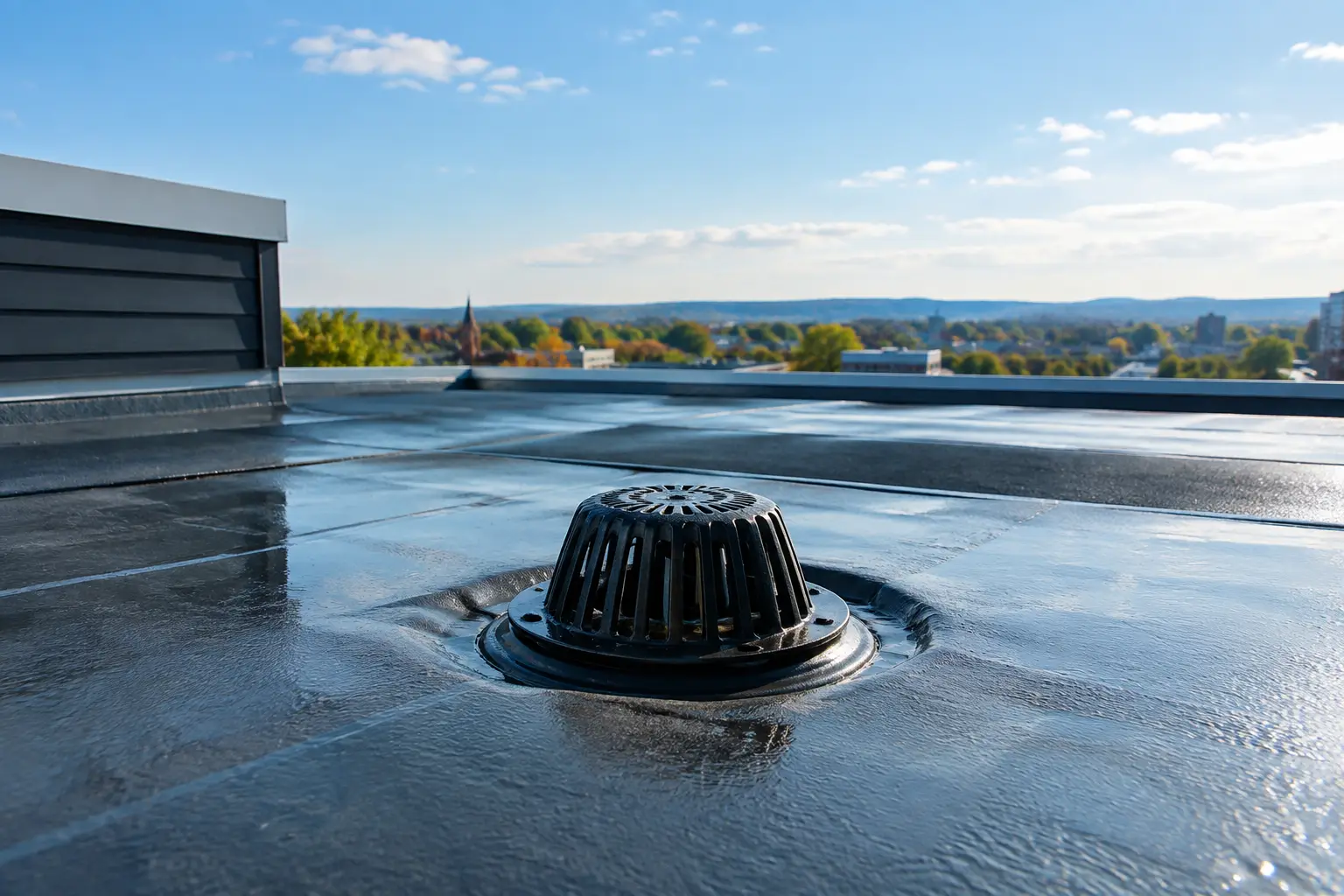
On a commercial building, the inspection should include membrane seams, edge metal, drainage areas, curbs, rooftop equipment flashings, and interior ceiling areas. Even a small puncture or lifted seam can allow water beneath the roof surface, where it may travel before it becomes visible inside.
Connecticut weather adds another concern. Hail damage that seems limited in summer can be stressed by autumn rain, freeze-thaw cycles, snow accumulation, and ice dams during winter. A weakened shingle or flashing detail may hold up for a while, then fail when the roof faces its next demanding weather event.
When to Schedule a Professional Roof Inspection
Schedule an inspection after a storm that produced hail in your immediate area, especially if neighbors report damage to vehicles, siding, gutters, or roofs. You should also arrange an evaluation if you notice new granules in gutters, a ceiling stain, water around an attic vent, broken or dented exterior components, or a roof that is already near the end of its expected lifespan.
Timing matters. An inspection soon after the storm documents the roof’s condition while evidence is still clear. It also allows repairs to be completed before water finds a path into the attic, insulation, walls, or electrical systems. Waiting for a leak is rarely a cost-saving strategy. By the time water reaches an interior ceiling, the repair may involve more than the roof.
For an active leak, visible opening, or storm-related damage that exposes the building to rain, emergency protection should be arranged immediately. Temporary measures can limit water intrusion while a complete repair plan is developed. Property owners should avoid placing tarps or attempting repairs themselves unless it can be done safely from the ground.
Repair or Replacement: What Is the Right Response?
Not every hail-damaged roof needs replacement. A localized repair may be appropriate when damage is limited to a small area, matching shingles are available, and the surrounding roofing remains in good condition. Replacing damaged shingles, repairing flashing, and addressing related drainage issues can restore performance without disturbing the full system.
Replacement may be the better value when hail damage is widespread, shingles have become brittle, multiple roof slopes are affected, or the roof was already nearing the end of its useful life. A patchwork approach on an extensively worn roof can lead to repeated service calls and mismatched materials. For commercial properties, the decision may also depend on the roof membrane’s condition, warranty requirements, drainage performance, and the extent of moisture beneath the surface.
A professional assessment should explain what was found, where it was found, and why a particular repair or replacement recommendation makes sense. The right answer is based on the roof’s condition, not simply the severity of one storm.
Documenting Hail Damage for an Insurance Claim
If you believe hail damaged your roof, begin with simple documentation. Take dated photos from the ground of hail accumulation, damaged gutters, screens, siding, and other visible exterior signs. Note the date and approximate time of the storm, and save weather alerts or local reports if available.
Then schedule a roofing inspection before making permanent repairs. A detailed contractor assessment can identify affected roof areas and related components, helping you understand the scope of work before speaking with your insurer. Keep copies of inspection findings, photographs, estimates, invoices, and all claim correspondence.
Insurance coverage varies by policy, deductible, roof age, and the cause of damage. A roofing contractor can document roofing conditions and provide a repair or replacement estimate, but the insurance carrier determines coverage. Be cautious with anyone who promises claim approval or pressures you to sign immediately after a storm. Storm damage deserves a careful evaluation, clear paperwork, and workmanship you can rely on after the crews leave.
Protecting Your Roof Before the Next Storm
No roof can be made completely hail-proof, but routine maintenance reduces the chance that a storm exposes an existing weakness. Keep gutters and downspouts clear, remove overhanging limbs where practical, and address lifted shingles, worn sealants, damaged flashing, and ventilation concerns before severe weather arrives.
Regular inspections are especially worthwhile for older roofs, coastal properties, historic homes, and commercial buildings with low-slope systems. These roofs may have details that require specialized experience and materials. Rick’s Main Roofing provides inspections, repairs, replacements, and emergency response for roofing systems throughout Fairfield County, with the material-specific expertise needed to evaluate storm damage accurately.
After hail falls, the most useful next step is not guessing from the driveway. Have the roof checked, understand the condition of the complete roofing system, and make a timely decision that protects the building beneath it.