

A roof can look perfectly sound from the driveway and still be vulnerable when a nor’easter begins lifting at its edges. Choosing the best shingles for high winds is not just about buying a product with an impressive rating. In Fairfield County, wind performance depends on the shingle, the roofing system beneath it, and installation details that keep the entire roof working as one assembly.
For homeowners, property managers, and commercial building owners, the right decision starts with a realistic view of the property. A sheltered inland home has different needs than a waterfront property exposed to Long Island Sound, while a steep, tall roof may see greater wind pressure than a low-profile ranch. The best roof is the one specified and installed for the conditions it will actually face.
What Makes a Shingle Suitable for High Winds?
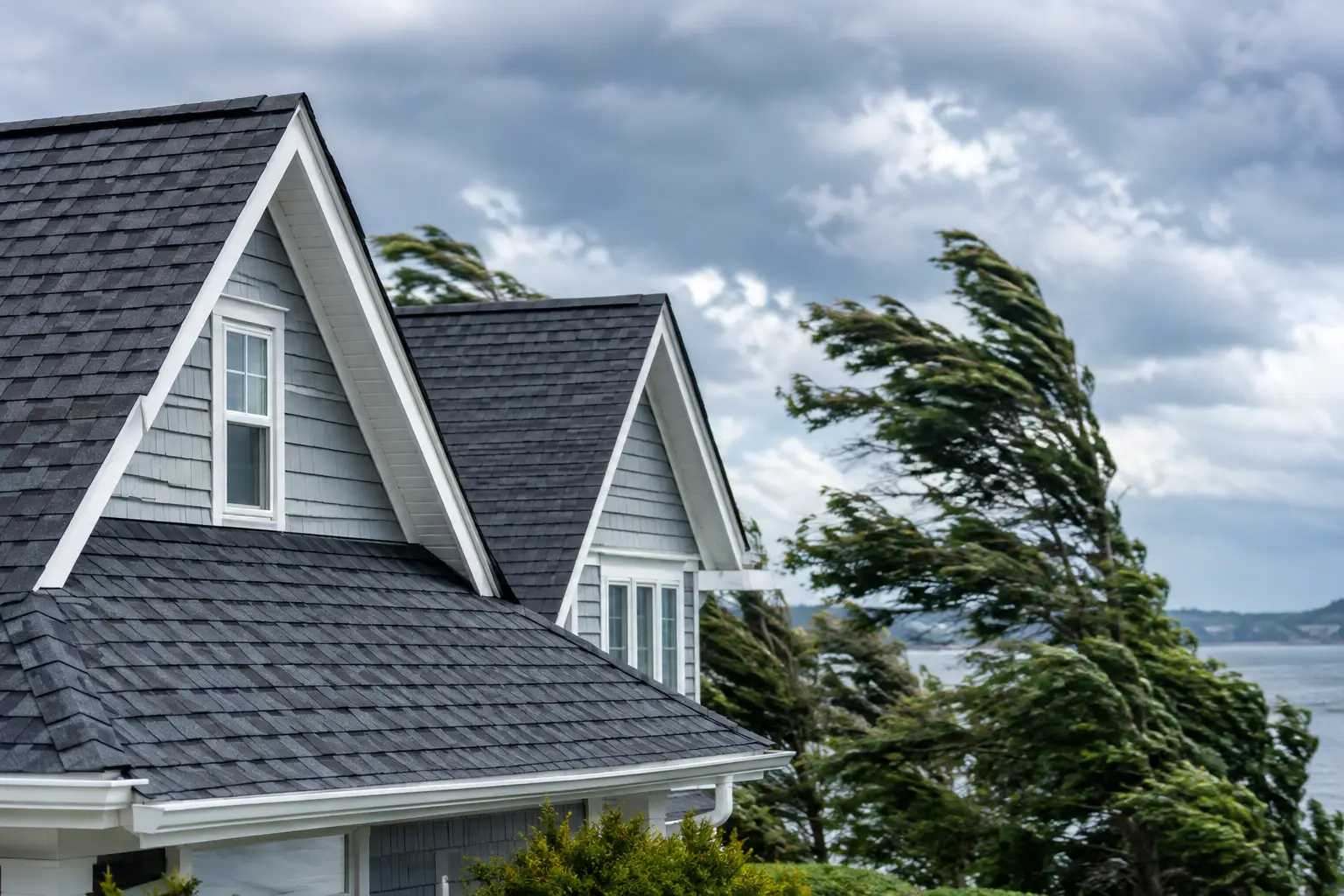
Wind does not usually remove an entire roof at once. It finds a vulnerable point, often at the eaves, rakes, ridge, valleys, or around penetrations. Once a tab or edge lifts, wind-driven rain can reach the underlayment and roof deck. Continued uplift can then loosen adjacent shingles.
A high-wind shingle should have a tested wind rating, a strong sealing strip, adequate weight and construction, and compatibility with a complete roofing system. Architectural asphalt shingles are typically the practical choice for many Connecticut homes because they are thicker and more dimensional than traditional three-tab shingles. Their laminated construction generally offers better resistance to wind uplift and a more substantial appearance.
Three-tab shingles can be an economical option on some properties, but they usually have lower wind resistance and fewer design options. On a home with regular storm exposure, a low-slope roof edge, or an open coastal setting, the initial savings may not justify the added risk of repairs or premature replacement.
Wind Ratings Matter, but So Does the Fine Print
Many quality architectural shingles carry wind ratings in the 110 to 130 mph range when installed according to the manufacturer’s requirements. This can be appropriate for many Connecticut properties, but a rating is not a blanket guarantee. It is based on specific conditions, including the approved number and placement of fasteners, proper shingle sealing, and compatible starter shingles and ridge caps.
A shingle rated for higher winds is not automatically the right choice for every building. Roof height, pitch, building orientation, local terrain, nearby trees, and coastal exposure all affect wind loads. A house on an open hill or near the shoreline may require more careful material selection and installation planning than a similar house in a protected neighborhood.
Homeowners should also understand that a wind rating is different from an impact rating. Impact-resistant shingles are designed to better withstand hail or falling debris. That can be valuable, particularly under mature trees, but it does not replace the need for strong wind performance. A shingle can offer one benefit without providing the same level of the other.
Best Shingles for High Winds: Architectural Asphalt Options
For most residential roof replacements in Norwalk and throughout Fairfield County, premium architectural asphalt shingles offer the strongest balance of durability, appearance, availability, and cost. Look for products from established manufacturers with documented high-wind installation requirements and system components made to work together.
Heavier laminated shingles generally provide more resistance to lifting than entry-level products. Their dimensional profile can also complement colonial homes, contemporary homes, and many higher-end properties without the cost and structural considerations of natural slate. Color selection matters aesthetically, but the technical details should come first: wind rating, warranty requirements, ventilation compatibility, and installation method.
For properties that demand a distinctive architectural finish, designer asphalt shingles may be worth considering. These products can replicate the texture of slate or cedar while providing modern performance features. They are more expensive than standard architectural shingles, but may make sense for prominent homes where curb appeal and wind resistance are both priorities.
Cedar, slate, and metal can also perform well in windy conditions when properly designed and installed. However, they require material-specific expertise. Natural slate is heavy and needs an appropriate roof structure. Cedar needs careful detailing and ongoing maintenance. Metal roofing has excellent wind potential but requires correct panel design, clip or fastener spacing, and edge detailing. There is no single material that is best for every roof.
Installation Is the Difference Between a Rating and Real Protection
The most expensive shingles cannot compensate for poor workmanship. Wind resistance is built into the roof one layer at a time, beginning with the deck. If deteriorated plywood, loose sheathing, or damaged fascia is covered rather than repaired, fasteners may not hold as intended when the roof is under pressure.
Proper installation includes a correctly applied starter course at the roof perimeter, manufacturer-approved nails driven at the specified location, and a sufficient number of fasteners per shingle. In high-wind areas, installers may use additional fasteners where allowed or required by the product instructions and local code. Nails that are overdriven can cut through the shingle mat; nails that are underdriven can prevent shingles from sealing flat. Both conditions can create a future failure point.
Ridge caps, hip caps, flashing, pipe boots, chimney transitions, and drip edges deserve the same attention as the field shingles. These are common areas for wind-driven water intrusion. A complete system also includes appropriate underlayment and ice-and-water protection at vulnerable locations. In Connecticut, that protection helps address both storm conditions and the risk of ice dams during winter.
Ventilation is another factor that is often overlooked. Poor attic ventilation can trap heat and moisture, shorten shingle life, and contribute to uneven aging. It does not directly create wind uplift, but a roof that ages prematurely is less likely to perform as intended over time.
Coastal and Elevated Homes Need a More Careful Approach
Near the coast, wind exposure is not limited to major named storms. Repeated gusts, salt air, and wind-driven rain place ongoing stress on roof edges and flashing details. Homes near Long Island Sound may benefit from a roofing plan that goes beyond selecting a higher-rated shingle.
A contractor should evaluate the roof’s exposure, the condition of the decking, the attachment of soffits and fascia, the type and placement of vents, and the condition of nearby gutters. Wind can force water sideways and upward, so transitions around walls, dormers, skylights, and chimneys need particular care.
For taller homes and buildings with complex rooflines, wind pressures can vary substantially across the roof. Corners and perimeter zones often experience stronger uplift than the center field. That is why experienced local roofers do not treat every roof replacement as a standard installation. The roof geometry and location should shape the scope of work.
When Repair Is Enough and When Replacement Makes More Sense
A few missing shingles after a storm do not always require a full replacement. If the roof is otherwise in good condition, matching materials are available, and the damage is limited, a targeted repair can restore protection. Prompt action matters because exposed underlayment or decking can allow water into the home.
Replacement becomes the better investment when shingles are brittle, curling, repeatedly blowing off, losing granules heavily, or nearing the end of their service life. It is also worth considering when the roof has had several repairs in different areas. Continually patching an aging roof may cost more over time and leave the property exposed during the next major weather event.
A professional inspection after significant wind can identify lifted tabs, damaged seals, loose flashing, and concealed water entry before a stain appears on the ceiling. Rick’s Main Roofing evaluates roofing systems with Connecticut weather conditions, building details, and long-term performance in mind.
Questions to Ask Before Choosing a High-Wind Shingle
Before approving a roofing proposal, ask which shingle line is recommended, what wind rating applies to the planned installation, and whether the estimate includes the complete manufacturer-approved system. Confirm how damaged decking will be handled if it is found during tear-off, and ask about starter materials, underlayment, flashing, ridge caps, ventilation, and ice-and-water protection.
It is also reasonable to ask how the contractor will address your property’s specific exposure. A dependable answer should account for the roof’s age, pitch, complexity, location, and existing condition instead of relying on a one-size-fits-all recommendation.
When strong winds are part of life where you own property, your roof deserves more than a product selection based on color or price. A careful inspection and a properly designed roofing system can provide confidence long after the forecast changes.