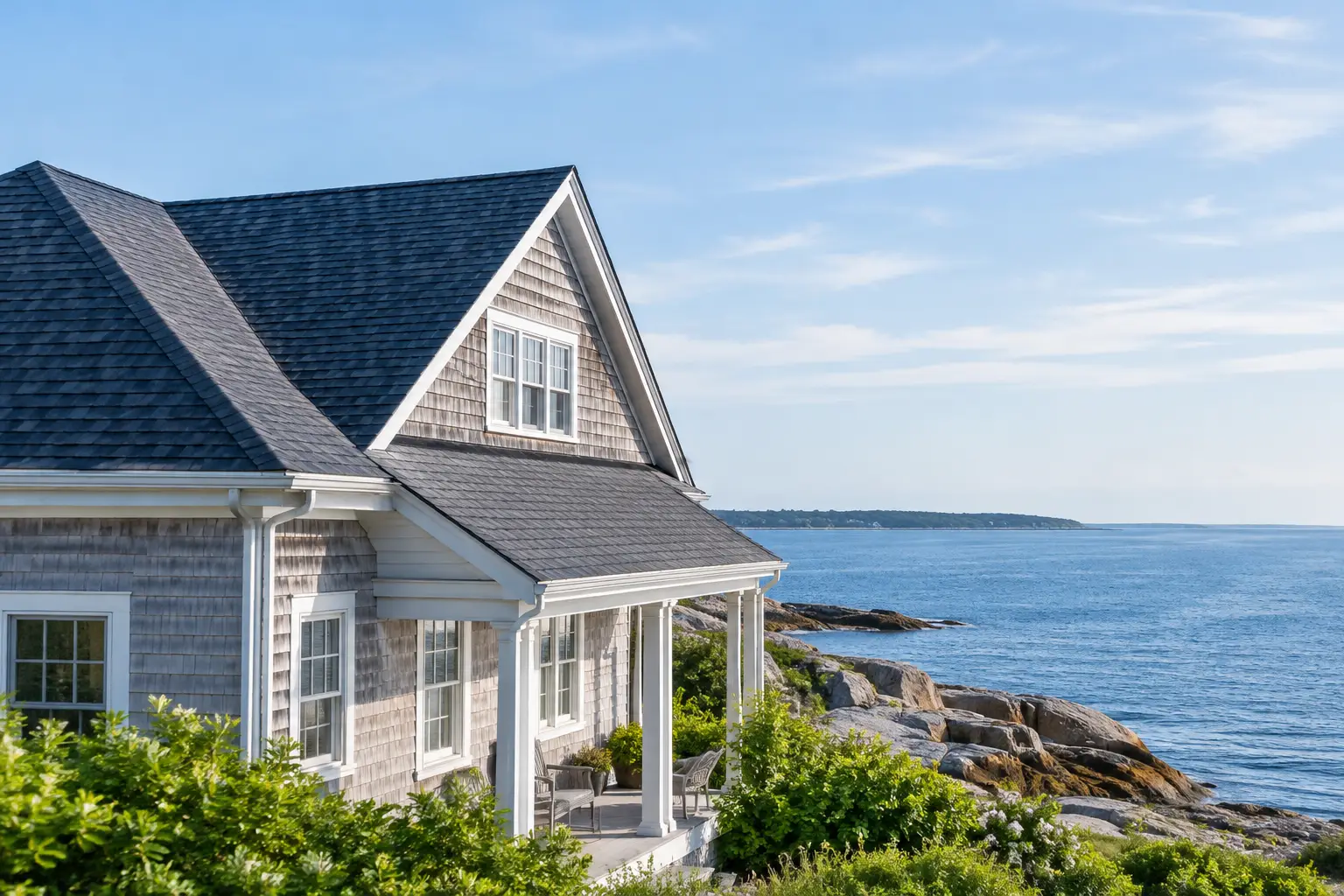


A roof near the Connecticut shoreline faces more than ordinary rain and snow. Wind-driven rain can work under aging shingles, salt air can accelerate corrosion, and winter freeze-thaw cycles can turn a small weak point into an active leak. This Connecticut coastal roofing guide explains what Fairfield County property owners should consider when protecting a home, historic property, or commercial building near Long Island Sound.
Why Coastal Roofs Need a Different Standard
Coastal roofing is not only about choosing a material that looks appropriate for the neighborhood. The entire roof assembly must be prepared for repeated exposure to wind, moisture, salt, temperature swings, and storms that can arrive with little warning.
High winds place extra stress on shingles, ridge caps, flashing, gutters, and roof edges. Wind does not need to remove a large section of roofing to create a problem. A lifted shingle tab, a loose piece of metal flashing, or an unsealed penetration around a vent pipe can allow water into the system.
Salt air is another long-term concern. It can shorten the service life of exposed fasteners, metal accessories, HVAC supports, gutters, and flashing if the wrong products are used or if existing components are already deteriorating. Properties closer to the water typically need more frequent inspections, but wind exposure, tree cover, roof design, and maintenance history matter as much as distance from the shore.
Winter adds another layer of risk. Snow accumulation, ice dams, blocked drainage, and inadequate attic ventilation can all contribute to moisture intrusion. A roof that performs well during a summer storm may still be vulnerable when melting snow refreezes along the eaves.
Connecticut Coastal Roofing Guide: Start With the Whole System
A durable coastal roof is a system, not simply a layer of shingles. The visible roofing material matters, but its performance depends on the deck, underlayment, ventilation, flashing, fasteners, and drainage components beneath and around it.
Wind-rated installation matters
For asphalt shingles, correct fastening patterns and the manufacturer-approved number of nails are essential. Nails placed too high, too low, or too few can reduce wind resistance and may affect warranty coverage. Starter strips, ridge caps, and edge details deserve the same attention. These are common locations for wind damage because they experience concentrated uplift.
Roofers should also assess the condition of the roof deck. If plywood or other decking has softened from prior leaks, new roofing installed over it will not provide the secure fastening needed for long-term performance. Replacing compromised decking during a roof replacement is a necessary repair, not an optional cosmetic upgrade.
Flashing is where many leaks begin
Chimneys, skylights, sidewalls, valleys, dormers, vent pipes, and roof-to-wall transitions need properly integrated flashing. Caulk alone is not a reliable long-term answer for a failed flashing detail. Sealants can be useful as part of a complete installation, but they should not substitute for properly lapped metal and water-shedding design.
On coastal properties, flashing material and fastener compatibility should be considered carefully. Corrosion-resistant components can help reduce premature deterioration in salt-exposed conditions. This is especially relevant on metal roofs, low-slope commercial systems, and homes with complex architectural details.
Ventilation protects the roof from the inside
A poorly ventilated attic can trap heat and moisture. During winter, warm interior air can contribute to condensation and ice dams. During warmer months, excess heat can increase stress on roofing materials and make upper floors less comfortable.
Proper ventilation is not one-size-fits-all. The best approach depends on attic configuration, insulation levels, existing intake and exhaust openings, and whether the roof assembly is vented or unvented. A professional inspection can identify whether moisture staining, mold-like growth, peeling paint, or recurring ice dams are connected to ventilation problems rather than the roof covering alone.
Choosing Materials for Shoreline Properties
The right roofing material depends on the building style, roof slope, budget, local exposure, and expected maintenance level. No single material is the best fit for every coastal property.
Architectural asphalt shingles remain a practical choice for many Connecticut homes. They provide strong curb appeal, broad color selection, and dependable performance when installed with quality underlayment and wind-resistant detailing. Premium shingles may be a worthwhile consideration for homes with significant wind exposure or owners seeking a more dimensional appearance.
Cedar roofing offers a distinctive look that suits many traditional and higher-end coastal homes. It requires knowledgeable installation and ongoing maintenance. Moisture management, airflow, fire considerations, and natural weathering should all be discussed before choosing cedar. It can be a beautiful option, but it is not the lowest-maintenance choice.
Slate has exceptional longevity and a classic appearance, particularly for historic properties. However, slate is heavy, requires specialized craftsmanship, and may demand structural evaluation before installation. Repairs also require a contractor experienced with slate rather than a general roofer who only works with asphalt shingles.
Metal roofing can perform very well in coastal conditions when the system, finish, flashings, and fasteners are selected for the environment. It sheds snow efficiently and offers a long service life, but expansion and contraction details must be handled correctly. Not every metal panel profile is appropriate for every roof shape or exposure level.
For flat and low-slope roofs, common on commercial buildings and some modern homes, rubber and membrane systems provide reliable water protection when properly designed and maintained. Drainage is critical. Standing water, clogged drains, open seams, and deteriorated edge metal can all shorten the life of a low-slope system.
Maintenance That Prevents Expensive Coastal Repairs
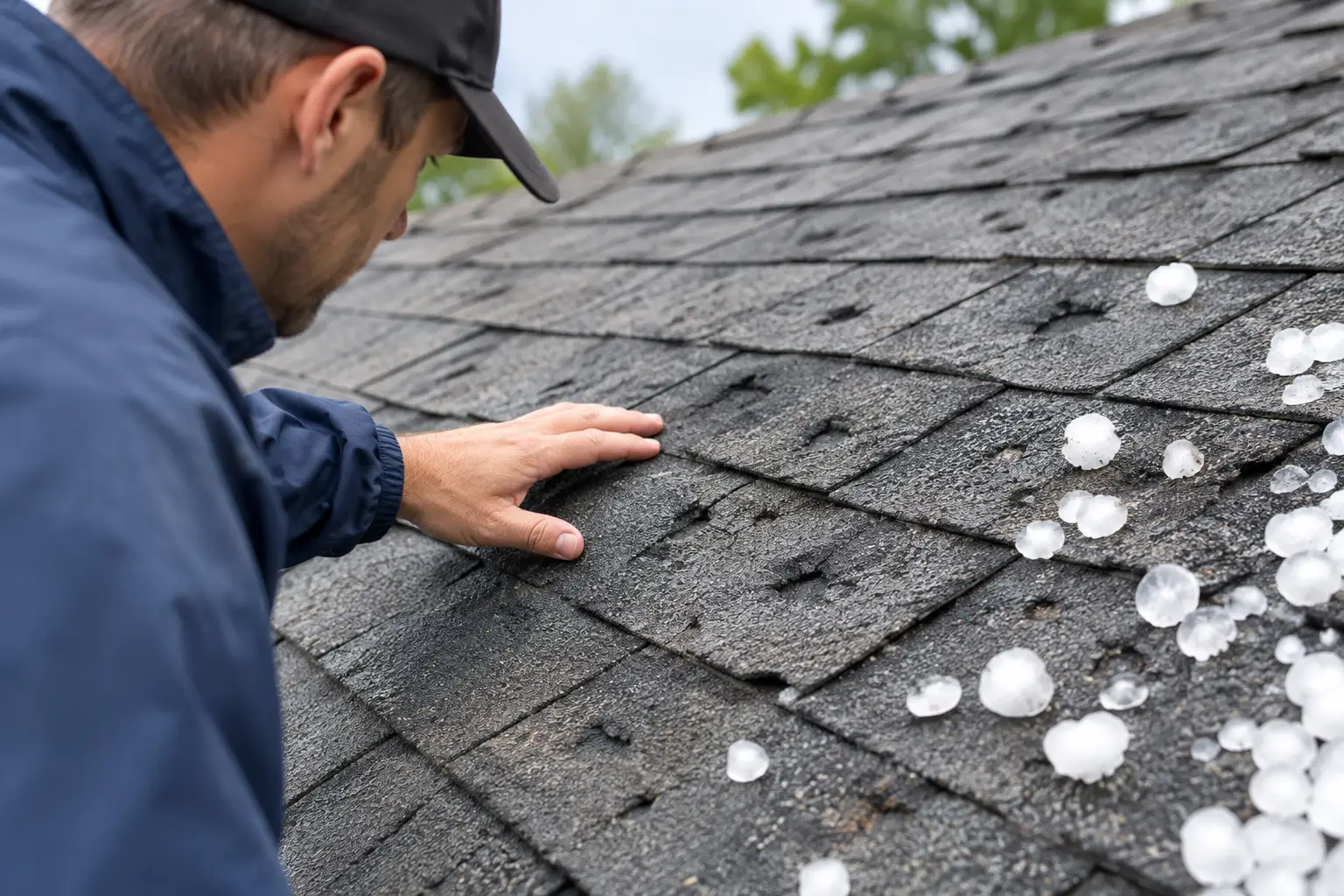
A coastal roof should be inspected at least annually and after a major windstorm. Property owners do not need to climb onto the roof to recognize warning signs. Water marks on ceilings, damp attic insulation, granules in gutters, loose siding near rooflines, missing shingles, rusted flashing, and overflowing gutters all justify a professional evaluation.
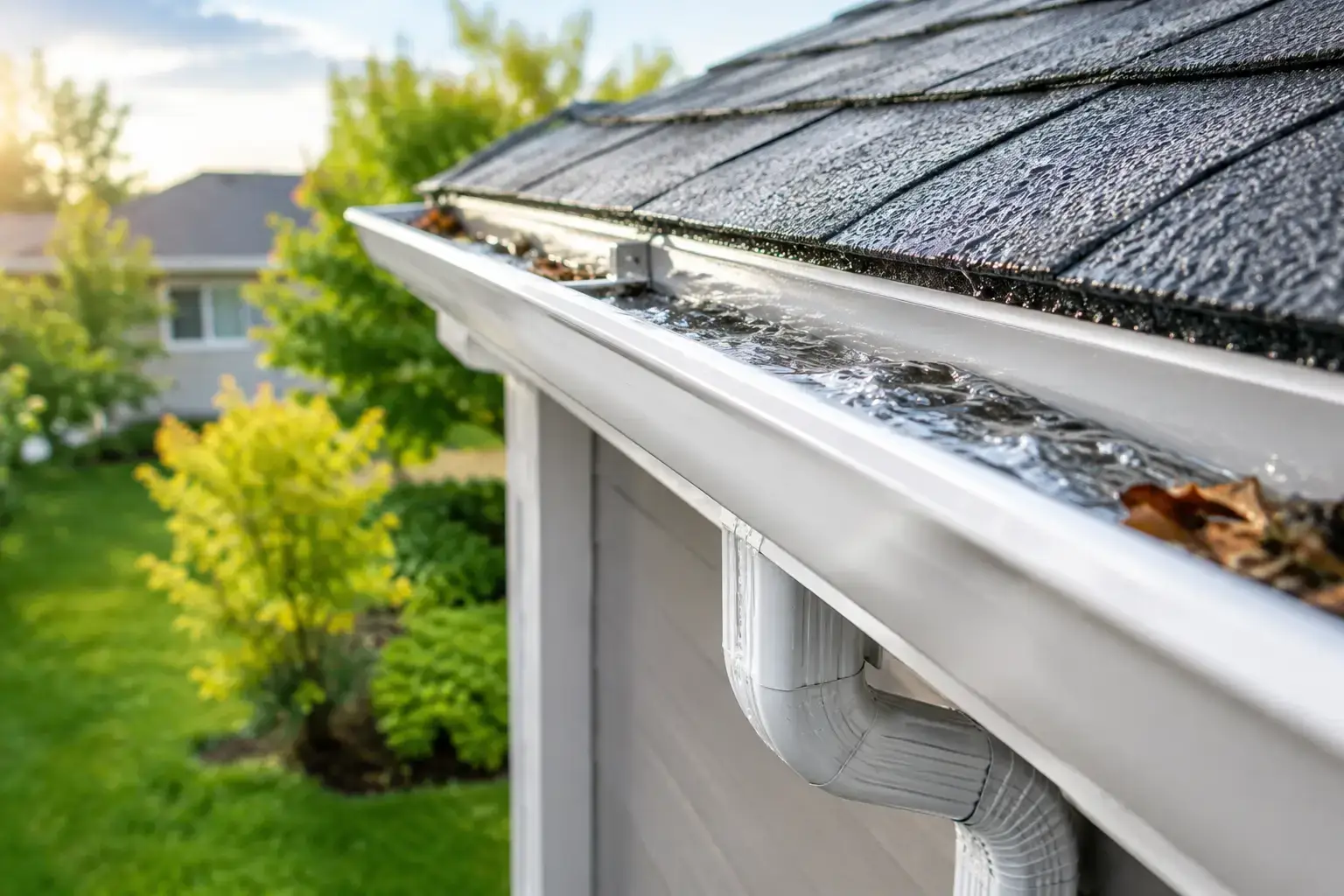
Keep gutters, downspouts, scuppers, and roof drains clear. On a low-slope commercial roof, blocked drainage can allow water to pond and place added stress on seams and penetrations. On a steep-slope residential roof, clogged gutters can contribute to water backup and ice dam formation during winter.
Tree limbs should be trimmed back from the roof where practical. Branches can scrape roofing surfaces, clog gutters, and create direct impact damage in storms. Moss and algae should also be addressed carefully. Aggressive pressure washing can damage shingles, dislodge granules, and force water beneath roofing materials.
Do not ignore minor leaks because they stop after the storm passes. Water can travel along roof decking, framing, insulation, and electrical pathways before becoming visible indoors. By the time a ceiling stain appears, the source may be several feet away.
Repair or Replacement: How to Make the Right Call
A targeted repair can be the right decision when damage is limited, the remaining roof has substantial service life, and replacement materials can be matched effectively. Replacing damaged flashing, sealing a properly identified penetration, or repairing a small storm-damaged section can restore protection without requiring a full roof replacement.
Replacement becomes more practical when repairs are recurring, shingles are broadly curled or missing granules, leaks appear in multiple locations, or the roof is nearing the end of its expected lifespan. It may also be the better investment when old installation details, poor ventilation, deteriorated decking, or widespread flashing issues are affecting the entire system.
For commercial owners and property managers, the decision should account for business operations. A planned replacement is usually easier to schedule, budget, and coordinate than an emergency response after a failure disrupts tenants, equipment, or inventory.
Choose a Contractor Who Understands Connecticut Conditions
Coastal roofing work requires accurate diagnosis and careful installation, not quick surface fixes. Ask whether the contractor has experience with your roofing material, understands wind and salt exposure, and can evaluate the full roof system. For historic homes, slate, cedar, metal, and specialized low-slope systems, material-specific experience is particularly important.
Look for clear written scopes of work that explain what will be repaired or replaced, how flashing and underlayment will be handled, and whether damaged decking will be addressed if discovered. Manufacturer certifications and local experience can provide added confidence, especially when selecting a contractor for a full replacement or a complex commercial project.
Rick’s Main Roofing serves Norwalk, Fairfield County, and nearby communities with residential and commercial roofing services, including inspections, repairs, replacements, maintenance, and emergency response.
A coastal roof does not need to wait for a visible leak to deserve attention. A timely inspection, sound drainage, and properly detailed repairs can help protect the building beneath it through the next storm season and the years that follow.