

A hailstorm can leave a roof looking almost unchanged from the ground while causing damage that shortens its service life. So, what does roof hail damage look like when you get close enough to inspect it? The answer depends on the roofing material, the size and density of the hail, the roof’s age, and the direction of the storm. Some signs are obvious. Others are subtle and require an experienced roofing inspection to identify accurately.
For Fairfield County property owners, a prompt inspection after a significant storm can make the difference between a targeted repair and a leak that spreads into insulation, ceilings, walls, or a commercial building’s interior.
What Does Roof Hail Damage Look Like on Shingles?
On asphalt shingles, hail damage often appears as small, dark, circular impact marks. A damaged area may look like a bruise, with granules knocked loose to expose the asphalt beneath. Unlike normal aging, which tends to affect larger areas evenly over time, hail impacts are usually scattered and irregular.
A roofing professional may also find shingle surfaces that feel soft or slightly depressed at the point of impact. Hail can fracture the mat beneath the shingle even when the surface does not look severely damaged. That hidden break allows moisture and UV exposure to accelerate deterioration.
Granule loss alone is not proof of hail damage. Older shingles naturally shed granules, especially near the end of their useful life. However, fresh, concentrated granule loss following a hailstorm deserves attention, particularly when it appears alongside impact marks on gutters, vents, flashing, or other metal roof components.
Common Signs of Hail Damage From the Ground
A ground-level check cannot confirm the full condition of a roof, but it can help you recognize when to schedule an inspection. Look for dents in aluminum gutters and downspouts, dings on metal roof vents, damaged window screens, chipped siding, or pockmarks on painted trim. These items often show evidence of the same hail that struck the roof.
Check the area around downspouts as well. An unusual accumulation of loose shingle granules after a storm can be a warning sign, though it should be evaluated in context. Avoid climbing onto the roof to investigate. Wet surfaces, loose granules, steep pitches, and unseen storm damage can make a roof unsafe to walk on.
Inside the building, watch for water spots on ceilings, damp attic insulation, peeling paint near upper walls, or a musty odor after rainfall. Hail damage does not always create an immediate leak. A compromised shingle or flashing detail may not allow water inside until the next heavy rain, wind-driven storm, or winter freeze-thaw cycle.
How Hail Damage Looks on Other Roofing Materials
Different materials respond to hail differently. A roof can be damaged without displaying the familiar dark bruises associated with asphalt shingles.
Metal Roofing
Metal roofs commonly show dents, dimples, or paint damage after a hailstorm. Small cosmetic dents may not affect performance, but larger impacts can deform panels, loosen seams, damage protective coatings, or affect fasteners and flashing. On standing seam systems and commercial metal roofs, the location and depth of a dent matter more than appearance alone.
Cedar Shakes and Shingles
Hail can split, crack, or puncture cedar roofing. Fresh impacts may leave sharp-edged breaks or expose lighter, unfinished wood beneath the weathered surface. Because cedar naturally changes color and texture with age, distinguishing storm damage from ordinary wear takes a material-specific assessment.
Slate Roofing
Slate is durable, but it can crack or fracture from a direct hail impact. Damage may appear as chipped corners, broken pieces, or hairline fractures that are difficult to see from the ground. A cracked slate can allow water beneath the roofing system even if most of the tile remains in place. Historic and premium slate roofs should be inspected by a contractor familiar with slate repair methods.
Flat and Low-Slope Roofs
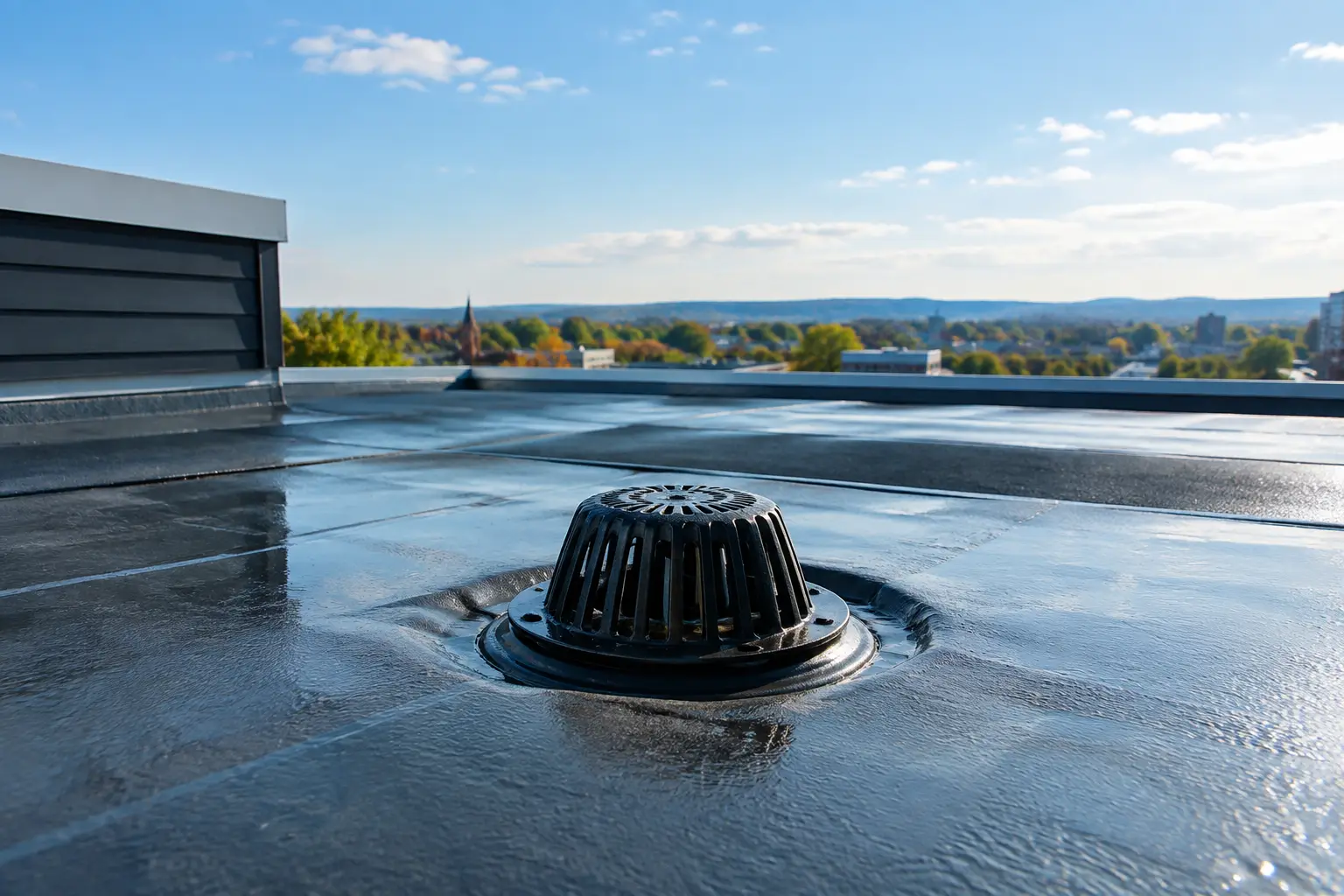
On rubber and other low-slope commercial roofing systems, hail may leave punctures, cracks, surface fractures, or compressed areas in the membrane and insulation below it. Ponding water can make the consequences worse by keeping moisture over a weakened section of roof. For facility managers, a timely inspection is particularly valuable because subtle membrane damage can turn into an interior leak far from the original impact point.
Hail Damage vs. Normal Roof Wear
Not every mark after a storm is hail damage. Blistering, thermal cracking, manufacturing defects, foot traffic, aging, and wind wear can all create conditions that resemble storm impacts. That is why a visual check alone is rarely enough to make a repair, replacement, or insurance decision.
Hail impacts typically have a more random pattern. They may be concentrated on one slope based on the storm’s direction, yet appear on multiple related surfaces such as gutters, flashings, and vents. Normal wear tends to be more consistent across sun-exposed areas or along roof edges. A trained inspector looks at the whole system rather than one suspicious spot.
The roof’s age also matters. Hail that barely affects a newer, flexible shingle may crack or dislodge granules from an older, brittle roof. Conversely, an aging roof may have enough pre-existing wear that a small hail event does not justify full replacement. The right recommendation should account for storm damage, remaining roof life, material condition, and the building’s risk of leaks.
When to Schedule a Professional Roof Inspection
Arrange an inspection after hail large enough to dent vehicles, damage outdoor fixtures, or leave visible marks on gutters and siding. It is also wise to call after a severe storm if your roof is older, has had previous repairs, or protects a coastal, historic, or complex property where small failures can become expensive quickly.
A professional inspection should include more than a quick look at the shingles. The inspector should assess roof slopes, ridges, valleys, penetrations, flashing, gutters, ventilation components, and accessible attic areas. On commercial properties, the inspection should also consider seams, drains, curbs, expansion joints, and areas where water may collect.
Documenting the roof soon after a storm is practical. Take clear photos from the ground of visible exterior damage, note the storm date, and save any relevant weather or repair records. If an insurance claim is appropriate, organized documentation can help establish the condition and timing of the loss. Do not authorize unnecessary work based solely on a door-to-door storm solicitation. A local roofing contractor should be able to explain what was found, where it was found, and whether repair or replacement is warranted.
What to Do If You Find Hail Damage
If you see a ceiling leak or active water intrusion, protect the interior first by moving valuables, containing water where safe, and contacting an emergency roofing professional. Do not attempt a temporary repair during dangerous weather or climb onto a damaged roof.
For non-emergency damage, schedule a detailed assessment before assuming the roof needs replacement. Some hail damage can be addressed with localized repairs, particularly when the affected area is limited and matching materials are available. Broader damage, compromised shingles across several slopes, or damage to a roof already near the end of its life may make replacement the more dependable long-term choice.
Rick’s Main Roofing provides thorough storm-damage inspections for homeowners and property managers throughout Norwalk, Fairfield County, and nearby Connecticut communities. The goal is straightforward: identify the actual condition of the roof, explain the options clearly, and protect the building with workmanship suited to its roofing system.
After a hailstorm, the safest next step is not guessing from the driveway. Have the roof evaluated before the next hard rain turns an unnoticed impact into a preventable repair.