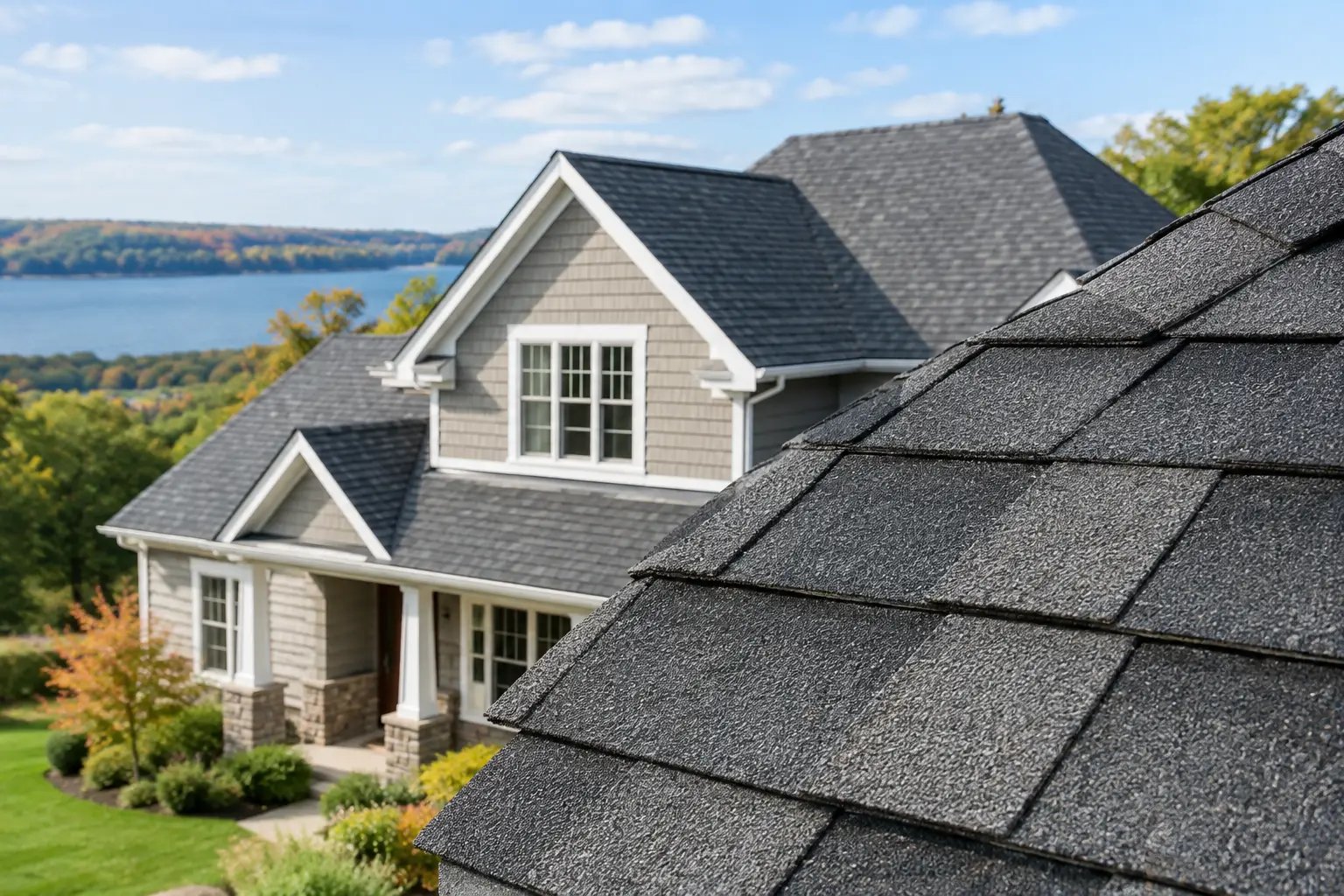


A commercial roof rarely fails without warning. Water stains near a ceiling tile, a drain that holds debris, loose flashing at an HVAC curb, or a seam beginning to separate can all point to a small issue that will become more expensive if it is ignored. This commercial roof maintenance guide is designed to help Connecticut property owners and managers protect their buildings, control repair costs, and make informed decisions about service.
For facilities in Norwalk and throughout Fairfield County, roof maintenance has to account for more than normal wear. Heavy rain, wind-driven coastal weather, freeze-thaw cycles, snow loads, ice dams, and summer heat all put pressure on commercial roofing systems. A consistent maintenance program gives problems less time to develop and helps preserve the useful life of the roof.
Why commercial roof maintenance pays for itself
A commercial roof is a building system, not just a surface. Its membrane or covering works with insulation, flashing, drains, edge metal, rooftop equipment curbs, and interior ventilation to keep water out and manage temperature. When one component fails, moisture can travel beneath the roof surface before appearing inside the building.
That is why waiting for a visible interior leak is a costly strategy. By the time water reaches the ceiling, it may have saturated insulation, corroded decking, damaged electrical components, or affected tenant spaces and inventory. Early repairs are usually more contained, less disruptive, and easier to schedule around business operations.
Maintenance also supports better capital planning. A qualified roofer can document the roof’s condition, identify areas approaching the end of their service life, and help an owner distinguish between a repairable issue and a roof that should be budgeted for replacement. The right answer depends on the roofing material, the age of the system, the extent of moisture intrusion, and how well the roof has been maintained.
Build a maintenance schedule around your building
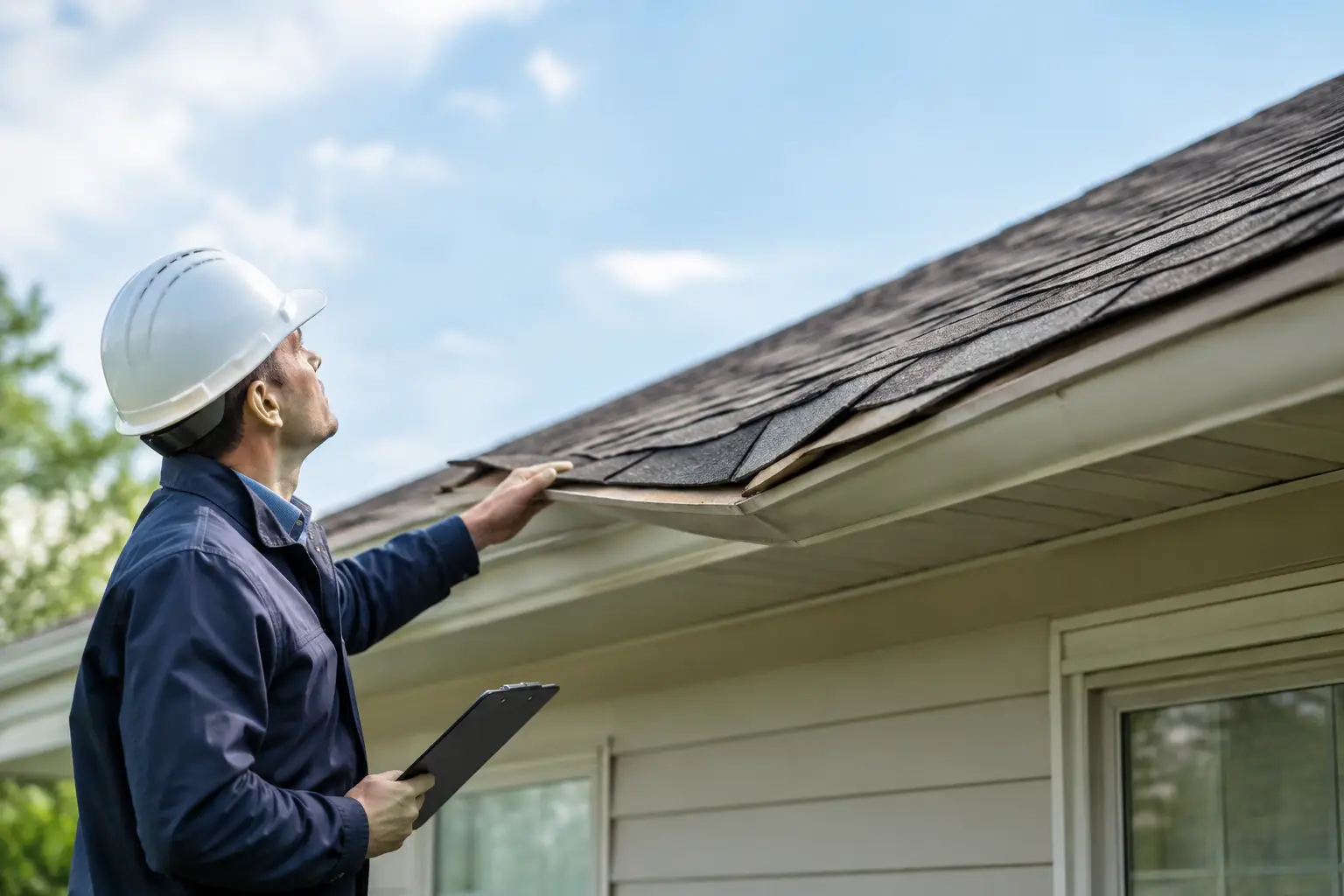
Most commercial properties should schedule professional roof inspections at least twice each year: once in the spring after winter weather and once in the fall before freezing temperatures return. Additional inspections are advisable after a major windstorm, prolonged heavy rain, hail event, or visible leak.
Buildings with flat or low-slope roofing, extensive rooftop equipment, mature trees nearby, or frequent foot traffic may need more frequent attention. Restaurants, medical facilities, warehouses, retail centers, multifamily buildings, and facilities with critical operations often benefit from a documented maintenance plan rather than a reactive repair approach.
Spring inspection priorities
Winter can expose weaknesses in seams, flashings, drains, and perimeter details. In spring, the roof should be checked for ponding water, cracked or displaced materials, membrane shrinkage, loose edge metal, and damage from snow removal or wind. Downspouts and interior drains should be clear so spring rain can leave the roof as designed.
For Connecticut buildings, this is also the time to look for evidence of ice damming and freeze-thaw damage around roof edges, scuppers, and transitions. Water that repeatedly freezes at a drainage point can stress materials and create openings that are not obvious from ground level.
Fall inspection priorities
A fall visit prepares the roof for the months when repairs can be harder to complete. Leaves, branches, and debris should be removed from drains, gutters, scuppers, and rooftop drainage paths. A clogged drain can turn an ordinary rainstorm into hours or days of standing water, adding unnecessary weight and increasing the risk of leaks.
The inspection should also confirm that flashing is secure around walls, skylights, vent stacks, roof hatches, and mechanical units. These penetrations are common leak locations because they bring multiple materials together and are affected by vibration, movement, and changing temperatures.
What to look for between professional visits
Property managers and maintenance staff do not need to perform roof repairs themselves, and they should not walk on a roof without proper training and safety procedures. They can, however, monitor warning signs from the ground, inside the building, and during routine exterior checks.
Pay attention to recurring ceiling stains, damp insulation, musty odors, peeling paint near the roofline, or water appearing around interior drains. Outside, look for overflowing gutters, vegetation in drains, displaced coping, loose metal, or water that remains on a low-slope roof long after rainfall has ended.
Rooftop equipment deserves attention as well. HVAC technicians, solar contractors, cable installers, and other trades can accidentally puncture a membrane, move protective pads, or leave debris behind. Any time work is performed on the roof, ask that the affected area be reviewed afterward. A small puncture from a dropped tool can allow water into the assembly over time.
Focus on the details where leaks start
Large, open roof areas matter, but leaks frequently begin at transitions and edges. A sound maintenance program gives extra attention to flashing, pipe boots, curbs, parapet walls, expansion joints, drains, and termination points.
On rubber and single-ply systems, seams should be checked for separation, punctures, surface wear, and lifting at edges. On metal roofing, fasteners, panel laps, sealants, and flashing must be evaluated for movement or corrosion. Modified bitumen and built-up roofs may show blisters, cracks, exposed reinforcement, or areas where the protective surface has worn away.
The roofing system changes the inspection method, but the principle remains the same: water must be directed off the roof without finding an opening at a seam, penetration, or edge. A contractor experienced with the specific material can identify whether a localized repair is appropriate or whether the condition signals broader system deterioration.
Keep drainage working as designed
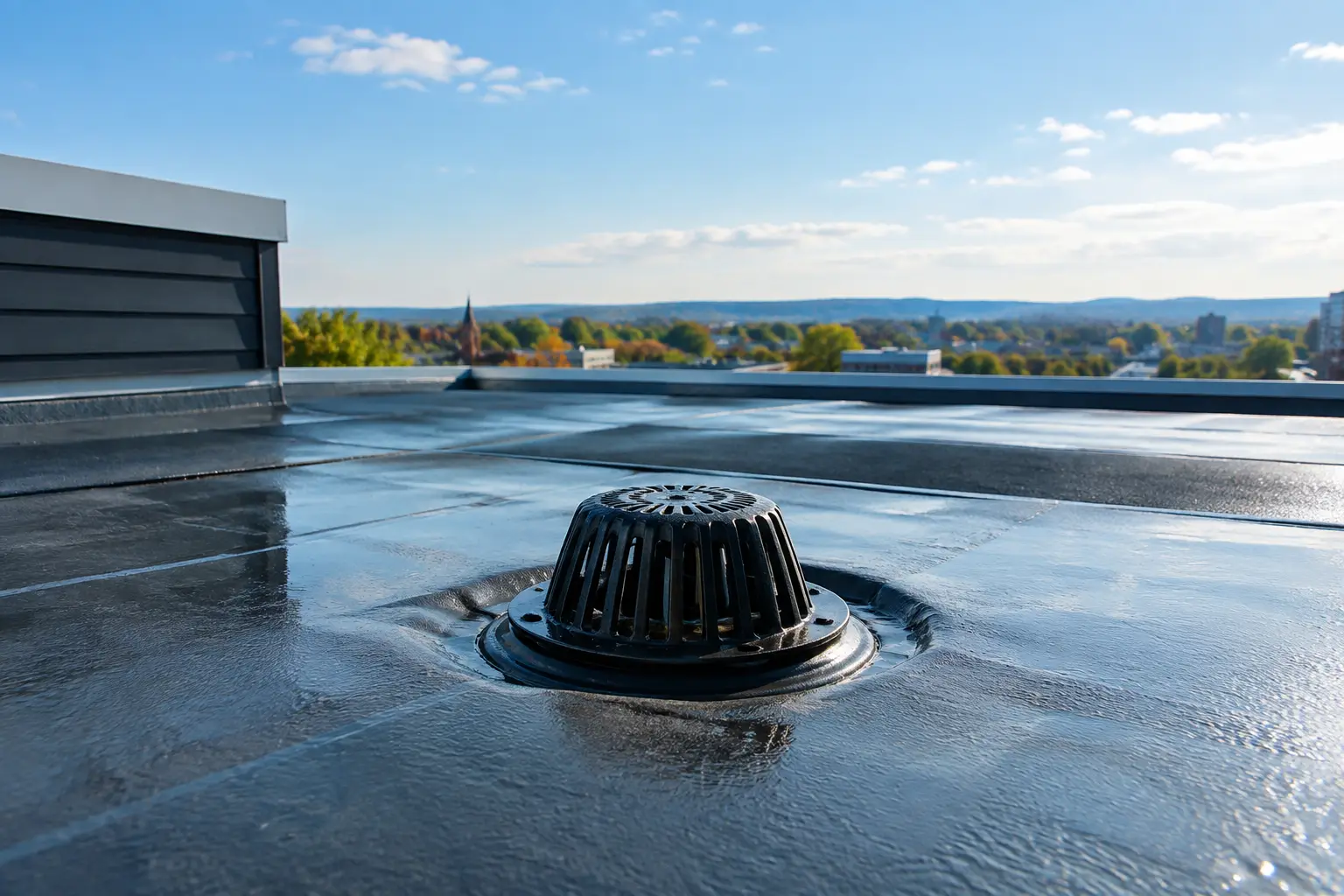
Drainage is one of the most important parts of commercial roof maintenance. Water should move toward drains, scuppers, gutters, and downspouts without pooling for extended periods. Ponding water can accelerate material wear, collect debris, encourage biological growth, and expose weaknesses that might otherwise remain dormant.
Not every shallow puddle requires immediate reconstruction. Some roofs are designed with minor areas of residual water, and the severity depends on how long water remains, the roofing material, and whether the condition is changing. However, standing water that persists beyond 48 hours, grows over time, or appears with leaks should be professionally evaluated.
Drain covers should be secure and clear, while gutters and downspouts need to discharge away from the building. If a drainage problem is caused by settlement, inadequate slope, or a deteriorated system, routine cleaning alone will not solve it. The repair may require tapered insulation, drain modifications, or a more comprehensive roofing solution.
Document repairs and protect the roof warranty
Keep a file with inspection reports, photos, repair records, roof plans, warranty information, and notes about storms or leaks. Good records help a property owner track recurring issues, support warranty claims when applicable, and make future budget decisions with better information.
They also help prevent uncoordinated work. Before anyone installs new equipment, runs a conduit, mounts signage, or makes a roof penetration, involve a qualified commercial roofing contractor. Improper penetrations and incompatible sealants can shorten roof life and may affect manufacturer warranty coverage.
A maintenance agreement can make this process easier by establishing regular inspections, written findings, and priority repairs before they become emergencies. It is particularly valuable for owners who manage multiple buildings or cannot inspect the property after every significant weather event.
Know when maintenance becomes an emergency
Some conditions should not wait for the next scheduled inspection. Active interior leaks, a large area of missing or lifted roofing material, storm damage, blocked primary drains during heavy rain, or visible structural sagging require prompt professional attention. Protect people and sensitive equipment below the leak, document the affected area, and avoid sending untrained personnel onto the roof.
Emergency repairs are intended to stop water intrusion and prevent further damage. Once conditions are stable, a thorough follow-up inspection can determine whether the roof needs a permanent repair, moisture investigation, or replacement planning.
For commercial property owners in Fairfield County, Rick’s Main Roofing provides inspections, maintenance, repairs, replacement services, and 24/7 emergency response for a range of commercial roofing systems. A planned inspection before the next storm is often the simplest way to protect the building, the people inside it, and the budget behind it.