

A missing shingle after a Norwalk windstorm can be easy to dismiss. Months later, that small opening may show up as a ceiling stain, wet insulation, or damaged roof decking. A roof inspection checklist homeowners can use helps catch those warning signs while repairs are still manageable – and before Connecticut weather turns a minor defect into an urgent problem.
Most homeowners can perform a careful visual review from the ground and inside the attic. The purpose is not to diagnose every condition or climb onto the roof. It is to notice changes, document concerns, and know when a qualified roofer should take a closer look.
When to Inspect Your Roof
Inspect your roof at least twice a year, ideally in spring after winter weather and in fall before snow and ice arrive. A separate inspection is wise after a severe thunderstorm, high winds, hail, a heavy snow load, or a fallen branch.
Age also matters. An older asphalt roof may need more frequent attention, especially once it reaches the latter portion of its expected service life. Cedar, slate, metal, and low-slope rubber roofs each have different failure points, so the inspection should reflect the material rather than follow a one-size-fits-all approach.
Do not wait for water to enter the house. By the time a leak becomes visible indoors, moisture may have already traveled through the roof assembly and affected materials beyond the original opening.
Roof Inspection Checklist for Homeowners
Start outside at ground level during daylight. Use binoculars if needed, take photographs of anything questionable, and compare the roof with prior photos if you have them. Avoid walking on a roof unless you have the training, equipment, and safe access to do so. Wet shingles, steep slopes, aging slate, and coastal wind conditions can make a roof dangerous very quickly.
Check the roof covering
Look for shingles that are missing, cracked, curled, loose, or visibly lifted at the edges. On asphalt roofing, dark bare patches or an unusual amount of granules in gutters and at downspouts can indicate that the protective surface is wearing away. One damaged shingle may be repairable; widespread wear across several slopes may point to a roof nearing replacement.
For cedar roofs, watch for split, cupped, decayed, or displaced shakes. Cedar needs room to dry, so moss buildup and overhanging branches deserve attention. Slate should be checked for slipped, cracked, or missing pieces, but it should not be walked on casually. Slate repairs require material-specific experience because improper foot traffic can break otherwise sound tiles.
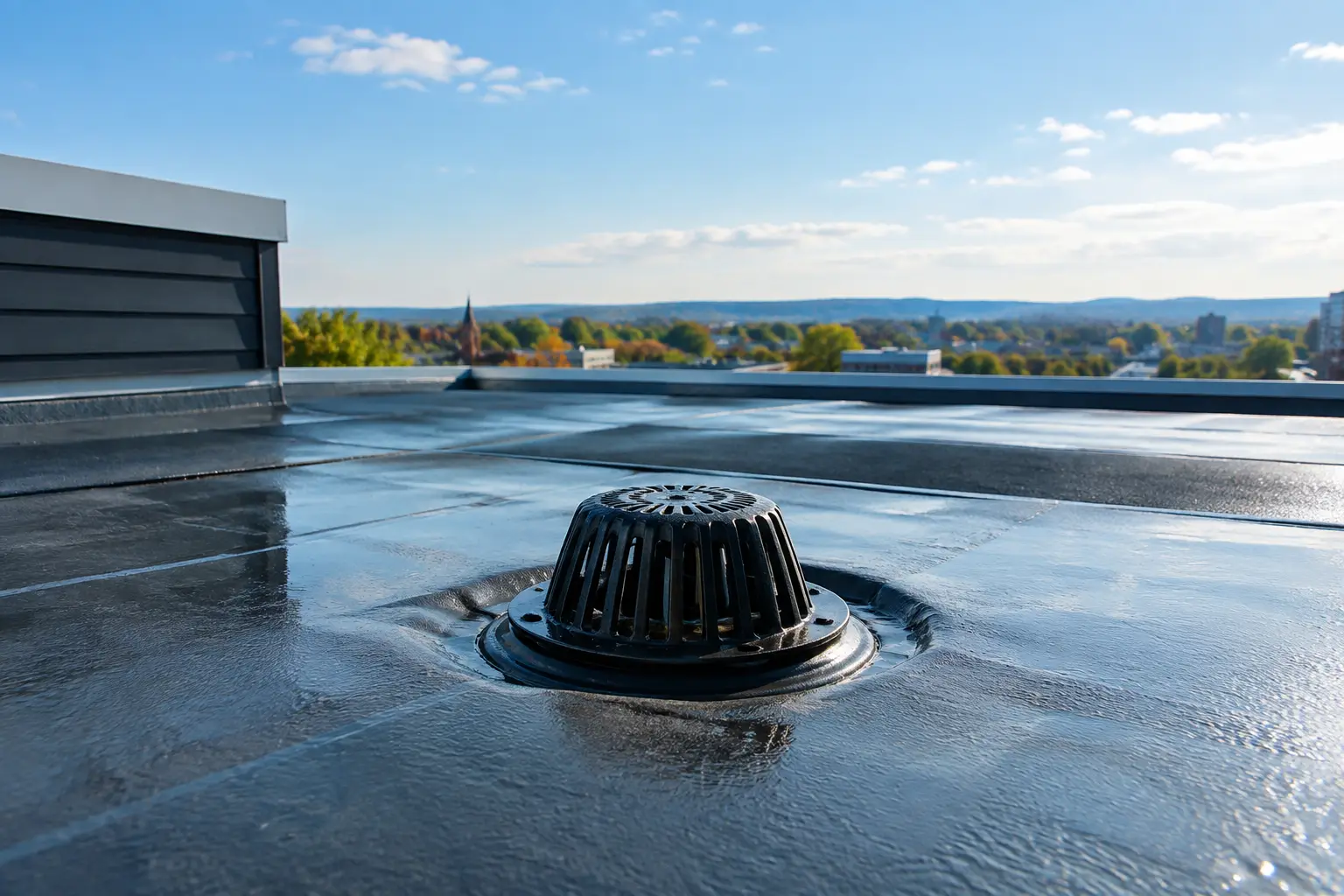
On metal roofs, look for loose fasteners, open seams, dents, corrosion, and failed sealant around penetrations. On rubber or other low-slope systems, look for ponding water that remains more than 48 hours after rain, open seams, punctures, blisters, and edge flashing that has pulled away.
Examine flashing and roof penetrations
Flashing is the metal or membrane detail that directs water away from vulnerable transitions. It is commonly installed around chimneys, skylights, vents, dormers, valleys, walls, and pipe boots. Because these areas involve changes in material and roof direction, they are frequent sources of leaks.
From the ground, look for flashing that appears bent, lifted, rusted, loose, or separated. Pay special attention to chimney areas. Cracked chimney mortar, loose counterflashing, and deteriorated sealant can allow water behind the roofing system even when the field shingles look sound.
Pipe boots are another common concern. The rubber collar around a plumbing vent can crack with age and sun exposure. A professional can often replace a failed boot without replacing the entire roof, provided the surrounding materials remain in good condition.
Review gutters, downspouts, and drainage
A roof cannot perform well if water has nowhere to go. Check that gutters are securely attached, clear of leaves and roofing debris, and pitched toward the downspouts. Water spilling over the gutter edge, sagging sections, and staining on siding can signal clogs or poor drainage.
Downspouts should move water away from the foundation. If discharge pools near the house, it can contribute to basement moisture and undermine landscaping. In wooded Fairfield County neighborhoods, gutters may need cleaning more than twice a year. This is especially true after heavy leaf fall or windstorms.
Also look at the roof edge. Rotting fascia boards, peeling paint, and water marks beneath the gutters can indicate that water has been backing up or overflowing for some time.
Look for storm damage and tree contact
Wind damage does not always leave shingles on the lawn. Shingles can lift and reseal imperfectly, leaving their adhesive strips compromised. Look for irregular shingle lines, exposed nails, creased tabs, or areas that appear to sit higher than surrounding shingles.
After a storm, inspect the yard as well as the roof. Branches, shingle pieces, metal fragments, and granules can provide useful clues. If a tree limb is resting on the roof, do not pull it off yourself. The branch may be concealing broken shingles, punctures, or structural damage.
Trim branches that overhang or rub against the roof. This reduces abrasion, limits leaf buildup, and makes it harder for squirrels and other pests to access the roofline. The right clearance depends on the tree and roof design, but branches should not scrape the roof during normal wind movement.
Do Not Skip the Attic and Interior Check
The roof surface is only part of the system. Go into the attic with a flashlight on a dry day and look for water stains, wet or compressed insulation, mold-like growth, rusty nails, darkened wood, or daylight coming through the roof deck. A musty odor is also worth investigating.
Then inspect upper-level ceilings, walls, and closets. Fresh water stains may appear yellow or brown. Peeling paint, bubbling drywall, and recurring stains around exterior walls or skylights should not be ignored. Water can travel along framing before it becomes visible, so the stain may not sit directly below the leak.
Ventilation deserves attention, particularly in Connecticut homes that experience humid summers and freezing winters. Poor attic ventilation can trap heat and moisture, contribute to premature shingle aging, and create conditions that support ice dams. In winter, uneven snow melt or thick ridges of ice along eaves may indicate a heat-loss or ventilation issue, not simply a gutter problem.
What You Can Handle and What Requires a Roofer
Homeowners can usually clear light debris from accessible gutters, monitor interior stains, trim branches with safe ground access, and keep records of roof changes. They should not attempt repairs involving steep slopes, electrical service connections, fragile slate, structural sagging, active leaks during a storm, or complex flashing.
A professional roof inspection is appropriate when you see repeated leaks, missing materials, sagging roof lines, large amounts of shingle granules, persistent moss, or storm-related damage. It is also a sound investment before buying a home, after purchasing a property with an older roof, or when planning exterior work such as solar installation, siding replacement, or a major renovation.
An experienced contractor can inspect areas that are not safely visible from the ground, assess the roof deck and ventilation, identify material-specific issues, and explain whether repair, maintenance, or replacement makes the most financial sense. The answer depends on roof age, the extent of damage, prior repairs, and whether the problem is isolated or widespread.
Keep a Record of What You Find
Take dated photos during each inspection and save invoices for repairs, maintenance, and previous replacements. This record helps you recognize whether a condition is getting worse and gives a roofing professional a clearer history of the system.
For homeowners in Norwalk and throughout Fairfield County, local weather exposure should be part of that record. Note the dates of significant wind events, ice dams, coastal storms, and tree impacts. Rick’s Main Roofing can provide a professional assessment when your checklist reveals a concern or when you want an experienced opinion before the next season puts your roof to the test.
A careful look from the ground today may be all it takes to prevent a small roofing concern from becoming the repair you did not plan for.