

A flat roof that holds water after a storm, leaks around a seam, or starts cracking in winter is not a minor nuisance. It is usually a sign that the roofing system is no longer doing its job. That is why many Connecticut property owners look at rubber roofing for flat roofs when they need a replacement that can handle temperature swings, rain, snow, and long-term exposure.
For both homes and commercial buildings, rubber roofing has become a practical choice because it is durable, relatively low maintenance, and well suited to low-slope designs. But like any roofing system, it is not automatically the right fit in every situation. The real value comes from understanding what it does well, where the weak points are, and how installation quality affects performance over time.
Why rubber roofing for flat roofs is so common
When people refer to rubber roofing, they are often talking about EPDM, a synthetic rubber membrane used on low-slope and flat roof systems. It has been used for decades on commercial buildings, but it also works well on residential additions, garages, porches, and contemporary homes with low-slope roof sections.
One reason it is so widely used is flexibility. In a climate like Connecticut, roofing materials have to expand and contract through hot summers, freezing winters, heavy rain, and snow accumulation. Rubber membranes are designed to tolerate that movement better than many rigid materials. That flexibility helps reduce cracking and splitting as the roof ages.
Another reason is efficiency. A properly installed rubber roof can cover a broad, low-slope area with fewer vulnerabilities than systems that depend on many individual pieces. When seams, flashing, and drainage details are done correctly, the finished system offers strong waterproofing performance with a relatively clean, straightforward appearance.
What makes rubber roofing a strong option
The biggest advantage of rubber roofing is durability. A well-installed EPDM roof can last for decades, especially when it is inspected and maintained before minor wear turns into leakage. It resists many of the common issues that damage aging flat roofs, including UV exposure, standing moisture, and weather-related movement.
Maintenance is another major benefit. Rubber roofing does not usually demand the same level of ongoing attention as some older flat roof materials. That does not mean it is maintenance-free. Debris still needs to be cleared, drains need to remain open, and flashing details should be checked regularly. But for many property owners, the upkeep is manageable and predictable.
Rubber roofing also performs well on buildings where access for major tear-offs or complex installations is limited. Because the membrane system is comparatively efficient to install, it can be a smart solution when owners want dependable protection without turning the project into a long disruption.
For commercial owners and property managers, that matters. For homeowners, it matters too, especially when the flat roof section is over a living area, office, or garage where leaks can quickly become expensive.
Where rubber roofing has limitations
No roofing material is perfect, and flat roofs always require careful planning. Rubber membranes are highly effective, but they depend on proper installation and proper detailing. If seams are not bonded correctly, flashing is poorly executed, or drainage is ignored, even a quality membrane can fail early.
Punctures are another consideration. EPDM is durable, but it can still be damaged by foot traffic, dropped tools, storm debris, or equipment service on commercial rooftops. On buildings with frequent rooftop activity, extra protection may be needed around access paths or mechanical units.
Appearance can also be a factor. Some property owners are focused almost entirely on performance, while others care about how the roof system fits the look of the building. Rubber roofing is usually chosen for function first. On a visible residential roofline, some owners may prefer a different material if aesthetics are the top priority.
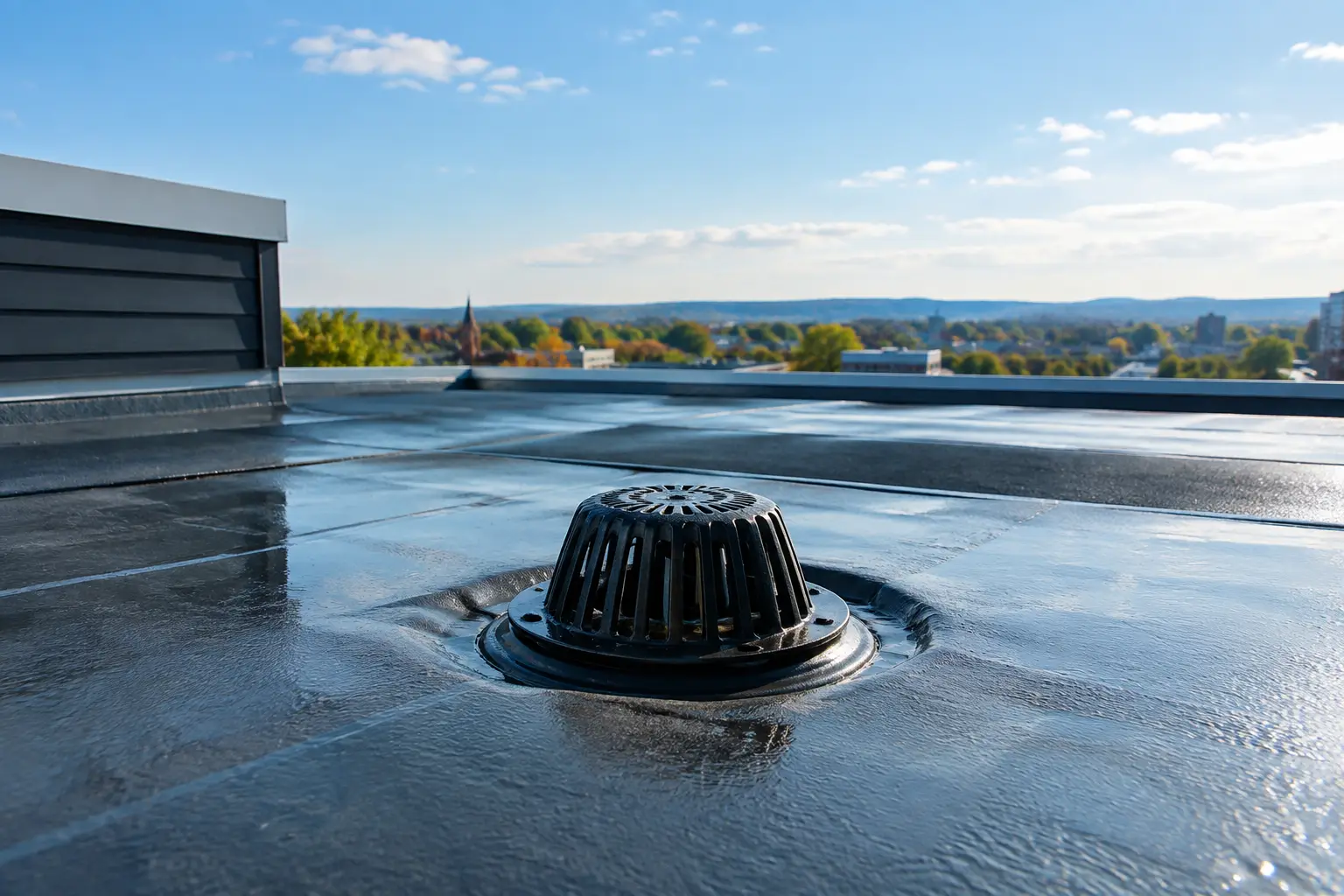
Then there is the issue of drainage. A flat roof is never truly flat. It needs a slope that directs water toward drains, scuppers, or gutters. Rubber roofing can handle low-slope applications very well, but it is not a cure for structural ponding problems. If the roof deck is sagging or the slope is wrong, those issues need to be addressed as part of the roofing project.
How rubber roofing performs in Connecticut weather
Local climate matters. In Fairfield County and along the Connecticut coast, roofs deal with more than ordinary rain. They face freeze-thaw cycles, strong winds, humid summers, snow loads, and wind-driven storms. A roofing system that looks fine on paper can underperform quickly if it is not suited to those conditions.
Rubber roofing performs well in cold weather because it remains flexible instead of becoming brittle. That is a significant advantage during winter, when low-slope roofs can experience stress from snow, ice, and fluctuating temperatures. It also holds up well under UV exposure, which helps with long-term aging.
That said, weather resistance depends on more than membrane material. Roof edges, penetrations, transitions, and drainage points often determine whether the system performs for years or starts leaking early. An experienced roofing contractor will assess the whole assembly, not just the top layer.
On coastal and near-coastal buildings, wind exposure deserves special attention. Attachment method, perimeter detailing, and substrate condition all matter. The roof has to be built for the building and its environment, not installed as a one-size-fits-all system.
Residential and commercial uses
Rubber roofing is common on commercial buildings because many commercial roofs are low slope by design. It works well on offices, retail buildings, warehouses, multifamily properties, and facilities with mechanical equipment on the roof.
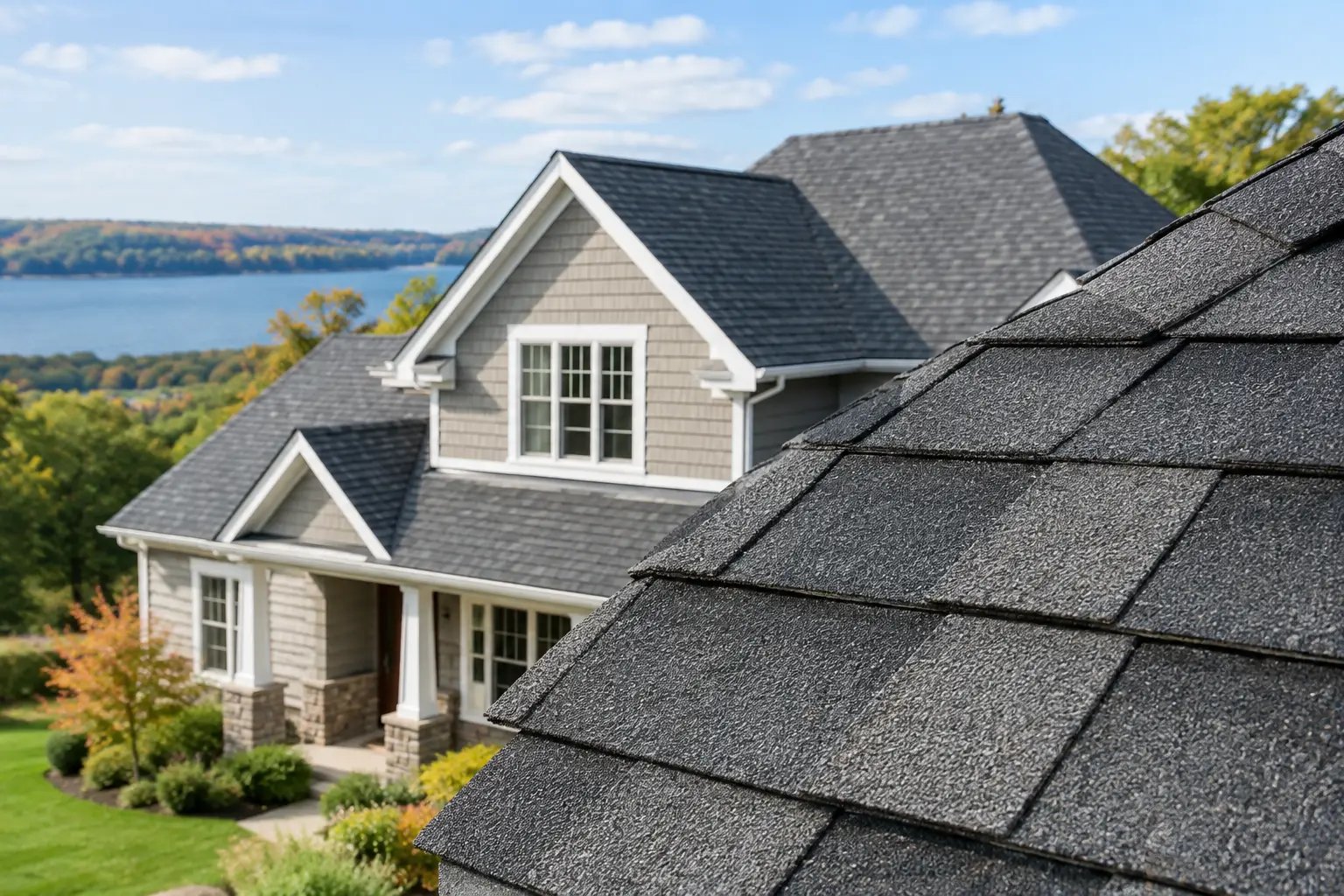
On the residential side, it is often used for home additions, porch roofs, dormers, garages, and sections of modern homes where shingles are not appropriate. In these areas, homeowners usually want a roof that is weather-tight, durable, and not overly complicated to maintain.
The decision often comes down to building design. If the roof has a low slope that makes shingles or other steep-slope systems impractical, rubber roofing becomes a strong candidate. If the property includes both steep and low-slope sections, a contractor may recommend combining materials so each area gets the right system.
Repair or replacement?
A leak in a rubber roof does not always mean the entire system has to be replaced. In many cases, localized damage around seams, flashing, punctures, or penetrations can be repaired effectively if the overall membrane is still in good condition.
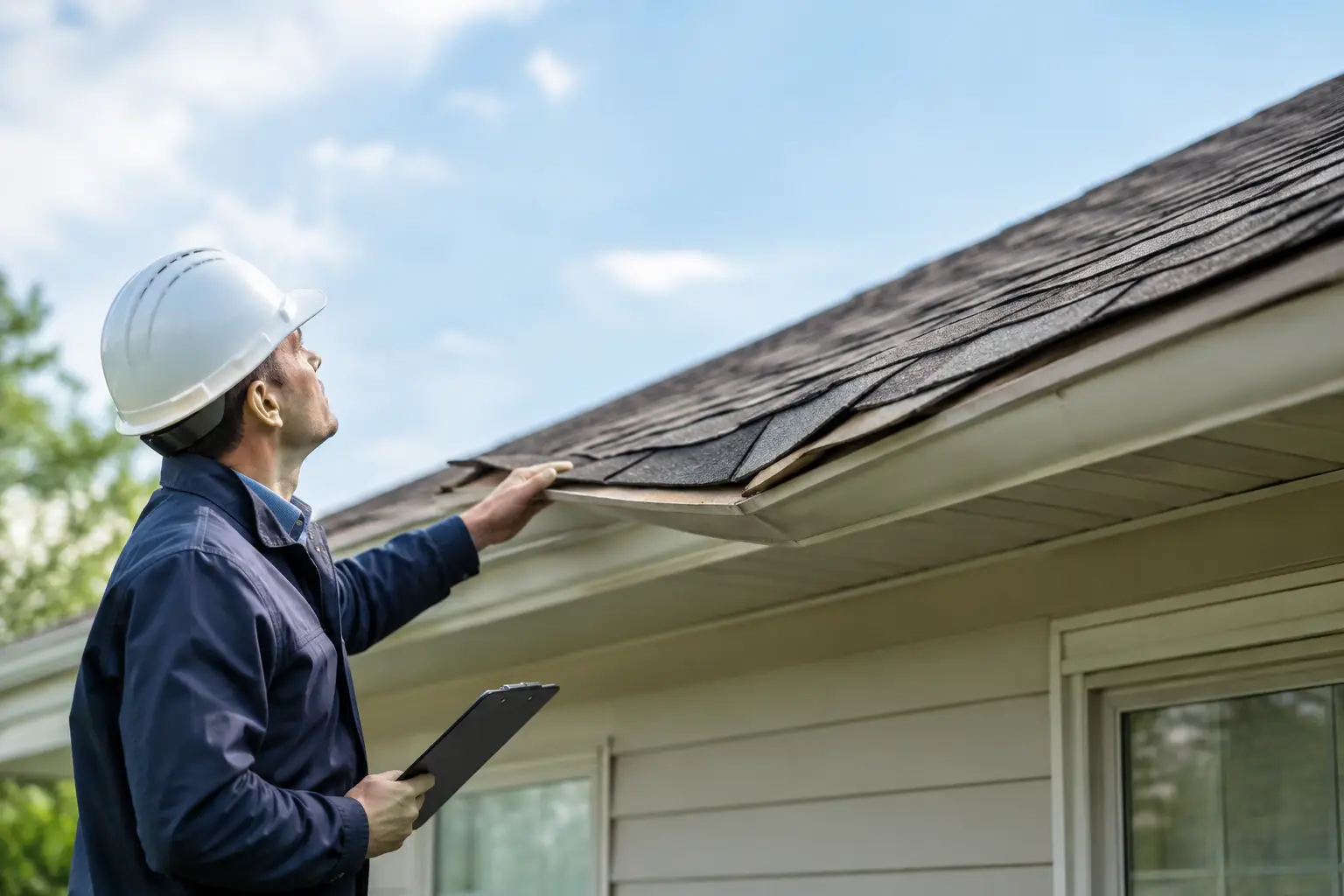
The problem is that flat roof leaks do not always show up directly below the source. Water can travel beneath the membrane or insulation before it appears inside the building. That makes professional inspection important. A quick patch in the wrong location can waste time and allow hidden damage to continue.
Replacement becomes the better option when the membrane is aging out, repairs are becoming frequent, moisture has affected underlying components, or installation defects are widespread. At that point, continuing to patch the surface often costs more in the long run than installing a new system correctly.
What to look for in a contractor
Rubber roofing is not just about material selection. It is about design, surface preparation, seam work, flashing, and drainage. A contractor should understand low-slope roofing in detail and be able to identify whether the issue is the membrane itself, the substrate below it, or the roof design as a whole.
That experience matters even more on buildings with added complexity, such as older homes, coastal properties, mixed-material rooflines, or commercial roofs with penetrations and rooftop equipment. A reliable contractor should be able to explain what condition the roof is in now, what options make sense, and what trade-offs come with each one.
For property owners in Norwalk and the surrounding area, working with a roofing company that understands local weather patterns, ventilation concerns, ice-related issues, and storm response can make a real difference. Rick’s Main Roofing approaches flat and low-slope systems with that broader view, which is exactly what these roofs require.
Is rubber roofing the right choice?
If you need a practical, proven system for a low-slope roof, rubber roofing is often a very strong option. It offers dependable waterproofing, long service life, and solid performance in Connecticut conditions when installed correctly. It is especially effective for property owners who value function, durability, and manageable maintenance.
Still, the right answer depends on the roof itself. The age of the building, the drainage layout, the amount of rooftop traffic, the visibility of the roofline, and the condition of the substrate all matter. A good recommendation should come from an inspection, not a guess.
If your flat roof is showing signs of wear, the best next step is not to wait for a bigger leak. It is to have the roof evaluated while your options are still open and the solution can be planned instead of rushed.