

A ceiling stain in a warehouse, a wet tile outside an office suite, or water collecting near rooftop equipment can quickly become more than a maintenance issue. For commercial property owners and managers, flat roof leak repair commercial services are about protecting operations, tenant spaces, inventory, electrical systems, and the building itself.
Flat roofs are dependable systems when they are properly installed and maintained, but they require a different approach than steep-slope roofs. Water does not shed as quickly. Small membrane failures, clogged drains, damaged flashing, or ponding water can allow moisture to travel beneath the surface before it becomes visible indoors. The source of the leak is not always directly above the stain.
Why Commercial Flat Roof Leaks Need Fast Attention
A commercial roof leak rarely stays small. Water can move through insulation, along metal decking, around penetrations, and behind wall assemblies. By the time a tenant reports a drip, the roofing system may already have sustained hidden moisture damage.
Delaying repair can lead to damaged insulation, deteriorated decking, mold concerns, interior repairs, and business interruption. In occupied buildings, water intrusion can also create slip hazards and affect customer-facing areas. For facilities with servers, medical equipment, stored products, or sensitive records, even a minor leak deserves immediate evaluation.
Connecticut weather adds another layer of risk. Heavy rain, wind-driven coastal storms, freeze-thaw cycles, snow loads, and ice buildup can expose weak points in commercial roofing systems. A roof that appears sound after a summer rain may reveal a problem during a winter thaw or a strong Nor’easter.
Common Causes of Flat Roof Leaks in Commercial Buildings
Commercial flat roofs are often constructed with systems such as EPDM rubber, TPO, PVC, modified bitumen, or built-up roofing. Each material has its own repair methods, but leak locations tend to follow familiar patterns.
Failed Seams and Membrane Damage
Seams are a frequent concern on single-ply roofing systems. Age, weather exposure, poor adhesion, foot traffic, and movement in the building can weaken seams over time. A puncture from maintenance activity or dropped equipment can also compromise an otherwise sound membrane.
The repair may be as straightforward as properly cleaning and patching a localized area. However, widespread seam separation or brittle membrane material can indicate that the roof needs a broader restoration plan or replacement assessment.
Flashing Problems Around Edges and Penetrations
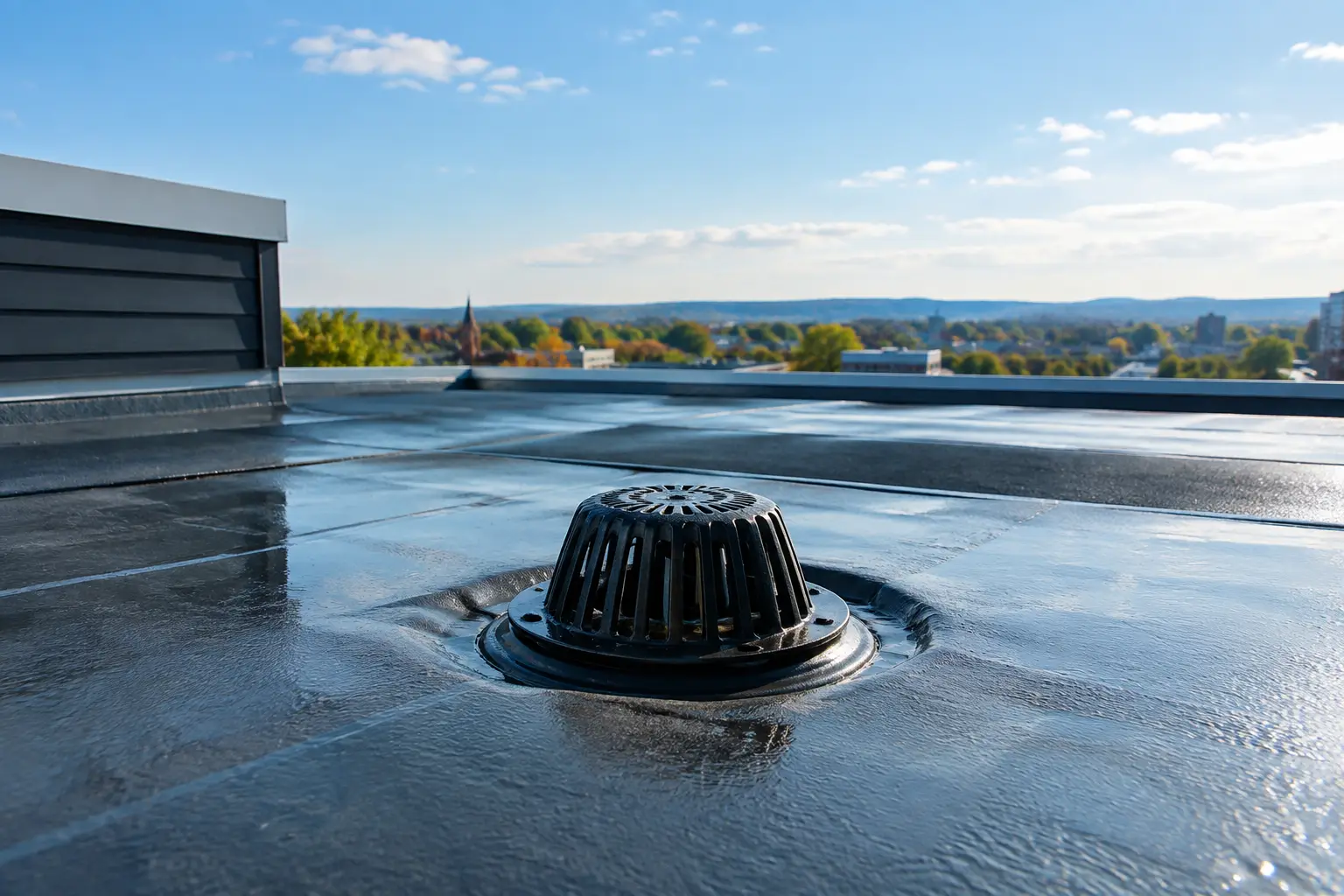
Flat roofs rely heavily on flashing to keep water out around parapet walls, vents, skylights, HVAC curbs, drains, pipes, and roof access points. These transitions experience movement and concentrated water flow, making them common leak sources.
Caulking alone is rarely a lasting answer when flashing has pulled away, cracked, or deteriorated. A professional repair should address the condition of the membrane, fastening, substrate, and flashing detail rather than simply covering the visible opening.
Ponding Water and Drainage Failures
Water that remains on a roof for more than 48 hours after rainfall is a concern. Ponding water accelerates material wear, adds weight to the structure, and makes small defects more likely to leak. It can result from clogged drains, blocked scuppers, undersized drainage, settlement, or insulation that no longer provides proper slope.
Clearing drains may solve a short-term issue, but recurring ponding requires a closer look. In some cases, tapered insulation, drain improvements, or localized roof regrading may be the right long-term solution.
Roof Age and Deferred Maintenance
Commercial roofs do not usually fail all at once. They decline through small issues that go unaddressed: open seams, worn coatings, loose flashing, backed-up drains, and damage around rooftop units. Regular inspections give property managers an opportunity to repair these conditions before a storm turns them into an emergency.
How Commercial Flat Roof Leak Repair Should Be Handled
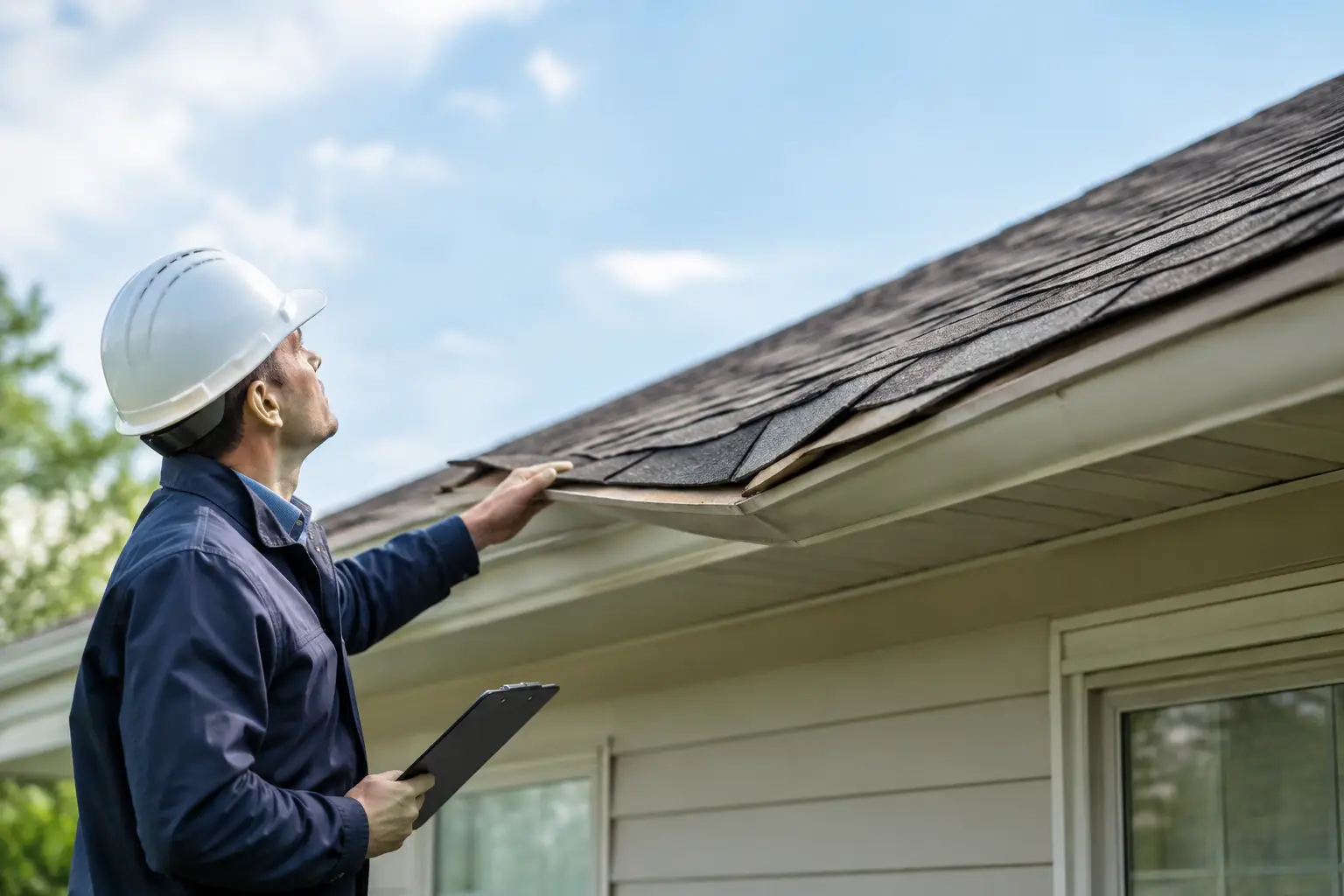
The first step is not applying a patch. It is locating the actual entry point and determining how far moisture has traveled. An experienced roofing contractor will inspect the membrane, seams, flashings, penetrations, drainage components, and interior signs of water intrusion. Depending on the roof system and conditions, that may include moisture detection methods to identify wet insulation beneath the surface.
Once the source is confirmed, the repair should match the roofing material. EPDM, TPO, PVC, modified bitumen, and built-up roofs require compatible products and installation techniques. Using the wrong patch material or relying on general-purpose sealant can create a temporary appearance of repair while allowing moisture to continue moving below the membrane.
For an active leak, temporary emergency protection may be necessary to limit interior damage while weather conditions improve. That does not replace a permanent repair. After the immediate risk is controlled, the roof should be evaluated for related damage, including saturated insulation, compromised flashing, and weak areas near the original leak.
Rick’s Main Roofing provides commercial roof repair and 24/7 emergency roofing response for property owners throughout Norwalk, Fairfield County, and nearby Connecticut communities. The focus is on identifying the real cause of the leak and completing repairs that support the roof’s ongoing performance.
When a Repair Is Enough and When Replacement Makes Sense
Not every leak means a commercial roof needs replacement. A newer roof with isolated punctures, localized flashing failure, or a single open seam can often be repaired effectively. Prompt repair is usually the most cost-conscious choice when the surrounding membrane and insulation remain in good condition.
Replacement becomes more reasonable when leaks are recurring, repairs are appearing in multiple areas, insulation is extensively saturated, the membrane has reached the end of its service life, or drainage problems are built into the existing assembly. A roof that requires repeated emergency service may be costing more in disruption and interior damage than a planned replacement would.
There are trade-offs. A repair costs less upfront and can extend roof life when the system is fundamentally sound. A replacement requires more capital planning, but it can address hidden moisture, drainage design, energy performance, and long-term maintenance concerns at once. A professional inspection gives decision-makers the information needed to choose based on condition rather than guesswork.
Protecting Your Building Between Service Visits
Property managers can reduce leak risk by keeping roof drains, scuppers, and gutters clear of leaves, debris, and standing water. Rooftop HVAC work should be monitored because service traffic and equipment repairs can damage membranes or disturb flashing. After major storms, a visual check from a safe location can help identify obvious debris, displaced materials, or drainage issues.
Avoid allowing untrained personnel to walk the roof or apply store-bought coatings and sealants to suspected leak areas. These efforts can make professional diagnosis harder and may interfere with compatible repair materials. Commercial roofs should be inspected on a routine schedule and after significant weather events, particularly for buildings near the coast or in exposed locations.
A flat roof does not need to be leaking inside the building to need attention. Early signs such as ponding water, loose flashing, visible membrane wear, clogged drains, or stains around rooftop penetrations are a reason to schedule an inspection before the next storm tests the system.
When water is entering an occupied commercial building, protect the interior, document the affected areas, and arrange for qualified roofing evaluation as soon as possible. Fast action can preserve a repairable roof and keep a manageable maintenance issue from becoming a costly disruption.