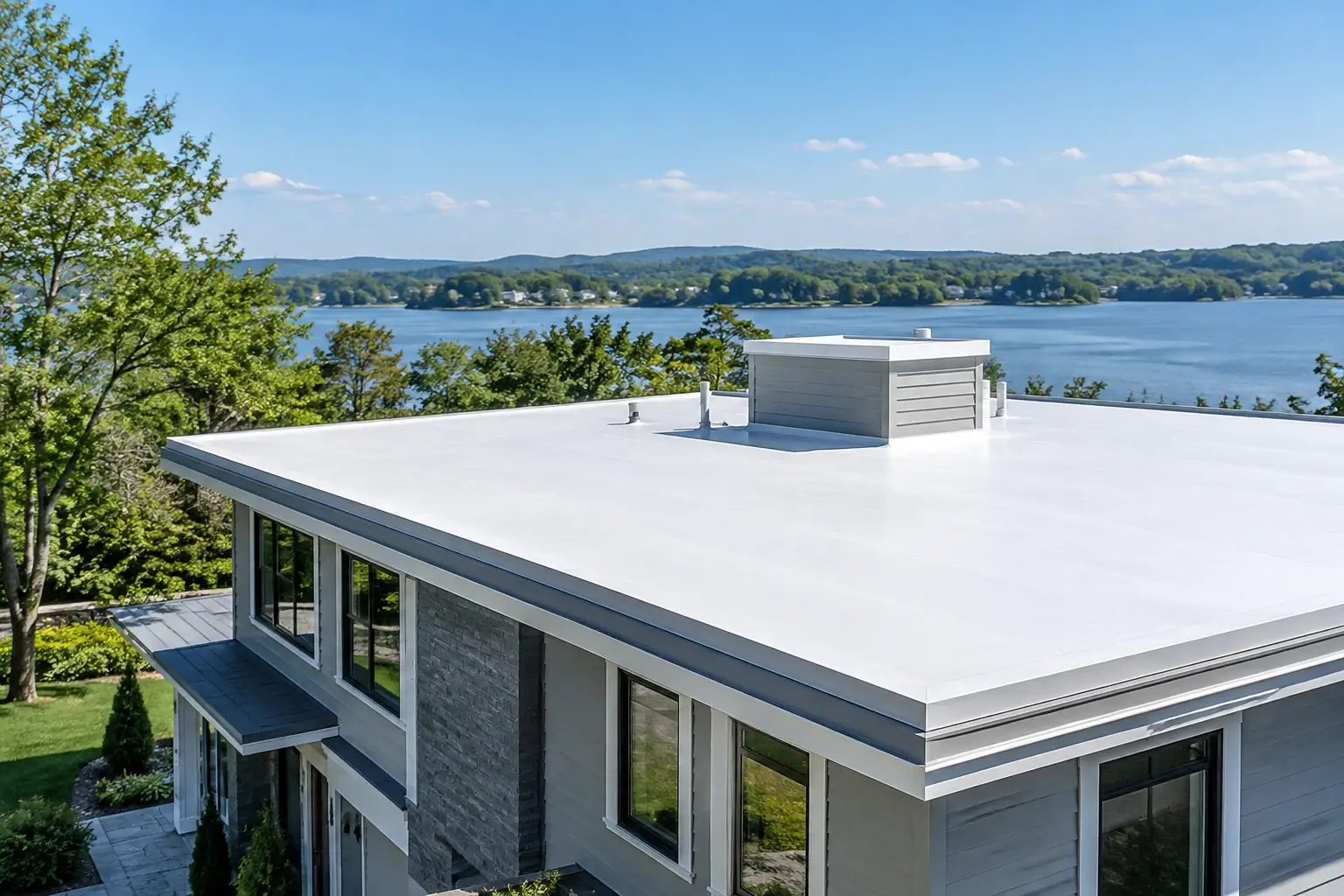


A flat roof should never be treated as a level roof. Every low-slope roofing system needs a deliberate path for rain, melting snow, and runoff to leave the surface. Effective flat roof drainage solutions are what keep standing water from becoming membrane damage, interior leaks, saturated insulation, and expensive structural repairs.
For property owners in Norwalk and throughout Fairfield County, drainage deserves special attention. Connecticut roofs must handle heavy rain, wind-driven coastal storms, leaf buildup, snow, and repeated freeze-thaw cycles. A drain that works adequately in mild weather can become overwhelmed when a storm drops several inches of rain or when debris blocks an outlet just as snow begins to melt.
Why Drainage Is Critical on a Flat Roof
Low-slope roofs are designed with subtle pitch, often directing water toward drains, scuppers, gutters, or roof edges. That pitch may be difficult to see from the ground, but it is essential. When water remains on the roof for more than 48 hours after normal weather conditions, it is commonly called ponding water. It is a warning sign worth investigating.
Ponding adds weight to the roof assembly and keeps seams, flashing, and membrane surfaces wet for longer periods. Over time, this can accelerate wear in rubber roofing and other low-slope systems. Water may also find small openings around penetrations, curbs, drains, or edge details that would not leak during a brief rainfall.
The problem is not always the drain itself. A roof may have insufficient slope, crushed insulation, settlement in the deck, undersized drainage components, or poorly placed drains. A sound solution begins with identifying why water is collecting rather than simply clearing the visible blockage.
Common Flat Roof Drainage Solutions
The right drainage design depends on the roof size, slope, parapet walls, roof material, building use, and local exposure. A small residential addition does not need the same drainage configuration as a large commercial building, but both need a reliable outlet for water.
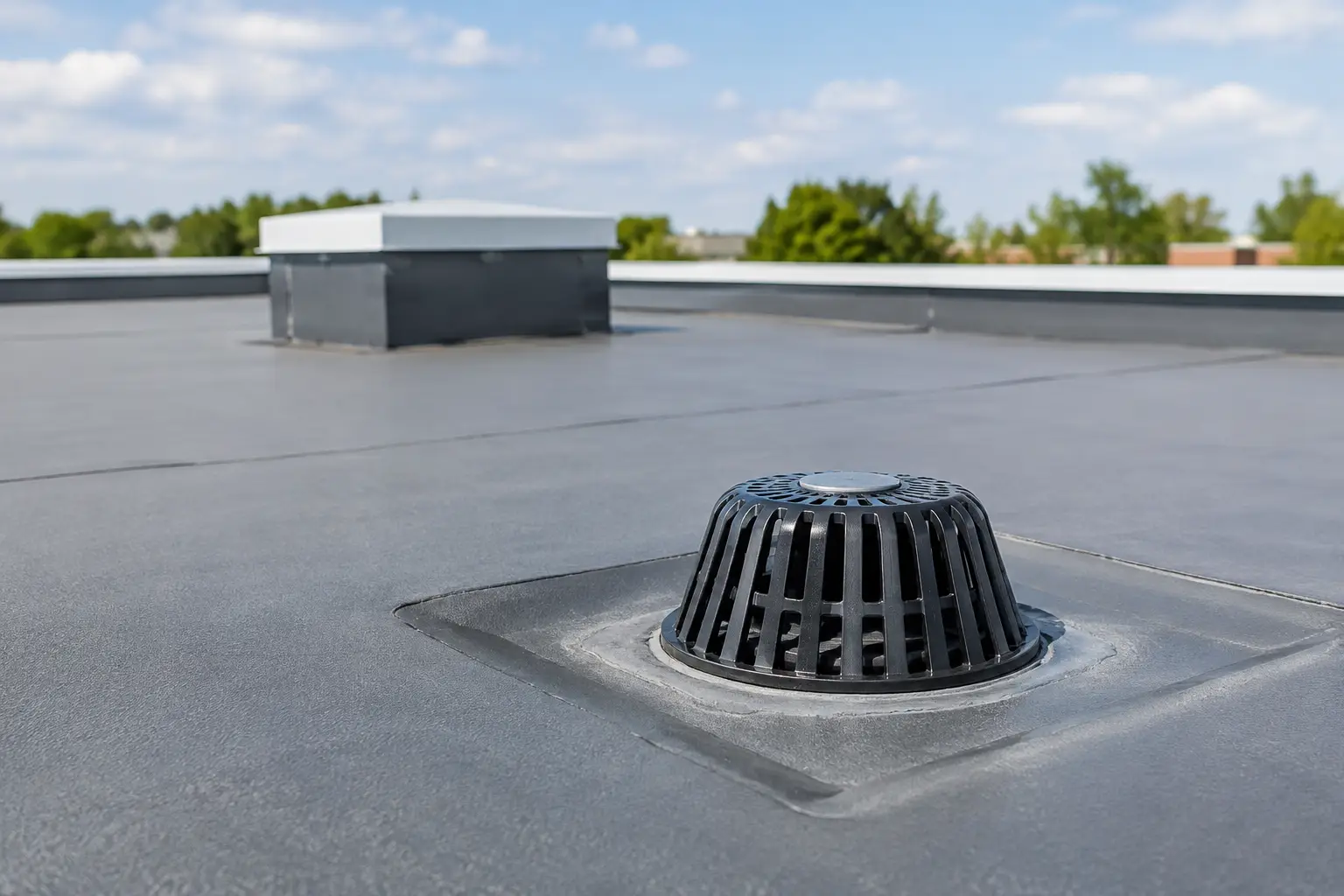
Interior Roof Drains
Interior drains collect water at low points and carry it through piping within the building. They are widely used on larger commercial flat roofs because they can manage substantial water volume without routing downspouts along exterior walls.
These drains require regular maintenance. Their strainers can become blocked by leaves, gravel, roofing debris, or nesting material. In Connecticut, an obstructed interior drain can be especially serious during a winter thaw, when snowmelt has nowhere to go. Proper drain bowls, clamping rings, flashings, and membrane connections are just as important as the drain pipe below.
Scuppers and Downspouts
Scuppers are openings through a parapet wall that allow water to exit the roof and enter a conductor head, downspout, or discharge area. They can be an effective option for buildings with perimeter walls, particularly when interior drainage is not practical.
Scuppers must be sized and positioned correctly. A narrow scupper may clog with leaves or ice, while an outlet set too high can allow water to pond before it escapes. Downspouts also need to direct water away from the foundation and pedestrian areas, where winter icing can create another property hazard.
Gutters and Edge Drainage
Some low-slope roofs drain toward exterior gutters. This approach is common on smaller roof sections, porches, garages, and certain residential additions. It can work well when the roof has adequate positive slope and the gutter system is large enough for the roof area it serves.
Gutters are simple in concept but demanding in practice. They need secure attachment, proper pitch, clear outlets, and regular cleaning. Overflowing gutters can send water behind fascia boards, down exterior walls, or into soffits. On coastal properties, corrosion-resistant components and durable fastening are also important considerations.
Tapered Insulation for Positive Slope
When a roof has recurring ponding because the deck is nearly level or has settled, tapered polyiso insulation may be part of the answer. Tapered insulation creates a planned slope beneath the roofing membrane, directing water toward drains or scuppers while also improving thermal performance.
This is not a minor repair. It is usually considered during a roof replacement or a substantial restoration because the roofing system must be opened and rebuilt correctly. Still, for a roof with widespread standing water, adding drainage slope can be more durable than repeatedly patching the areas where water collects.
Secondary or Emergency Overflow Drainage
Primary drains can clog, and severe storms can exceed normal drainage capacity. That is why many commercial roofs require secondary drainage, often through overflow scuppers or secondary drains installed above the primary drainage level.
These components are a safeguard, not a substitute for maintenance. If water is regularly reaching an overflow scupper, the primary system should be inspected promptly. The roof may have a blockage, inadequate capacity, or a drainage design issue that needs correction.
Signs Your Roof Needs a Drainage Inspection
A visible puddle is not the only indication of trouble. Water staining on ceiling tiles, peeling interior paint, musty odors, bubbling roof membrane, deteriorated flashing, and algae or debris lines around drains can all point to drainage problems.
Property managers should also watch for drains that repeatedly back up, gutters that spill over during ordinary rain, or downspouts that discharge too close to the building. On roofs with HVAC equipment, service traffic can compress insulation and create low spots around walk paths or equipment supports.
After a heavy storm, it is reasonable to inspect the roof from a safe location or have a roofing professional assess it. Do not walk on a wet low-slope roof unless you are trained and equipped to do so. Wet membranes can be slippery, and concealed weak spots may not support foot traffic safely.
Maintenance Protects Every Drainage System
Drainage systems perform best when maintenance is scheduled before problems develop. For most flat roofs, spring and fall inspections are a practical baseline, with additional checks after major storms. Buildings surrounded by mature trees or located near the coast may need more frequent attention.
A professional maintenance visit should include clearing roof drains and scuppers, checking strainers, examining seams and flashing near drainage points, confirming that gutters and downspouts are secure, and identifying low areas where water is collecting. The inspection should also look at the condition of the membrane around drains, since this is a common area for deterioration and leaks.
Owners sometimes focus only on the roof surface, but drainage is connected to the entire building envelope. Water that leaves the roof must continue away from walls, foundations, entrances, and paved areas. A good drainage plan protects the roofing system and reduces water-related problems around the property.
When Repair Is Enough and When Replacement Makes Sense
A clogged drain, loose strainer, separated flashing detail, or damaged downspout may be corrected with a targeted repair. If the membrane is otherwise in good condition and water is not persistently ponding, repair can be a sensible and cost-effective approach.
Replacement becomes more likely when the roof has widespread low spots, aging materials, recurring leaks, saturated insulation, or a drainage layout that was inadequate from the start. During a full replacement, the roofing contractor can evaluate drain locations, install tapered insulation where appropriate, improve perimeter details, and plan emergency overflow drainage.
For commercial properties, that planning should account for building operations. Drain placement may need to work around rooftop equipment, access routes, and occupied spaces below. For residential properties, the solution should protect the home without creating oversized or visually distracting drainage components.
Local Expertise Matters for Low-Slope Roofs
Flat and low-slope roofs require more than a quick patch around a drain. The roof membrane, insulation, slope, flashing, drain hardware, and water discharge path must work together. A mistake at any one point can allow water to remain where it does not belong.
Rick’s Main Roofing evaluates the full roofing system when diagnosing low-slope leaks and drainage concerns. With experience serving homes, commercial buildings, coastal properties, and specialized roofing systems across Fairfield County, the team can determine whether the issue calls for maintenance, repair, improved drainage, or a complete roofing solution.
If water remains on your roof after the weather clears, treat it as an early warning rather than a cosmetic concern. A timely professional inspection can help protect the roof, the structure beneath it, and the people who depend on the building every day.