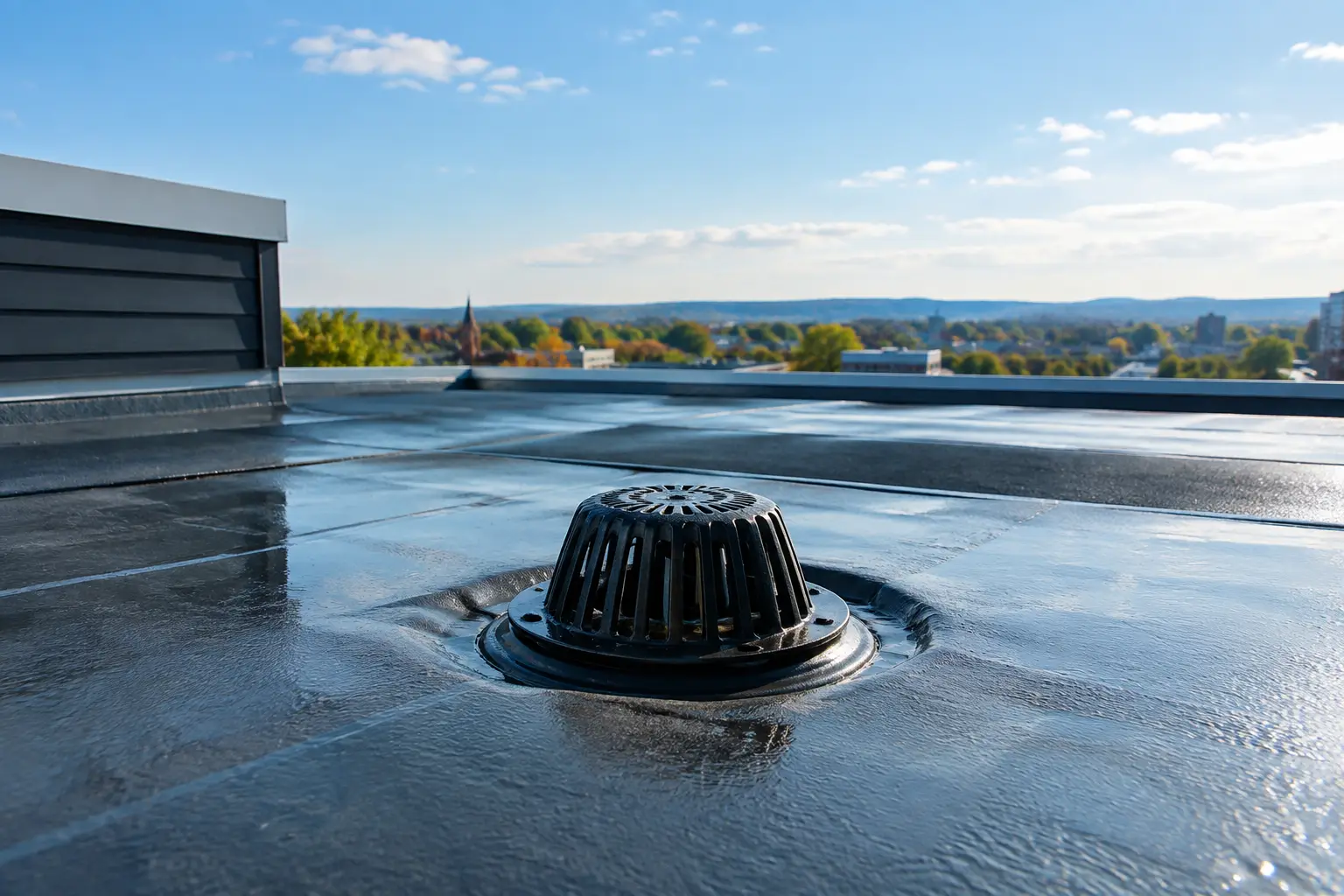


Commercial property owners downtown often battle the “silent killer” of flat roofs: ponding water. When water sits for over 48 hours, it degrades membrane seams and adds immense structural weight, often leading to premature failure or denied insurance claims due to specific exclusions for standing water.
The Building Department now strictly enforces “positive drainage” codes during re-roofing projects to combat this expensive issue. At Rick’s Main Roofing, we specialize in retrofitting older buildings with tapered insulation systems that satisfy city inspectors and keep your investment dry. Here is how to meet the new standards and protect your asset.
What is “Ponding Water” and Why Does Stamford Code Ban It?
You can guess the meaning after hearing the word “ponding water.” It is water that gathers in one place. Water mostly collects in the lower areas, such as pits. This happens because of poor design or insulation. This is an issue the local code officers care about, and this is for good reason.
The 48-Hour Rule: Identifying Critical Drainage Failure.
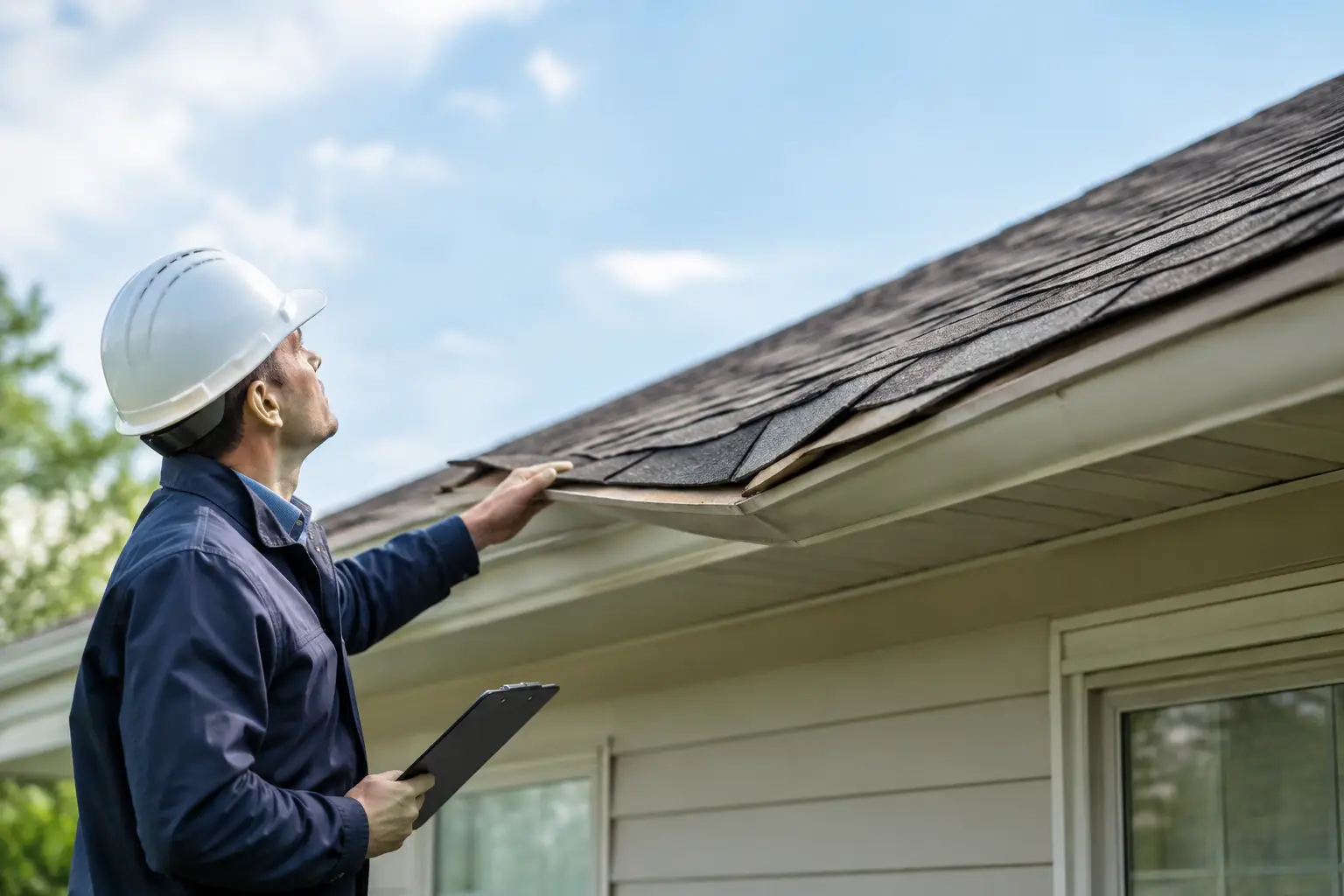
Roof inspectors follow a simple rule. Water that remains on the roof for 48 hours after rainfall is classified as ponding. This rule is very important because it indicates that the roof is not draining properly. It signals a slope problem. It is a signal that something is not working on the roof.
Even small puddles can bring major problems. Sunlight heats the standing water and breaks down the roofing materials. The water can freeze during winter. Frozen water takes up more space. There is a continuous freezing and melting process. It exerts pressure at the seams and borders.
Structural Risks in the Freeze-Thaw Cycle
The weather is a major problem for ponding water. The area experiences intense freezing temperatures in winter, so the water melts and freezes continuously.
The conversion of water to ice increases the volume, and it takes up more space. That extra weight can stress roof decks, causing sagging. The steel or wood supports underneath become weak.
Membranes are also broken due to repetitive freezing and thawing cycles. Sometimes, they crack and allow water leak. Leaks may not be immediately visible, but this increases the repair costs. Because of these hazards, authorities try to prevent standing water.
“Positive Drainage” Requirements for Commercial Roofs
Positive drainage is one of the terms that you need to know for roof inspections. It means that the roof should move water toward drains or edges, rather than depend on evaporation.
Understanding Minimum Slope Standards (1/4 Inch per Foot).
Standard commercial roofing practices are followed in Stamford. A flat roof must have a slope of at least 1/4 inch per foot. The slope may not look very steep, but it should direct water toward the drains.
Many of the older downtown buildings do not meet this standard because they were built decades ago. At that time, there were no rules for drainage. Over time, the insulation compresses and the slope disappears. Inspectors check the roofs and their slope. If the roof is less than the minimum slope, you have to get it fixed.
Secondary Emergency Scuppers: Are Yours Up to Code?
Authorities also mandate secondary drainage systems for many commercial roofs. They are referred to as emergency scuppers or overflow drains. The working process is simple. Emergency drains stop water from accumulating to dangerous levels if the normal drains are blocked.
These features are missing in many older buildings. Some have scuppers that are too low or poorly positioned. Inspectors will analyze these features. Permits could be delayed or canceled due to drainage problems.
Retrofitting Tapered Insulation: The Cost-Effective Fix
The roof deck is not cheap to replace. Fortunately, there is a smarter way to deal with drainage issues. That solution is tapered insulation.
How Tapered Systems Create Artificial Slope on Flat Decks.
Tapered insulation is not flat, as each panel is cut on a slight bevel. These panels produce a slope on the roof if they are installed properly. The roof still looks flat, but water naturally flows toward the drains.
It’s a solution to numerous problems at the same time. It improves drainage and increases insulation value. It follows the local regulations without major structural changes. It’s the most affordable alternative for many buildings.
Integrating “Crickets” to Divert Water from HVAC Units.
Commercial roofs have HVAC units, vents, and skylights. These features block water flow. Water collects behind these structures. Roof crickets can solve this problem. A cricket is a tiny protruding piece of insulation that resembles a ridge. It diverts water around obstacles.
Inspectors typically advise installing crickets behind any large rooftop units. They allow water to slide into the drain. Crickets prevent major problems and extend the life of a roof.
Navigating Commercial Roofing Permits in Downtown
Commercial vs. Residential Permit Differences.
Commercial roofing licenses are more complicated than residential ones. They require detailed drawings, in which drainage plans are included. Insulation level should adhere to the latest energy codes.
Inspectors review slope calculations and inspect the location of drains and overflow systems. One bad drawing can ruin the entire project. A contractor who knows the area will save you time.
Handling Debris Disposal in Dense Urban Zones.
Downtown has limited space because the streets are narrow and they have strong pedestrian traffic. A roof tear-off leaves a lot of debris. The town has rules about debris disposal. You can face penalties if you fail to dispose of the materials. It can also halt a project halfway through.
Why Businesses Trust Rick’s Main Roofing
Local experience is important because the codes are strict. Inspectors are detail-focused. Rick’s Main Roofing knows what it takes to install or fix a roof. We know how inspectors check the details and the things they focus on. Our team installs professional roofs that pass the checks on the first try.
Our specialty is flat commercial roofs. We install the best drainage systems and tapered insulation. Our professional team handles the permits and documentation. Trust our team for high-quality work that protects your building.
Pro Tip: The Flood Zone Factor & Permit Elevation Data
The geography of Stamford has an important regulation: many commercial properties near the Harbor Point and South End districts are considered high-risk FEMA flood zones. You have to file for a commercial roofing permit. The Building Department will inspect the documentation to make sure the roof follows the standards. This paperwork can stall projects for weeks if not prepared in advance.
At Rick’s Main Roofing, we anticipate this requirement. We coordinate the necessary “elevation certificates” and structural verification as part of our initial permitting package, ensuring your project isn’t red-flagged before the first membrane is laid.
FAQs About Re-Roofing Your Property
1. What is considered “ponding water” by roofing inspectors?
Ponding means the collection of water on a roof for more than 48 hours after rainfall. Inspectors check stains and algae that indicate standing water. Even shallow puddles cause problems.
2. Can I just add a new layer of roofing over my old one in Stamford?
You can add a layer if all the drainage problems are fixed. If the current roof has ponding, a new layer of roofing will not be approved. Inspectors require positive drainage.
3. How does tapered insulation fix flat roof drainage?
Tapered insulation is used to build a slope where it doesn’t exist. The panels are thicker on one side and thinner on the other. They direct water to drains. This prevents water ponding.